 Save to Pinterest
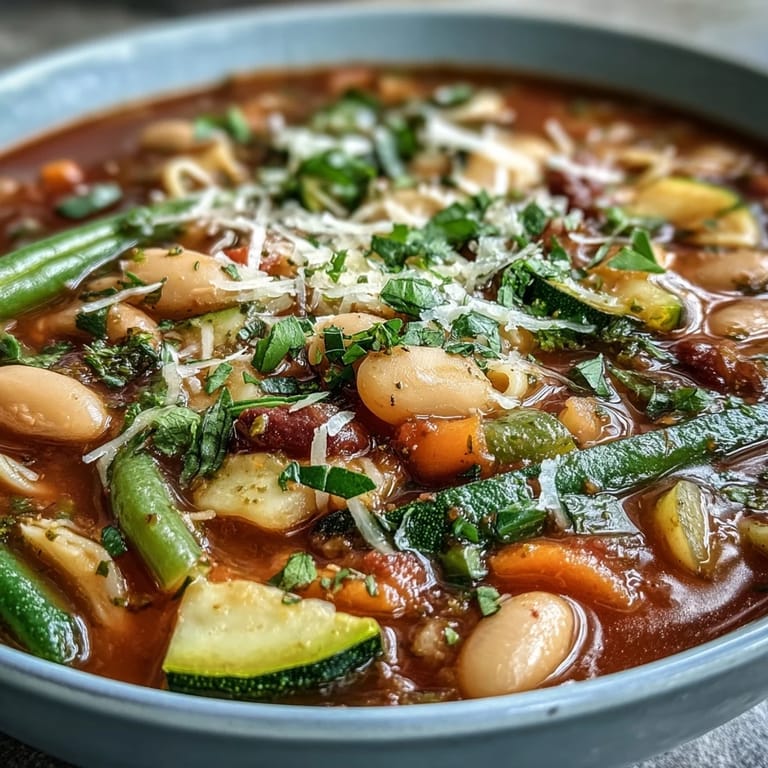
 My neighbor Maria taught me this soup on a gray October afternoon when she caught me staring at my empty vegetable crisper drawer, clearly lost. She showed up with a canvas bag and a knowing smile, walking me through minestrone like it was the simplest thing in the world, which somehow made it feel like it was. What struck me most wasn't the recipe itself but how she explained it as a conversation between you and your ingredients, not a rigid set of rules. I've made it dozens of times since, and it never tastes quite the same way twice, which is exactly why I keep making it.
I made this for my book club on a snowy evening, and something about watching six bowls of steaming soup warm everyone's hands while we debated a mystery novel felt like the whole point of cooking. One friend asked if it was store-bought because she couldn't believe how good it was, and I laughed because that's when you know a recipe has truly landed.
Ingredients
- Olive oil: Use a quality one you actually enjoy tasting, since it's doing real flavor work here, not just lubricating the pan.
- Yellow onion, carrots, and celery: This trio is the holy trinity of Italian cooking for a reason, and learning to recognize when they've softened into golden sweetness is a small skill that changes everything.
- Garlic: Mince it fresh right before you add it so it releases that sharp, peppery fragrance that tells you something delicious is about to happen.
- Zucchini, potato, and green beans: These are your volume players, and they'll soften gently into the broth without falling apart or turning to mush.
- Canned diced tomatoes: Don't feel fancy about using canned; they're actually more reliable than fresh ones that traveled across the country.
- Cannellini beans: Drain and rinse them to cut down the salt and any canned flavor that might muddy the broth.
- Small pasta like ditalini: Add it near the end so it doesn't absorb all the broth and leave you with soup that's more starch than liquid.
- Vegetable broth: A good broth is your foundation, so taste it first and adjust your final seasoning accordingly.
- Dried Italian herbs and bay leaf: They'll infuse the whole pot with warmth and earthiness that makes this taste like home.
- Baby spinach or kale: The heat will wilt it in seconds, adding a bright note right at the finish.
- Fresh parsley and Parmesan: These final touches remind you that you made this from scratch, not opened a can.
Tired of Takeout? 🥡
Get 10 meals you can make faster than delivery arrives. Seriously.
One email. No spam. Unsubscribe anytime.
Instructions
- Build your flavor base:
- Warm the olive oil over medium heat and add your onion, carrots, and celery, letting them soften for about five minutes while the kitchen fills with that sweet, mellow smell. You'll know they're ready when the onion becomes almost translucent and starts smelling genuinely irresistible.
- Layer in the secondary vegetables:
- Stir in the minced garlic, zucchini, potato, and green beans, cooking for another three minutes until everything releases its individual scent and they're just starting to soften. Don't walk away during this part; your nose will tell you exactly when to move forward.
- Build the broth:
- Add the tomatoes, beans, broth, herbs, and bay leaf all at once, then bring the whole pot to a gentle boil. This is the moment your separate ingredients officially become a soup instead of just chopped vegetables.
- Simmer the soup:
- Cover the pot, lower the heat, and let it bubble softly for twenty minutes while the vegetables absorb the broth and the flavors marry together. This is when you can finally sit down with a cup of tea.
- Add the pasta:
- Stir in your small pasta and leave the lid off so the starch can release and you can actually watch it cook. Check it around eight or nine minutes; when both the pasta and vegetables are tender but not mushy, you're done.
- Finish with greens and seasoning:
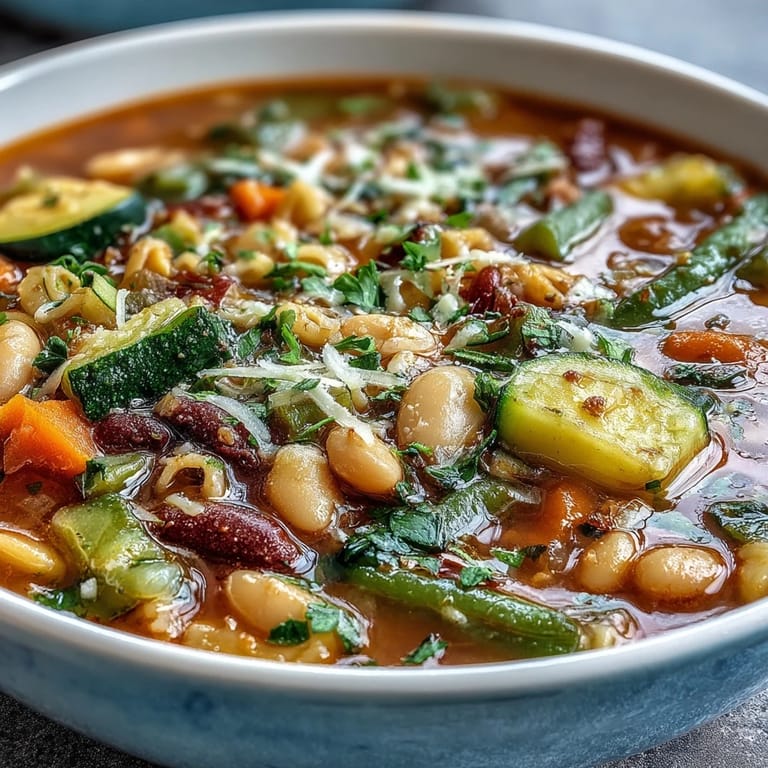
- Fish out the bay leaf, add your spinach or kale, and let it wilt for two minutes before tasting and adjusting the salt and pepper. This final taste-and-adjust moment is where home cooks often differ from people following recipes blindly.
 Save to Pinterest
 There's a particular kind of satisfaction in ladling a bowl of minestrone and knowing that everything in it is good for you and tastes wonderful at the same time. It's the kind of meal that makes you feel like you're taking care of yourself without any self-sacrifice involved.
The Magic of Flexibility
What I love most about minestrone is how it lives by the season and the contents of your produce drawer. In summer, I throw in zucchini and tomatoes without a second thought, but come winter, I've swapped in cabbage, kale, and extra carrots, and it's never once disappointed me. The soup doesn't care if you're following a rigid formula; it actually rewards improvisation.
Why This Tastes Better the Next Day
If you make minestrone on a Sunday evening, the Monday lunch version will taste noticeably richer and more rounded, because the vegetables have spent time releasing their sweetness and the herbs have fully opened up in the broth. It's one of those rare soups that doesn't suffer from being made ahead, and honestly, that makes it perfect for busy weeks when you want something wholesome you can just reheat.
Serving and Storage Wisdom
Serve this soup with crusty bread and maybe a simple green salad if you want something on the side, though honestly it stands beautifully on its own. Store it in the fridge for up to four days, and if you're feeding a crowd or planning ahead, it freezes well for up to three months.
- If you're freezing it, leave out the pasta and add fresh pasta when you reheat, so it doesn't turn soft and mushy.
- A sprinkle of fresh Parmesan and a torn basil leaf right before serving makes everyone feel like you went to much more trouble than you actually did.
- On cold evenings, a glass of red wine and this soup is honestly all the dinner party you need.
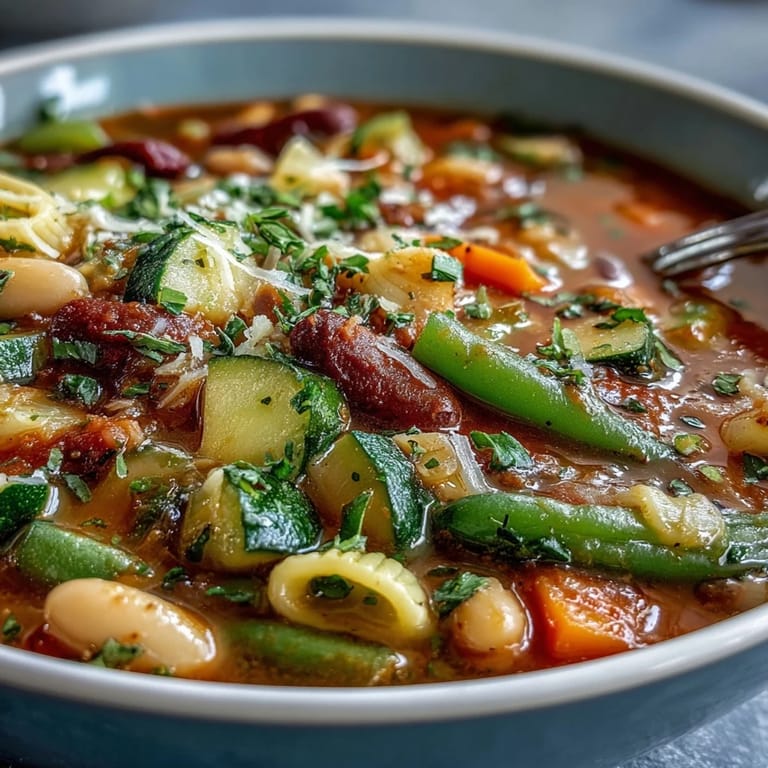 Save to Pinterest
 This soup has a way of turning a regular Tuesday into something that feels like you're doing right by yourself and anyone lucky enough to be sitting at your table. Make it, love it, and don't be afraid to make it completely your own.
Recipe Questions & Answers
- → What makes minestrone authentic?
Authentic minestrone features a base of soffritto—sautéed onions, carrots, and celery—plus tomatoes, beans, and pasta. The vegetables vary by season, making it a flexible, rustic dish that uses whatever's fresh from the garden.
- → Can I freeze this soup?
Yes, but freeze it before adding the pasta. Pasta becomes mushy when frozen and reheated. Store the soup base in freezer-safe containers for up to 3 months, then cook fresh pasta when reheating.
- → What pasta works best?
Small shapes like ditalini, elbow macaroni, or shells are ideal. They fit neatly on the spoon and hold the broth well. Gluten-free pasta works perfectly for dietary needs.
- → How do I make it richer?
Add a Parmesan rind while simmering for deep umami flavor. Remove it before serving. A splash of olive oil or extra fresh herbs at the end also elevates the dish.
- → Can I use different beans?
Absolutely. Borlotti, kidney, or chickpeas all work beautifully. Each brings slightly different texture and flavor while maintaining the hearty, satisfying character of the soup.