 Save to Pinterest
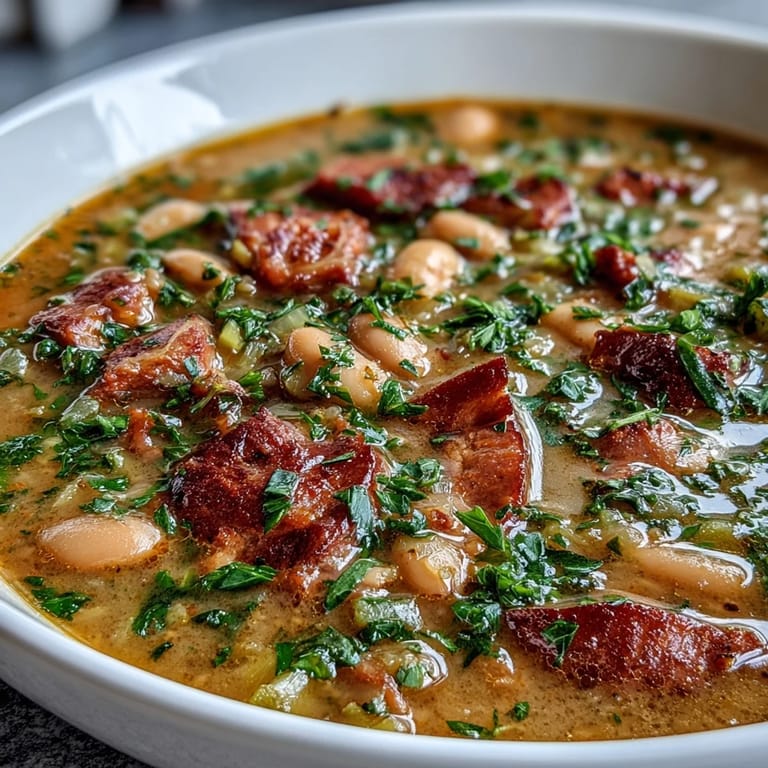
 My neighbor brought over a mason jar of her grandmother's ham and butter bean soup on a Tuesday afternoon when the weather had just turned cool, and I spent the next hour standing in my kitchen trying to reverse-engineer it by taste alone. There's something about that smoky-savory combination that makes you feel like you're wrapped in a warm blanket, and I knew I had to master it. The first time I made it, I forgot to soak the beans overnight and ended up simmering them for an extra hour, but somehow it worked out even better that way, with the beans almost melting into the broth.
I made this soup for my sister's book club once, and it turned into this unexpected moment where everyone stopped talking about their books entirely and just kept asking for seconds. One person actually asked if I'd added chicken stock instead of the broth, thinking the depth of flavor had to come from somewhere fancy, but it's really just the ham doing all the heavy lifting. That's when I realized this soup has a kind of quiet power to it.
Ingredients
- Smoked ham hock or diced ham (1 lb): The backbone of everything—the smoke and saltiness carries the entire soup, so don't skimp on quality or you'll taste the difference immediately.
- Dried butter beans (2 cups) or canned (3 cans, 15 oz each): Dried beans need overnight soaking but reward you with better texture, while canned beans work perfectly fine if you're short on time and honesty matters more than perfection.
- Yellow onion (1 large, diced): Builds the aromatic foundation along with carrots and celery, though if you only have half an onion, it'll still taste good.
- Carrots and celery (2 medium carrots, 2 stalks): These create the classic soup base that tastes like comfort, and their sweetness balances the saltiness of the ham.
- Garlic (3 cloves, minced): Added after the softer vegetables to prevent burning, it wakes up all the other flavors without being pushy about it.
- Chicken broth (8 cups): Low-sodium broth lets the ham season the soup naturally rather than fighting against existing salt.
- Water (2 cups): Dilutes the broth just enough so the soup tastes bright rather than heavy.
- Bay leaves (2), dried thyme, parsley, and chives: Fresh herbs stirred in at the end taste alive and make the soup feel intentional, not like it simmered for hours.
- Black pepper and salt: Taste as you go because the ham brings its own saltiness, and you don't want a surprise at the end.
Tired of Takeout? 🥡
Get 10 meals you can make faster than delivery arrives. Seriously.
One email. No spam. Unsubscribe anytime.
Instructions
- Soak your beans the night before (or skip this if using canned):
- Fill a bowl with cold water and drop in your dried butter beans, letting them sit overnight on the counter. The next morning, drain and rinse them thoroughly—this step prevents that bloated feeling that sometimes comes with beans.
- Build your flavor base:
- Heat a splash of oil in a large pot over medium heat and add diced onion, carrots, and celery. You're looking for that soft, slightly golden moment after about 5 to 7 minutes, which is when you'll smell something almost sweet rising from the pot.
- Wake up the garlic:
- Stir in your minced garlic and let it cook for about a minute until the rawness disappears and it smells almost sweet. Don't let it brown or it'll taste bitter.
- Add everything else and bring to life:
- Drop in your ham hock or diced ham, beans, broth, water, bay leaves, thyme, and black pepper. Bring it all to a boil, then immediately turn the heat down and let it simmer uncovered for about an hour (45 minutes if your beans came from a can).
- Shred your ham and meld the flavors:
- After simmering, remove the ham hock and let it cool slightly, then shred any meat clinging to the bone and return it to the pot. Fish out those bay leaves and discard them, then taste and adjust your salt and pepper.
- Finish with fresh herbs and serve:
- Stir in your parsley and chives right before serving so they taste bright and alive. Ladle into bowls and let everyone add hot sauce if they want a kick.
 Save to Pinterest
 There was this one evening when my kid came home sick from school and asked for this soup specifically, even though I'd only made it a handful of times. We sat at the kitchen table while it simmered, and they told me about their day between spoonfuls, and I realized this soup had somehow become part of our family story without me even noticing it happen. That's the kind of quiet magic this recipe holds.
The Beauty of Patient Cooking
This soup doesn't ask for speed or fancy techniques, just low heat and time. There's something meditative about letting a pot simmer while you move around your kitchen doing other things—checking on it occasionally, stirring now and then, letting the flavors find each other without interference. It's cooking without pressure, which feels increasingly rare and increasingly necessary.
When to Use Dried Beans vs. Canned
I've made this soup both ways and honestly they're both good, just different. Dried beans need planning and overnight soaking but they give you more control and a slightly firmer texture that some people prefer. Canned beans are a gift when you're short on time and they break down beautifully into the broth, making it feel creamier without any extra effort.
How This Soup Changes Over Time
The first night it's bright and flavorful and the beans still have some integrity. By the next day it's thicker and even more soulful, as if the flavors decided to get more intimate overnight. If you're planning to make this, honestly the leftovers might be better than the original, so don't be shy about cooking a big batch.
- Store it in an airtight container in the refrigerator for up to 4 days, and it reheats beautifully on the stove without losing anything.
- If the soup gets too thick after sitting, just add a splash of broth or water and it softens right back up.
- Freeze individual portions in containers so you can pull out comfort whenever you need it.
 Save to Pinterest
 This soup reminds us that good food doesn't need to be complicated, just honest and made with a little patience. It's the kind of meal that wraps around you like a hug.
Recipe Questions & Answers
- → Can I use canned butter beans instead of dried?
Yes, canned butter beans can be used to reduce cooking time. If using canned, rinse them well and adjust simmering to about 45 minutes to tenderize flavors.
- → What herbs best complement this dish?
Fresh parsley, chives, thyme, and bay leaves enrich the savory profile and add bright, aromatic notes to the slow-cooked medley.
- → Is it possible to make this dish gluten-free?
Absolutely. Ensure the ham and broth are certified gluten-free to keep the dish suitable for gluten-sensitive diets.
- → How can I make the soup creamier?
Mash some of the cooked butter beans directly in the pot for a thicker, creamier texture without adding dairy.
- → What are suitable side options to serve alongside?
Crusty bread pairs well, bringing texture contrast, while a crisp white wine or sweet iced tea complements the smoky and herbal notes.
- → Can I substitute smoked turkey for the ham?
Yes, smoked turkey is a lighter alternative that maintains a smoky depth while reducing the dish's richness.