 Save to Pinterest
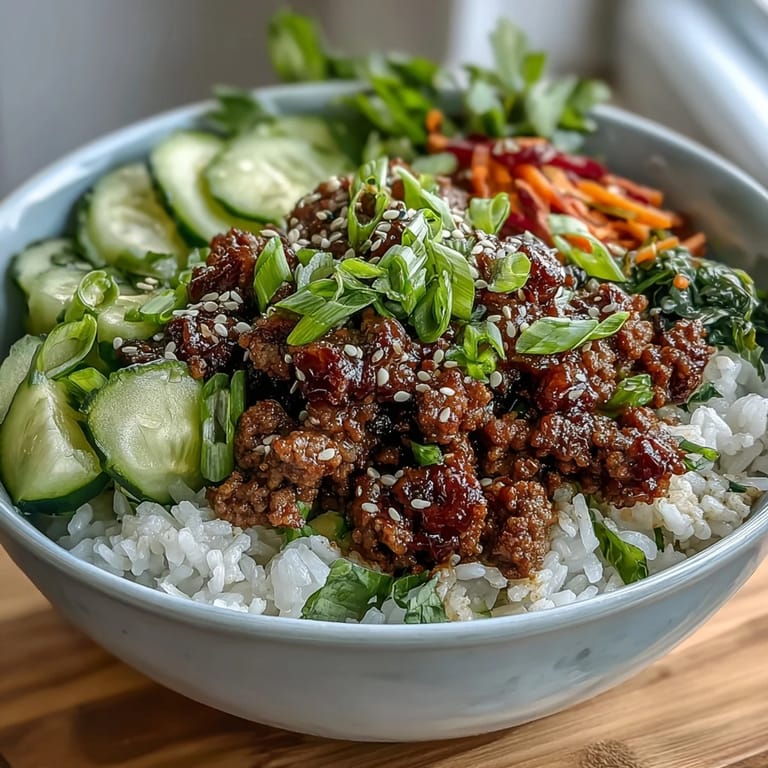
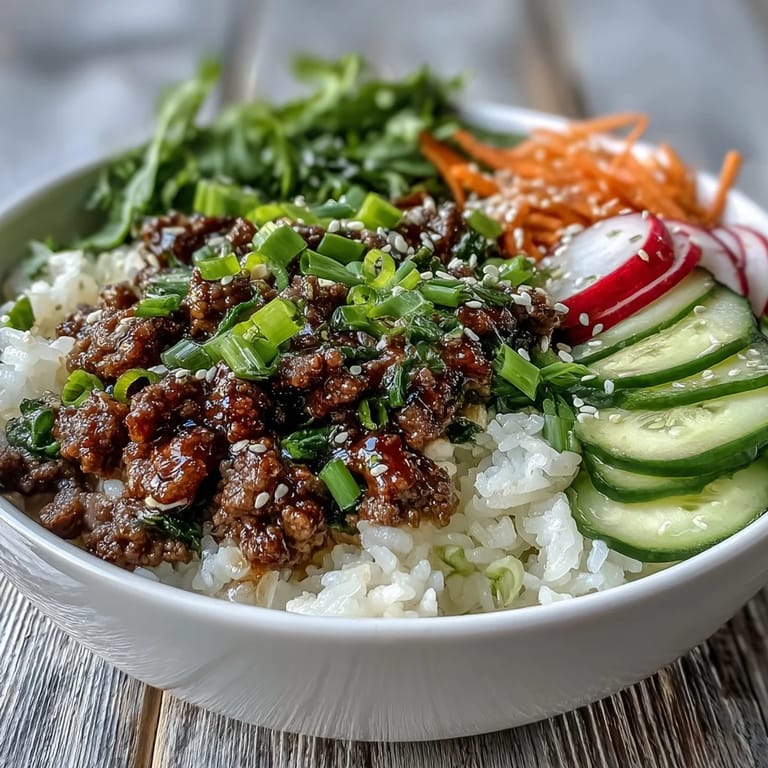
 My neighbor brought over a Korean beef bowl one Tuesday evening, and I watched her assemble it with such ease—the way she layered the warm rice, scattered the seasoned beef, and crowned it with those bright pickled vegetables felt like pure kitchen confidence. I had to know her secret, and what she shared that night wasn't complicated at all, just thoughtful proportions and a respect for balance. Now whenever I make this, I'm back in her kitchen, learning that sometimes the best dishes aren't about complexity but about letting each element shine.
I made this for my sister's potluck last month, and the way her kids devoured it—no complaints, no picking around—told me everything I needed to know. One of them even asked for the recipe to make at home, which honestly felt like winning the parent lottery. That's when I realized this bowl isn't just weeknight dinner; it's something people genuinely crave.
Ingredients
- Lean ground beef (500 g): Choose meat with a slight marbling; it browns better and stays tender rather than turning tough and crumbly.
- Soy sauce (2 tablespoons): The backbone of the flavor, though tamari keeps it gluten-free if that matters to your table.
- Toasted sesame oil (1 tablespoon): A little goes a long way—it's concentrated and aromatic, so don't skip the toasting step in your head.
- Brown sugar (1 tablespoon): This balances the salt and umami, rounding out the savory edges with a subtle warmth.
- Freshly grated ginger (2 teaspoons): Fresh is non-negotiable here; the ground stuff tastes flat by comparison and won't give you that bright zing.
- Garlic (3 cloves, minced): Mince it just before cooking so the volatile oils are still at their peak and the flavor stays sharp.
- Gochujang (1 teaspoon, optional): Korean chili paste adds depth and a gentle heat that sriracha can't quite replicate, but use what you have.
- Green onions (2, thinly sliced): Keep half for cooking and half for garnish so you get that fresh onion bite at the end.
- Sesame seeds (1 tablespoon): Toast them lightly in a dry pan first if you have time; it wakes up the nutty flavor.
- Jasmine or cauliflower rice (4 cups cooked): Jasmine rice is fluffy and absorbs the beef sauce beautifully, while cauliflower rice keeps it lighter.
- Rice vinegar (1/2 cup): The sharp, clean acidity that makes pickled vegetables sing—don't substitute with regular vinegar.
- Carrot, cucumber, and radish: Cut them thin and uniform so they pickle evenly and add that satisfying crunch to every spoonful.
Tired of Takeout? 🥡
Get 10 meals you can make faster than delivery arrives. Seriously.
One email. No spam. Unsubscribe anytime.
Instructions
- Quick Pickle Your Vegetables:
- Whisk rice vinegar, sugar, and salt together until the crystals dissolve completely, then pour over your julienned carrots, sliced cucumbers, and radish. Let them sit for at least fifteen minutes while you handle the beef—they'll soften slightly and soak up all that tangy flavor.
- Get Your Rice Ready:
- Follow your package instructions for jasmine or cauliflower rice, and keep it warm in the pot with the lid on so it stays fluffy and steaming when you're ready to serve.
- Brown the Beef:
- Heat a large skillet over medium-high heat and add the ground beef, breaking it into small pieces with your spoon as it cooks for about five to seven minutes until it's no longer pink and starting to brown at the edges. If there's excess fat pooling, pour some off—you want the beef seasoned, not swimming.
- Build the Sauce:
- Lower the heat slightly and stir in soy sauce, sesame oil, brown sugar, ginger, garlic, and gochujang if you're using it, letting everything cook together for two to three minutes until the kitchen smells absolutely intoxicating. This is when all those individual flavors marry into something cohesive and deeply savory.
- Finish with Fresh Elements:
- Remove from heat and fold in the sliced green onions and sesame seeds, tossing gently so everything is coated and nothing burns from the residual heat.
- Assemble Your Bowls:
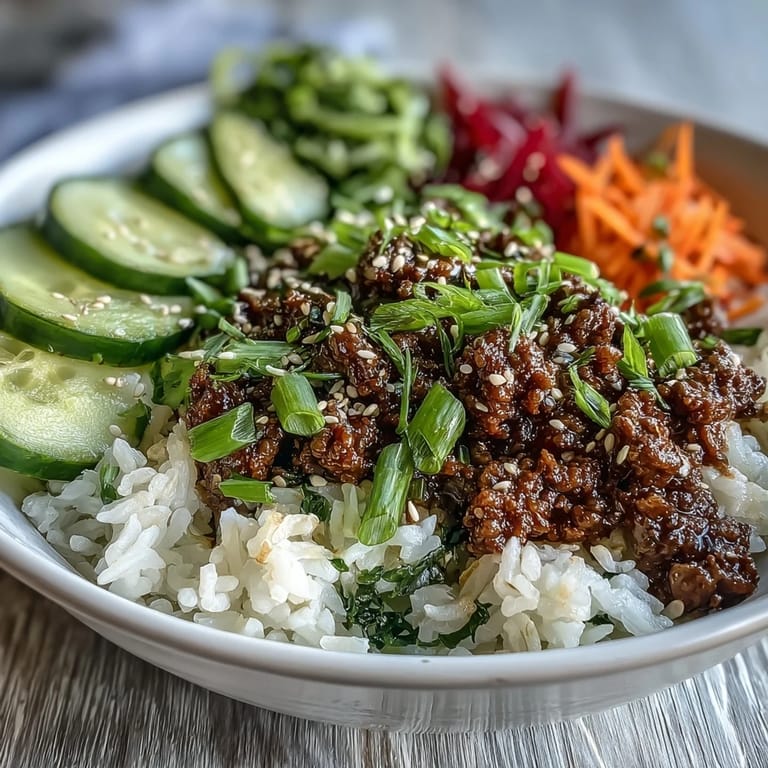
- Divide warm rice among bowls, spoon the seasoned beef over top, and pile on a generous handful of those pickled vegetables so every bite has contrast and brightness. Top with extra green onions and sesame seeds, then serve immediately while the rice is still steaming.
 Save to Pinterest
 There was an afternoon when my partner came home stressed from work, and I had this bowl on the table within forty minutes—no fancy techniques, just honest seasoning and fresh vegetables. Watching him slow down with each bite, shoulders relaxing, suddenly more present—that's when I understood why this became my go-to. It's the kind of meal that says you care without needing to say anything at all.
Why This Bowl Hits Different
There's something almost meditative about layering rice, beef, and pickles—you're building flavors that work together, not against each other. The warm base, the cool crunch of vegetables, the umami-rich meat in the middle—it's a conversation on a plate. Every element has a job, and when you respect that, the bowl becomes more than sustenance.
The Pickle Magic
Those quick pickled vegetables aren't just a topping; they're the hero keeping everything from feeling heavy or monotonous. The vinegar cuts through the richness of the beef, the crunch provides texture contrast, and honestly, they taste better the longer they sit. I've had leftover pickles last almost a week in the fridge, becoming even more flavorful as the days pass.
Making It Your Own
The beauty of this bowl is that it invites customization without losing its soul—swap proteins, adjust heat levels, choose your rice base. I've made it with ground turkey when beef wasn't on hand, added kimchi when I wanted more funk, and even topped it with a fried egg because sometimes you need that silky yolk breaking over everything. The core flavors stay strong enough that changes feel like variations, not compromises.
- For extra protein and richness, crown your bowl with a fried or soft-boiled egg that runs into the warm rice.
- Keep gochujang out of the initial cooking if heat-sensitive eaters are at your table, and let them add their own sriracha or hot sauce.
- Make the pickles a day ahead if you want more developed flavor and better texture—they actually improve overnight.
 Save to Pinterest
 This bowl has become my answer to the question what's for dinner when I want something that feels special but doesn't demand hours in the kitchen. It's honest food that respects your time while nourishing your body and soul.
Recipe Questions & Answers
- → Can I make this bowl ahead of time?
Yes, the seasoned beef and pickled vegetables can be prepared up to 3 days in advance. Store them separately in airtight containers in the refrigerator. Reheat the beef gently and assemble with freshly cooked rice when ready to serve.
- → What protein alternatives work well?
Ground turkey or chicken make excellent lighter substitutes. For a vegetarian version, crumbled firm tofu or tempeh absorbs the savory flavors beautifully. Adjust cooking time slightly as plant-based proteins may need less time to brown.
- → How spicy is this dish?
The base version has mild heat from aromatics. Add gochujang or sriracha to taste for more spice. Start with ½ teaspoon and adjust according to your preference. The pickled vegetables provide a cooling balance.
- → Can I use different vegetables for pickling?
Absolutely. Try thinly sliced red bell pepper, daikon radish, or even snap peas. The quick pickling liquid works well with any crisp vegetable that can be sliced thinly. Just maintain the same pickling time.
- → Is cauliflower rice a good substitute?
Cauliflower rice creates an excellent low-carb version that absorbs the savory beef juices. It reduces carbohydrates significantly while maintaining the bowl experience. Cook until just tender to avoid mushiness.