 Save to Pinterest
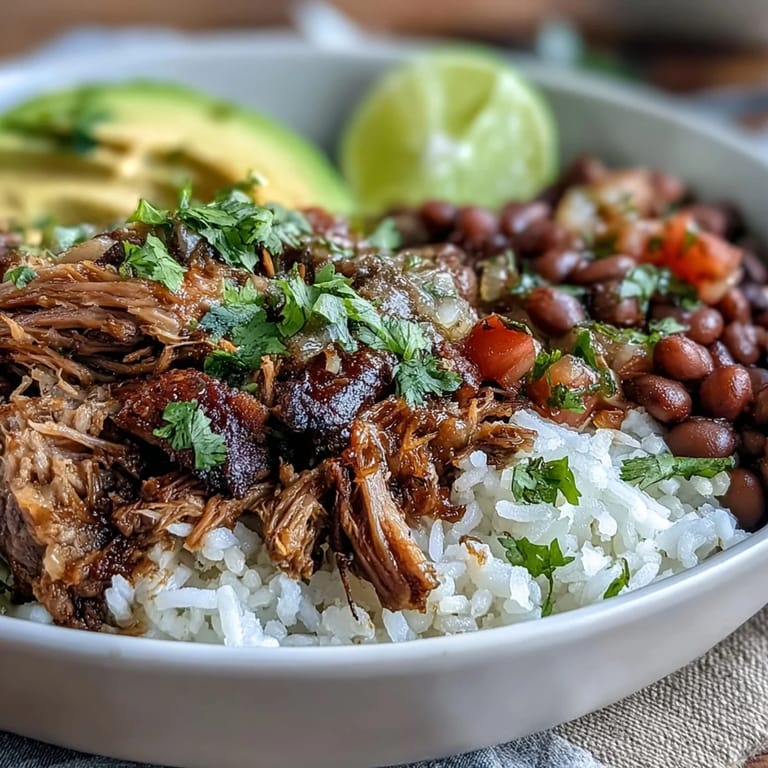
 My friend Marcus showed up one Saturday afternoon with a container of carnitas his grandmother had made, and I watched him layer it into a bowl with such care—rice first, then beans, then those golden shreds of pork that fell apart at the slightest touch. He drizzled lime juice over everything and took that first bite with a satisfied smile that made me realize right then I needed to learn how to make this. Now it's become my go-to meal when I want something that feels both comforting and alive, something I can build exactly how I'm craving it that day.
I made this for a group of coworkers during a potluck, and honestly wasn't sure if slow cooker food would impress anyone, but something about watching people return for seconds—and asking for the recipe—made me realize this dish has real magic. There's something about serving food that invites people to customize it exactly how they want that brings everyone together in a way fancier cooking sometimes doesn't.
Ingredients
- Pork shoulder, boneless and cut into large chunks: This cut has just enough fat to become incredibly tender through slow cooking, and the chunks stay intact rather than falling apart into shreds before you want them to.
- Salt and freshly ground black pepper: These aren't just seasoning—they're the foundation that lets everything else shine through without tasting flat.
- Ground cumin and dried oregano: These warm spices are what make carnitas taste like carnitas, and they build flavor gradually as the pork cooks low and slow.
- Smoked paprika: A half teaspoon adds depth and a subtle smokiness that makes people ask what the secret ingredient is.
- Garlic and onion: These create an aromatic base while the pork cooks, and they soften into the broth so nothing goes to waste.
- Orange juice and lime juice: The acidity cuts through the richness of the pork and keeps everything tasting bright and balanced rather than heavy.
- Low-sodium chicken broth: This becomes infused with all the pork's flavors and creates a beautiful sauce you'll want to spoon over everything.
- Long-grain white rice: Fluffy rice provides the perfect neutral base that lets the seasoned carnitas take center stage.
- Pinto beans: They add earthiness and fiber, and reheating them with cumin and chili powder makes them taste like they were simmered for hours.
- Fresh tomato salsa, ripe avocado, and cilantro: These final layers bring brightness and creaminess that transform the bowl from warm to vibrant.
Tired of Takeout? 🥡
Get 10 meals you can make faster than delivery arrives. Seriously.
One email. No spam. Unsubscribe anytime.
Instructions
- Prep and layer your slow cooker:
- Combine the pork chunks with salt, pepper, cumin, oregano, paprika, minced garlic, and chopped onion—really coat everything evenly so the spices reach every surface. Pour in the orange juice, lime juice, and chicken broth, which will become your cooking liquid and later your sauce.
- Let time do the work:
- Cover and cook on low for 8 hours (or high for 4 hours if you're in a hurry), until the pork is so tender a fork slides through it without resistance. The kitchen will smell incredible, and you'll find yourself checking on it multiple times just because.
- Shred and optionally crisp:
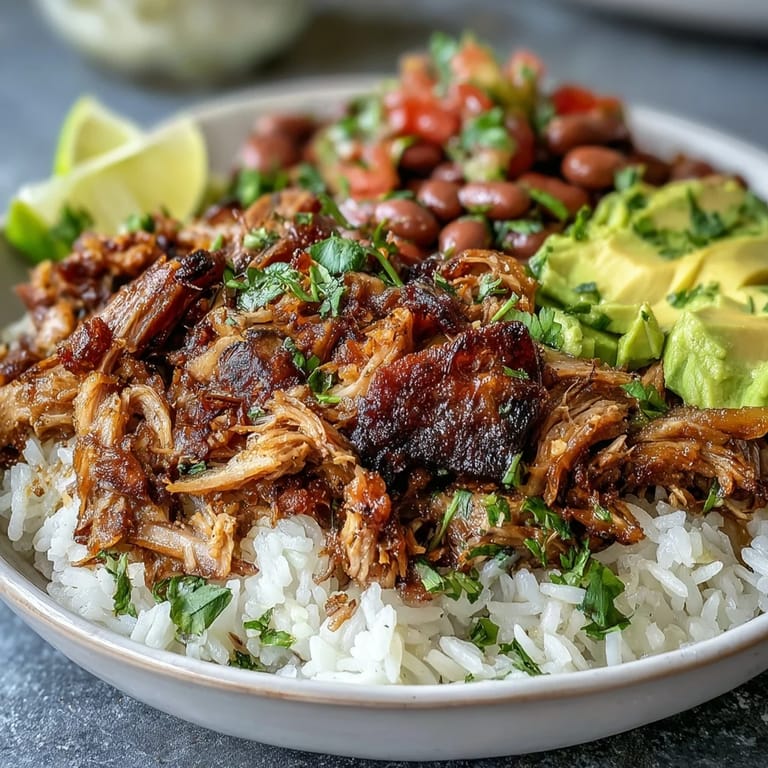
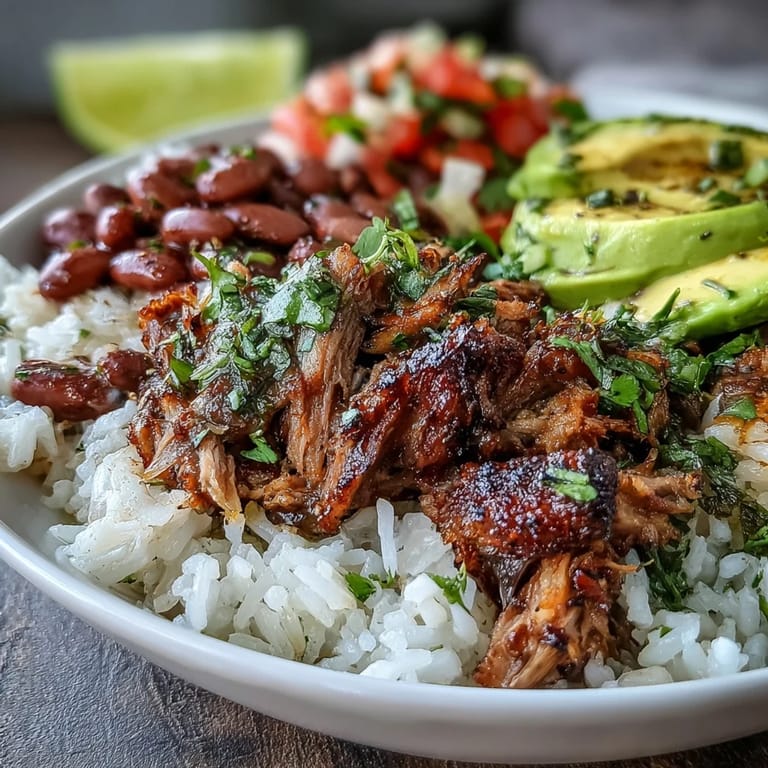
- Using two forks, pull the pork apart into those classic tender shreds right in the slow cooker. If you want crispy, caramelized edges (which I always do), spread the shredded pork on a baking sheet and broil for 5-7 minutes until the edges brown and crisp up slightly.
- Cook rice while the pork finishes:
- Rinse rice under cold running water until the water runs clear—this removes excess starch and helps each grain stay separate and fluffy. In a medium saucepan, combine rinsed rice, water, and salt, bring to a boil, then cover, reduce heat to low, and let it simmer untouched for 15 minutes.
- Rest the rice for perfect texture:
- Remove from heat and let it sit covered for 5 minutes—this final rest allows the steam to finish cooking the bottom layer without drying anything out. Fluff gently with a fork and your rice is ready.
- Warm the beans with flavor:
- In a small saucepan, combine drained pinto beans with ground cumin, chili powder, and a quarter cup of water. Simmer over medium heat for 5-7 minutes, stirring occasionally, until heated through and the spices have infused throughout.
- Assemble your bowls:
- Divide the fluffy rice evenly among four bowls as your base, then layer on the warm beans and as much carnitas as you want. Top with fresh salsa, avocado slices, and cilantro, then serve with lime wedges so people can add brightness to taste.
 Save to Pinterest
 What surprised me most was how this bowl became the meal I'd make when I wanted to feel accomplished without spending hours at the stove—the slow cooker does almost everything while I go about my day. Then at dinner, I get to play chef again during assembly, choosing exactly what each bowl needs, which somehow feels more satisfying than cooking could ever be.
Building Your Perfect Bowl
The beauty of carnitas bowls is that they're endlessly customizable once you have the components ready. One night I'll make mine heavily loaded with avocado and cilantro, another night I'll go light on toppings and heavy on the citrus, and both are equally delicious. This flexibility also means the recipe scales beautifully—make extra carnitas and you can assemble four completely different bowls for four different people without any extra effort.
Making It Ahead
Carnitas actually improve when made a day or two early, as the flavors deepen and the pork becomes even more tender through time. You can store the shredded pork in its cooking liquid in the refrigerator, then reheat it gently in a skillet before assembling bowls—this is exactly how restaurant kitchens handle it. Rice and beans also keep beautifully for a few days, so you can truly assemble these bowls with minimal fuss on a busy weeknight.
Customization and Variations
This recipe is forgiving in the best ways, and I've played with it endless times to match what I have on hand or what I'm craving. Try adding pickled red onions for sharp acidity, a dollop of sour cream for cool richness, or jalapeños if you want heat—the carnitas and rice provide such a solid foundation that almost anything works. You can also swap brown rice or quinoa if you want whole grains, or substitute roasted vegetables for the pork when cooking for vegetarian friends without losing the essence of what makes these bowls so satisfying.
- Experiment with different salsas, from corn-based to mango, to keep things interesting.
- Add black beans alongside or instead of pinto beans for a different flavor profile.
- Finish with a squeeze of lime or a pinch of fleur de sel to brighten everything at the very last moment.
 Save to Pinterest
 This bowl has become my answer to so many different occasions—quick weeknight dinner, meal prep for the week ahead, impressive dish to share with guests. There's something deeply satisfying about building something layered and thoughtful that tastes like you spent all day cooking, when really you just let time and low heat do the heavy lifting.
Recipe Questions & Answers
- → Can I make carnitas in advance?
Yes, carnitas reheat beautifully. Store in an airtight container in the refrigerator for up to 4 days or freeze for longer storage.
- → What cuts of pork work best?
Boneless pork shoulder (also called Boston butt) is ideal due to its marbling. The fat renders during slow cooking, creating tender, flavorful meat that shreds easily.
- → How do I get crispy carnitas?
After shredding the cooked pork, spread it on a baking sheet and broil for 5-7 minutes. This creates crispy, caramelized edges while keeping the interior moist.
- → Can I use a different protein?
While traditional carnitas use pork, you can substitute with jackfruit for a vegetarian option or chicken thighs for a lighter variation with similar preparation.
- → What other toppings work well?
Pickled red onions, sour cream, shredded cheese, radish slices, jalapeños, or a drizzle of chipotle crema all complement the flavors beautifully.
- → Is this bowl gluten-free?
Yes, when using gluten-free broth and checking labels on canned beans, this bowl is naturally gluten-free and suitable for those with gluten sensitivities.