 Save to Pinterest
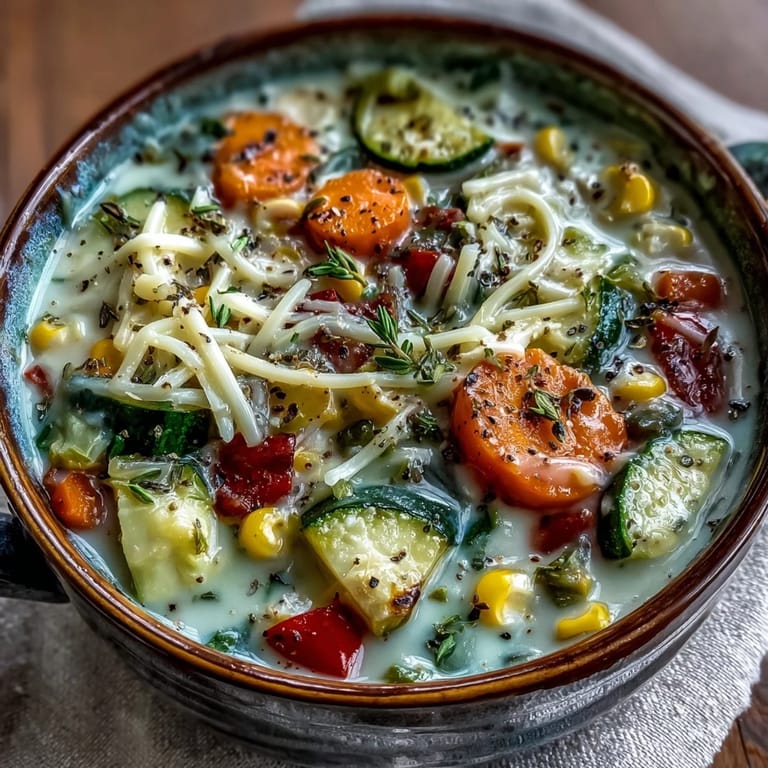
 There's something about a pot of creamy soup simmering on the stove that makes everything feel okay. I discovered this particular combination quite by accident one chilly Wednesday when I was trying to recreate two soups I loved but couldn't choose between—a vegetable chowder and a garlic Parmesan number I'd had at a dinner party. Instead of deciding, I just threw together the best parts of both, added an embarrassing amount of cheese, and watched it transform into something my family asked for again and again. That first bowl, with its silky cream coating my spoon and the cheese stretching between me and the bowl, felt like I'd figured out something important.
My neighbor came over on a rainy afternoon when she was feeling under the weather, and I made this soup without thinking twice about it. She sat at my kitchen counter and ate three bowls while we talked about nothing important, and I realized this was the kind of meal that bridges the gap between cooking for yourself and actually caring for someone. The steam rose up and fogged her glasses, and she smiled at me over the rim of her spoon in a way that made the whole recipe feel worthwhile.
Ingredients
- Unsalted butter and olive oil: The butter brings richness while the oil keeps the pan from scorching—together they create the perfect base for toasting your aromatics without burning them.
- Yellow onion, garlic, carrots, celery, and red bell pepper: This is your flavor foundation, and don't skip the bell pepper because its sweetness balances the earthiness of the other vegetables.
- Zucchini, Yukon gold potato, corn, and peas: These add texture and substance—the potato especially thickens the soup naturally as it breaks down.
- Vegetable broth: Quality matters here more than you'd think; a good broth tastes like something was actually simmered for hours.
- Whole milk and heavy cream: Use both, not one or the other—the milk lightens it slightly while the cream gives you that luxurious mouthfeel.
- Freshly grated Parmesan and shredded mozzarella: This is non-negotiable; pre-shredded cheese has additives that prevent proper melting and stretching.
- Dried thyme, oregano, smoked paprika, black pepper, salt, and cayenne: These seasonings build depth—the smoked paprika especially adds a subtle sophistication that makes people ask what's in this.
- All-purpose flour: This is your thickener and it also helps the cream incorporate smoothly, preventing any graininess.
Tired of Takeout? 🥡
Get 10 meals you can make faster than delivery arrives. Seriously.
One email. No spam. Unsubscribe anytime.
Instructions
- Heat your fat and start with onions:
- In a large soup pot, melt the butter with olive oil over medium heat, then add your diced onion and let it go soft and translucent for about three minutes. You're not rushing this—you want the onion to release its sweetness, which becomes the subtle backbone of everything else.
- Build your aromatic base:
- Stir in the minced garlic and let it bloom for just a minute until your kitchen smells incredible. This is when you know you're on the right track.
- Add your harder vegetables:
- Throw in the carrots, celery, and bell pepper and let them soften for about five minutes, stirring occasionally so nothing sticks to the bottom. You want them to start releasing their flavors into the butter.
- Layer in the rest of the vegetables:
- Add the zucchini, potato, corn, and peas, then sprinkle the flour over everything and stir it around for two minutes. This cooking step removes the raw flour taste and helps create that silky texture.
- Pour in your liquid carefully:
- Gradually add the vegetable broth while stirring constantly—this prevents lumps from forming and creates a smooth base. Stir in all your seasonings at this point.
- Simmer until everything is tender:
- Bring the soup to a boil, then drop the heat to low, cover it, and let it bubble gently for fifteen to twenty minutes until the potatoes are fork-tender. You can walk away here, but stir it once in a while if you're thinking about it.
- Introduce the dairy and cheese:
- Stir in the milk and heavy cream, heating the soup through but never letting it boil—boiling can cause the cream to break. Add your Parmesan and mozzarella a handful at a time, stirring until each addition melts completely into those gorgeous stretchy strands.
- Taste and adjust:
- Before you serve it, have a spoonful and decide if it needs more salt, pepper, or a whisper of cayenne for heat. You're the only one who knows what your palate wants.
 Save to Pinterest
 My daughter asked for this soup before every school day for an entire month, which meant I learned to prep the vegetables the night before and just coast through the actual cooking in the morning while she ate breakfast at the counter. There's something quiet and connected about feeding someone something warm when they're about to face their day, and this soup became our small ritual before the door closed behind her.
The Cheese Question
People always ask if they really need both Parmesan and mozzarella, and the honest answer is that Parmesan brings sharpness and umami while mozzarella provides the stretchy texture everyone loves. If you only have one, use two cups of it, but you'll lose something—the complexity of having both cheeses working together is where the magic lives. The mozzarella also prevents the Parmesan from making the soup taste too sharp and salty.
Making It Your Own
This soup is a canvas, and you can absolutely paint it with whatever vegetables you have on hand or love most. I've made it with broccoli, cauliflower, green beans, spinach, and even roasted Brussels sprouts, and each version tells a different story depending on what was in my crisper drawer that week. The bones of the recipe stay the same—fat, aromatics, vegetables, broth, cream, cheese—but the personality changes based on what you choose to highlight.
Serving and Storage Wisdom
This soup is best served immediately while the cheese is still at its stretchiest and the vegetables hold their shape, though it also reheats beautifully the next day—just add a splash of broth or milk when you warm it because the soup thickens as it sits. I always serve it with crusty bread for soaking up every last drop, and a small green salad on the side feels like the perfect counterpoint to all that richness.
- Store it in an airtight container in the refrigerator for up to four days, though it tastes best within the first two.
- Freeze it without the cheese, then add freshly melted cheese when you reheat it for better texture.
- A pinch of fresh parsley or chives stirred in at the end adds brightness that cuts through the heaviness in the best way.
 Save to Pinterest
 This soup has become the thing I make when I want to say I care without saying much at all. It's familiar enough to feel like home and fancy enough that it tastes like you tried, which is really what comfort food should be.
Recipe Questions & Answers
- → Can I make this soup ahead of time?
Absolutely. This soup actually tastes better the next day as flavors meld together. Store in the refrigerator for up to 4 days and reheat gently over medium-low heat, adding a splash of milk or broth if needed to restore consistency.
- → What vegetables work best in this chowder?
The recipe calls for carrots, celery, bell pepper, zucchini, potato, corn, and peas, but you can substitute based on what's in season. Green beans, butternut squash, or chopped kale also work wonderfully in this creamy base.
- → How do I prevent the cheese from separating?
Add the cheeses when the soup is hot but not actively boiling. High heat can cause dairy to separate. Stir constantly until fully melted and remove from heat once incorporated. The flour also helps stabilize the creamy texture.
- → Can I freeze this soup?
Freezing is possible but may slightly alter the creamy texture. For best results, cool completely before freezing in airtight containers for up to 3 months. Thaw overnight in the refrigerator and reheat gently, stirring in a splash of fresh cream to restore silkiness.
- → What can I serve with this soup?
Crusty bread, garlic knots, or warm dinner rolls are perfect for soaking up the cheesy broth. A crisp green salad with vinaigrette balances the richness, or serve alongside grilled cheese sandwiches for the ultimate comfort meal.
- → How do I make this gluten-free?
Simply replace the all-purpose flour with a 1:1 gluten-free flour blend or cornstarch. Whisk the thickener into the broth separately before adding to avoid lumps. Ensure your vegetable broth and cheeses are certified gluten-free as well.