 Save to Pinterest
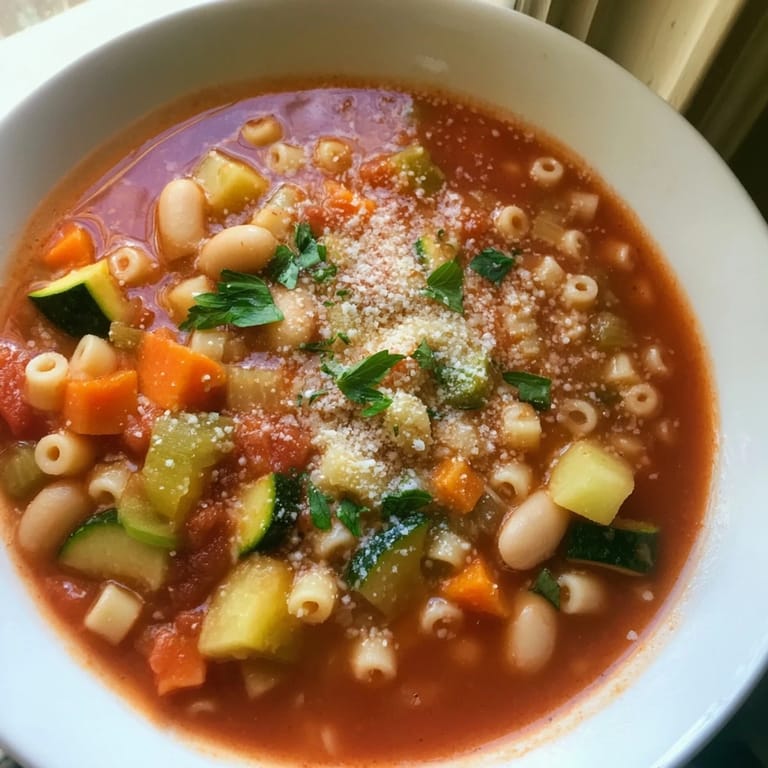
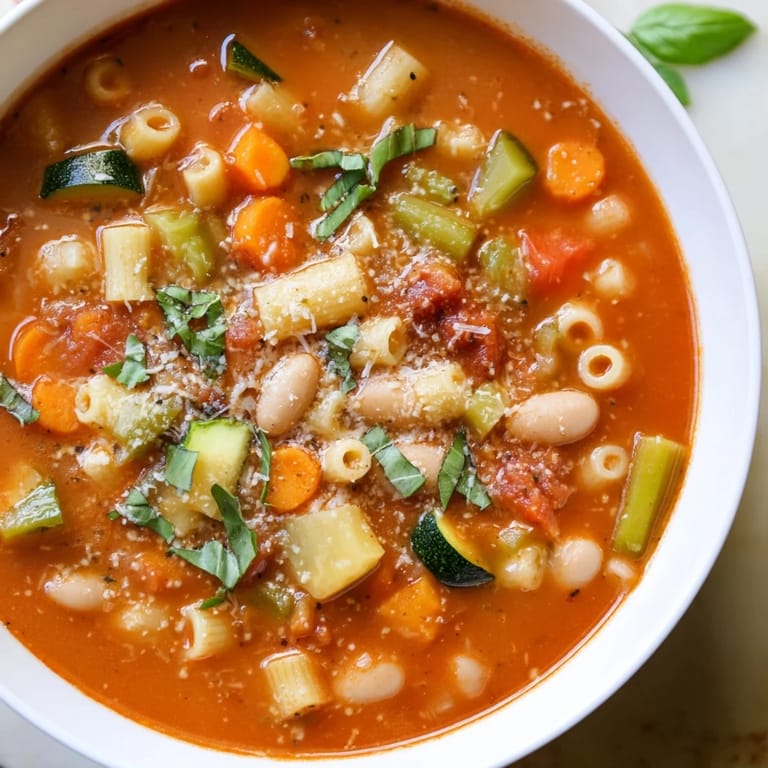
 The first time I made minestrone, my tiny apartment filled with such incredible aromas that my neighbor actually knocked on my door to ask what I was cooking. That's when I understood why this soup has been feeding Italian families for generations—it turns simple vegetables into something magical. I've since learned that minestrone isn't really about following a strict recipe at all. It's about using whatever vegetables look freshest at the market and letting them simmer into something greater than the sum of their parts.
Last winter, when my sister came down with a terrible flu, I brought her a container of this minestrone. She texted me two hours later saying it was the first thing she'd actually wanted to eat in days. There's something about this combination of vegetables, beans, and pasta that feels like a hug in a bowl. I've started doubling the recipe whenever I make it now, just so I can share it with people who need a little comfort.
Ingredients
- 2 tablespoons olive oil: This creates the foundation for sautéing your vegetables and adds that beautiful Mediterranean richness
- 1 medium onion, finely chopped: The aromatic base that builds incredible depth as it cooks down
- 2 cloves garlic, minced: Add this right after the onion so it mellows into sweet fragrance rather than burning
- 2 medium carrots, diced: These bring natural sweetness that balances the tomatoes beautifully
- 2 celery stalks, diced: Essential for that classic soup base flavor profile
- 1 medium zucchini, diced: Holds its shape perfectly and absorbs all the herbs as it simmers
- 1 medium potato, peeled and diced: The secret ingredient that gives the soup body and makes it feel substantial
- 1 cup green beans, cut into 1-inch pieces: Add a lovely texture contrast and keep their pleasant bite
- 1 (14 oz / 400 g) can diced tomatoes, with juices: The acidic backbone that ties everything together
- 4 cups (1 liter) vegetable broth: Use a good quality one you'd happily drink on its own
- 2 cups water: This prevents the broth from becoming too intense as it reduces
- 1 (15 oz / 425 g) can cannellini beans, drained and rinsed: Creamy and mild, they make this soup satisfying without being heavy
- 3/4 cup small pasta: Ditalini or elbow macaroni works perfectly to catch all the flavorful broth
- 1 teaspoon dried oregano: That quintessential Italian herb that makes everything taste like an Italian grandmother's kitchen
- 1 teaspoon dried basil: Sweet and peppery, it complements the fresh basil added at the end
- 1 bay leaf: The quiet workhorse that adds subtle depth while simmering
- Salt and freshly ground black pepper, to taste: Taste as you go—the vegetables need different amounts at different stages
- 1/4 cup chopped fresh parsley: Adds bright freshness right at the end to wake everything up
- 2 tablespoons chopped fresh basil (optional): If you have it, this makes such a difference in the final flavor
- Freshly grated Parmesan cheese (optional): The perfect finishing touch that adds salty richness
Tired of Takeout? 🥡
Get 10 meals you can make faster than delivery arrives. Seriously.
One email. No spam. Unsubscribe anytime.
Instructions
- Build your aromatic foundation:
- Heat olive oil in a large pot over medium heat. Add onion and garlic, sauté for 2–3 minutes until fragrant and translucent.
- Soften all your vegetables:
- Add carrots, celery, zucchini, potato, and green beans. Sauté for 5–6 minutes until slightly softened.
- Create the soup base:
- Stir in diced tomatoes with their juices, vegetable broth, and water. Add dried oregano, dried basil, bay leaf, salt, and pepper. Bring to a boil.
- Let the flavors develop:
- Reduce heat to a simmer, cover, and cook for 15 minutes. The vegetables should be starting to get tender.
- Add the hearty elements:
- Add cannellini beans and pasta. Continue to simmer, uncovered, for 10–12 minutes, or until pasta and vegetables are tender.
- Finish with fresh herbs:
- Remove and discard the bay leaf. Stir in fresh parsley and basil. Adjust seasoning as needed.
- Serve it up:
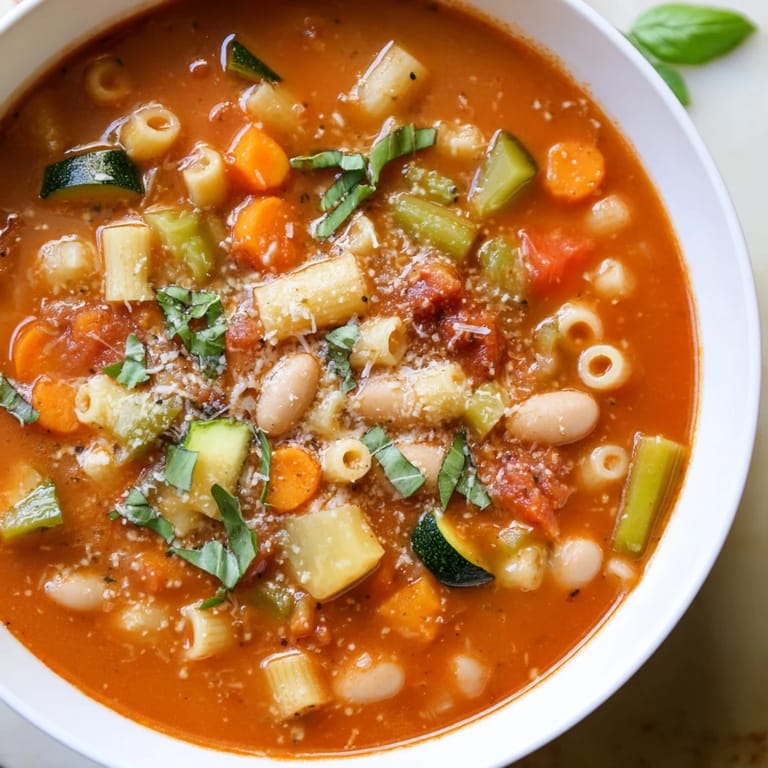
- Ladle into bowls and garnish with grated Parmesan cheese, if desired. Serve hot.
 Save to Pinterest
  Save to Pinterest
 This soup has become my go-to when friends need comforting, but it's also become a Tuesday night staple when I want something nourishing but not heavy. There's something about the process of chopping all those colorful vegetables that feels meditative, like I'm preparing a edible hug for everyone who'll eat it.
Making It Your Own
The beauty of minestrone is its flexibility. I've made it with spinach in spring, cabbage in winter, and whatever odd vegetables arrived in my CSA box. The key is keeping the total volume of vegetables roughly the same and adjusting the cooking time based on what you're using.
The Perfect Pasta Choice
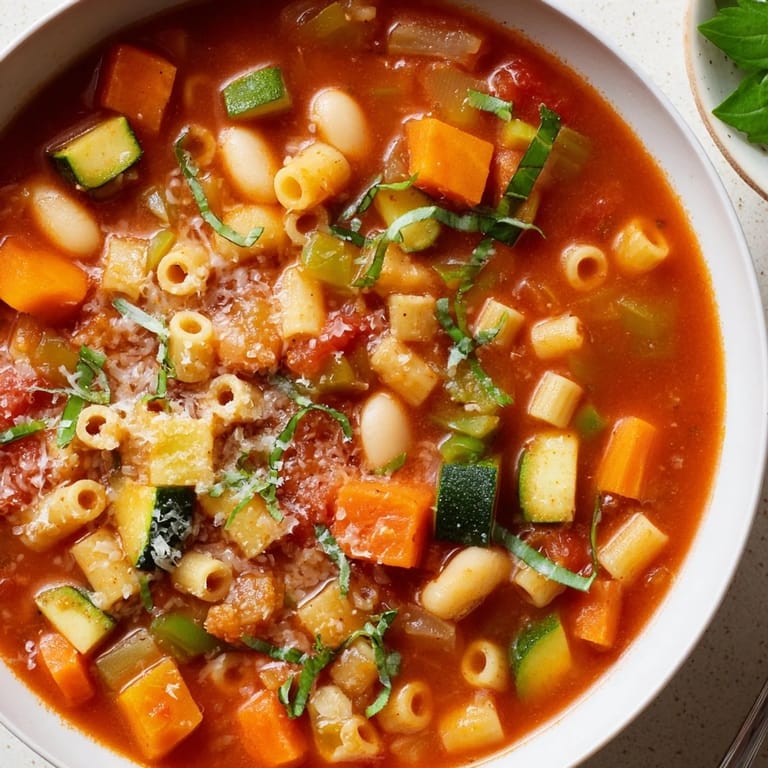
Small shapes really do work best here because they scoop up easily with every spoonful. I keep several different shapes in my pantry just for this soup. Ditalini, elbows, and even broken spaghetti pieces all create that perfect slurp-worthy experience.
Serving Suggestions
A hunk of crusty bread is non-negotiable for mopping up the bottom of the bowl. I like to rub my bread with a cut garlic clove before toasting it—the extra garlic flavor makes every bite incredible.
- Let everyone grate their own Parmesan at the table
- Drizzle with really good olive oil before serving
- Keep red pepper flakes handy for those who like heat
 Save to Pinterest
  Save to Pinterest
 There's something deeply satisfying about a soup that can feed a crowd, comfort a friend, and still taste better the next day. I hope this minestrone finds its way into your regular rotation too.
Recipe Questions & Answers
- → What vegetables work best in minestrone?
Traditional options include carrots, celery, zucchini, potatoes, and green beans. You can also add spinach, kale, or cabbage based on seasonality and preference.
- → Can I make minestrone ahead of time?
Absolutely. This soup actually tastes better the next day as flavors meld. Store in the refrigerator for up to 4 days, adding fresh herbs when reheating.
- → What pasta shapes are traditional?
Ditalini, elbow macaroni, or small shells work beautifully. The small shapes catch in your spoon with every bite for the perfect texture.
- → Is minestrone suitable for freezing?
Yes, though it's best to freeze without the pasta. Cook fresh pasta when reheating to prevent it from becoming mushy. Freezes well for up to 3 months.
- → How do I make a vegan version?
Simply omit the Parmesan garnish or use a plant-based alternative. The soup itself is naturally vegan and full of protein from the cannellini beans.
- → What can I serve with minestrone?
Crusty Italian bread is perfect for soaking up the flavorful broth. A simple green salad and glass of Chianti complete the meal beautifully.