 Save to Pinterest
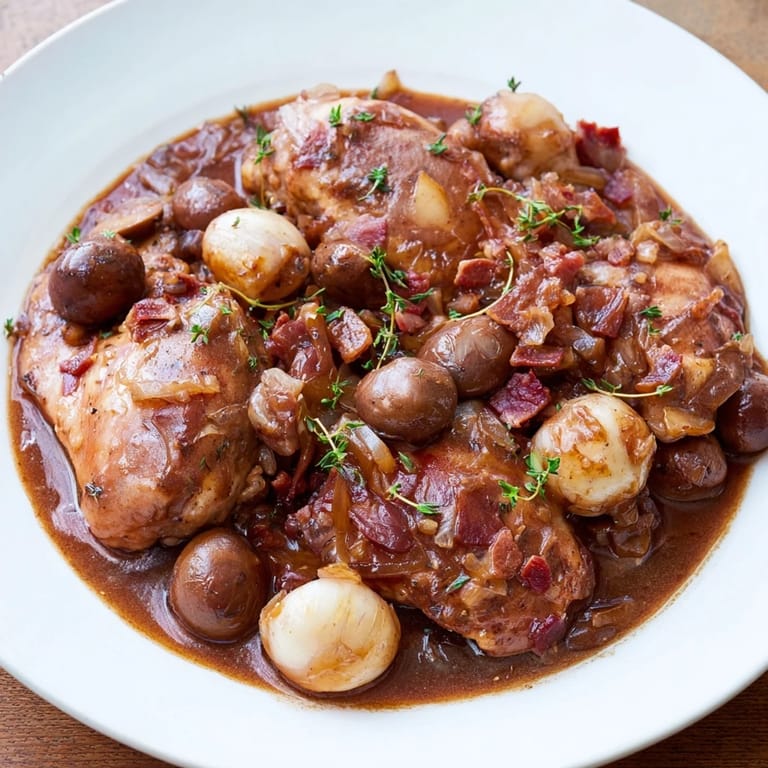
 There's something about the smell of bacon crisping in a heavy pot that immediately transports you somewhere European, somewhere slower. I discovered coq au vin almost by accident—my mother had mentioned it once over dinner, and years later, I found myself standing in a kitchen on a chilly autumn evening, determined to recreate that story she'd never quite finished telling. The first time I made it, I burned the mushrooms and forgot the thyme, yet somehow the dish was still extraordinary. That night taught me that coq au vin isn't really a recipe to perfect; it's a conversation between you, the chicken, and the wine.
I made this for a dinner party once when I was trying too hard to impress, but what actually happened was more honest and lovely. My best friend arrived early, and we ended up in the kitchen talking through the whole process—tasting the wine, debating mushroom sizes, laughing when I nearly dropped the Dutch oven. By the time everyone sat down, the food felt less like a performance and more like evidence of a good afternoon together.
Ingredients
- 1 whole chicken (about 1.5 kg), cut into 8 pieces: Use bone-in, skin-on pieces—they hold their shape and create a silkier sauce as they braise. A sharp knife and confidence make this prep quick.
- 150 g smoked bacon or pancetta, diced: The bacon is your flavor foundation, so don't skip it or swap it for something mild. Dice it yourself if you can; the quality matters.
- 200 g pearl onions, peeled: These stay almost whole during cooking and add gentle sweetness. Blanch them briefly in boiling water first if peeling feels tedious—it softens the papery layers.
- 250 g cremini or button mushrooms, cleaned and quartered: Cremini mushrooms have more depth than white buttons. Clean them with a damp cloth rather than rinsing; they'll brown better.
- 2 medium carrots, sliced: Cut them on a slight bias so they cook evenly and look intentional on the plate.
- 2 garlic cloves, minced: Fresh garlic makes a noticeable difference here. Don't mince it too far in advance or it loses its punch.
- 750 ml dry red wine (e.g., Burgundy or Pinot Noir): This isn't about expensive wine, but it should be something you'd actually drink. Avoid anything labeled "cooking wine."
- 250 ml chicken stock: Homemade tastes better, but quality store-bought works perfectly.
- 2 tbsp tomato paste: This anchors the sauce's depth without making it taste tomatoey.
- 2 tbsp all-purpose flour: The flour thickens the sauce gently as everything braises together.
- 2 tbsp olive oil, plus 1 tbsp more for the mushrooms: Use olive oil you like the taste of; it'll be present in the final dish.
- 2 tbsp unsalted butter: For sautéing the mushrooms separately, so they get proper color.
- 2 bay leaves and 4 sprigs fresh thyme: These herbs simmer quietly in the background, adding complexity without announcing themselves. Remove them before serving or guests will find them in their bowls.
- Salt and freshly ground black pepper: Season in layers—at the start, and again at the end when you can taste what you've actually made.
Tired of Takeout? 🥡
Get 10 meals you can make faster than delivery arrives. Seriously.
One email. No spam. Unsubscribe anytime.
Instructions
- Prepare and season the chicken:
- Pat your chicken pieces dry—this is the unglamorous step that makes all the difference for browning. Season generously with salt and pepper on both sides, then set them aside while you organize everything else. Mise en place might sound fancy, but it really just means not panicking halfway through.
- Crisp the bacon:
- Heat a large Dutch oven over medium heat with 1 tbsp olive oil. Add the diced bacon and let it cook slowly until the edges curl and the fat starts rendering into the pot. This bacon fat is liquid gold for flavor, so resist the urge to rush it.
- Brown the chicken in batches:
- Once the bacon is crisp, remove it to a plate and increase the heat slightly. Working in batches so you don't overcrowd the pot, place chicken pieces skin-side down and let them sit undisturbed for a few minutes. They'll stick at first, then release naturally—that's when they're ready to turn. Brown them thoroughly on all sides until the skin is golden.
- Sauté the vegetables:
- With the chicken removed, add your carrots, pearl onions, and minced garlic to the pot. Stir occasionally for about 5 minutes until they soften slightly and the onions start to turn translucent. The kitchen will smell incredible.
- Build the sauce base:
- Stir in the tomato paste and flour, letting them cook for about 1 minute. This brief cooking blooms the tomato flavor and removes any raw flour taste. Don't be alarmed if it looks thick and paste-like; the wine is about to transform it.
- Bring everything together:
- Return the chicken and bacon to the pot. Pour in the red wine and chicken stock, then add the bay leaves and thyme. Use a wooden spoon to scrape up all the browned bits stuck to the bottom—that's the umami that makes this dish sing. The liquid should come partway up the chicken pieces.
- Braise low and slow:
- Bring the liquid to a gentle simmer, then cover the pot and reduce heat to low. Let it cook for about 1.5 hours, until the chicken is tender and the flavors have melded. You'll smell it deepening as it goes, but resist peeking too often.
- Sauté the mushrooms separately:
- While the chicken braises, warm 1 tbsp butter and 1 tbsp olive oil in a skillet over medium-high heat. When it foams, add the mushrooms in a single layer and let them sit undisturbed for a few minutes so they can brown properly. Stir occasionally for about 5 minutes total until they're golden and tender.
- Finish the dish:
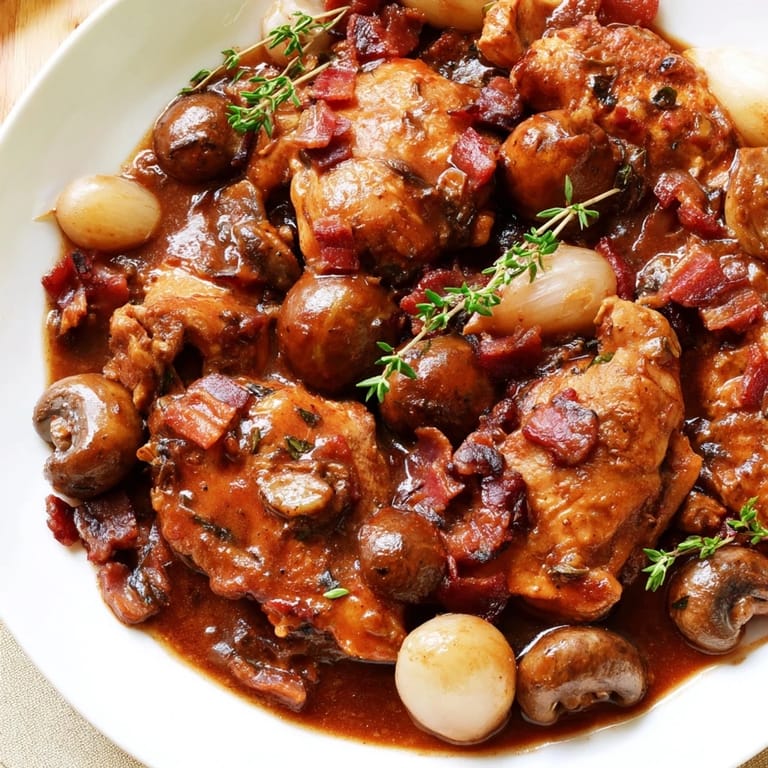
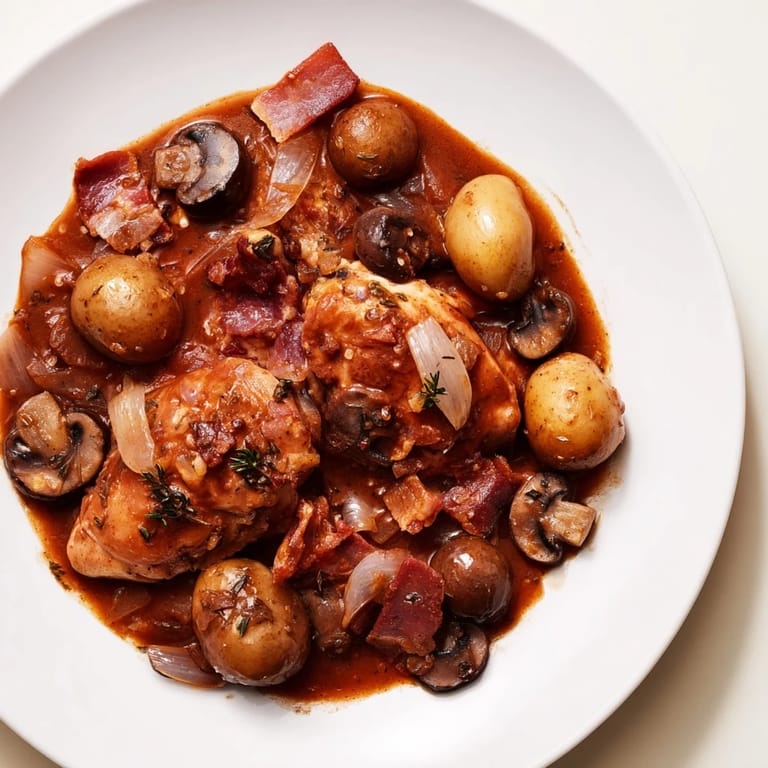
- Remove the lid from the Dutch oven for the last 15 minutes of cooking so the sauce can reduce and concentrate slightly. Stir in the sautéed mushrooms and taste carefully for salt and pepper—season conservatively at first, then adjust. Remove the bay leaves and thyme sprigs with a spoon before serving.
 Save to Pinterest
 There was a moment, maybe an hour into the cooking, when I opened the Dutch oven just to breathe in the steam—red wine, thyme, the quiet alchemy of time and heat. That's when coq au vin stopped being a task and became something I was genuinely excited to share.
Choosing Your Wine
The wine you choose will shape the entire dish's personality, so it deserves a moment of thought. A good Burgundy or Pinot Noir gives you earthiness and subtle fruit that deepens as it braises, but honestly, any dry red wine you enjoy drinking will work. The alcohol cooks off, but the flavor remains. I've used a simple Côtes du Rhône and gotten wonderful results—the point is that it should taste like wine you'd pour into a glass, not something labeled specifically for cooking. If you have a half bottle open from another dinner, this is the perfect way to use it up.
What To Serve It With
Coq au vin is rich and sauce-forward, so it asks for something to soak up all that liquid gold. Crusty French bread is the obvious choice, and it's the right one—tear off a piece and drag it through the sauce without embarrassment. Creamy mashed potatoes work beautifully, catching the wine sauce in all their peaks and valleys. I've also served it over buttered egg noodles with fresh parsley scattered on top, which feels more elegant and a bit less heavy. Whatever you choose, make sure there's enough of it, because people always want more sauce than they expect.
Make It Ahead & Storage
One of coq au vin's greatest gifts is that it improves with time, making it ideal for cooking a day ahead and reheating when you're ready to eat. The flavors continue settling and deepening overnight in the refrigerator, and the fat has a chance to rise to the top so you can skim it if you like. Reheat gently on the stovetop over low heat, stirring occasionally and adding a splash of stock or wine if the sauce has thickened too much.
- Store in an airtight container in the refrigerator for up to 4 days, or freeze for up to 3 months.
- Don't freeze the mushrooms separately if you've already stirred them in; they'll texture will suffer, so add fresh sautéed mushrooms when you reheat if you'd prefer.
- If you're doubling the recipe, use the same cooking time—just make sure your pot is large enough and the liquid still comes partway up the chicken.
 Save to Pinterest
 Coq au vin is the kind of dish that whispers you're capable of something sophisticated without requiring you to feel stressed the whole time you're making it. Pour yourself a glass and remember: the wine you're drinking, the same wine going into the pot, is what makes this evening feel like something worth the effort.
Recipe Questions & Answers
- → What type of wine is best for braising?
Dry red wines like Burgundy or Pinot Noir are ideal for braising as they add depth and acidity without overpowering the dish.
- → Can I use chicken thighs instead of a whole chicken?
Yes, chicken thighs work well due to their tenderness and flavor, and they braise evenly in this preparation.
- → Why are pearl onions used in this dish?
Pearl onions add a mild sweetness and tender texture, complementing the savory elements of the stew.
- → How do I get mushrooms to brown properly?
Sauté mushrooms over medium-high heat in butter and olive oil without overcrowding the pan to ensure even browning.
- → What is the purpose of removing bay leaves and thyme before serving?
Removing these herbs prevents overly intense flavors and ensures a pleasant eating experience without tough stems.