 Save to Pinterest
 The steam curling up from my bowl caught me completely off guard that first gray afternoon. I had been feeling run down for weeks, my joints aching in that way that makes you feel twice your age, when my grandmother suggested I simmer bones with ginger and turmeric. Something about the golden liquid, fragrant with earthy spices and bright vegetables, felt like being wrapped in a warm blanket.
I made a huge batch during a particularly harsh winter when everyone around me seemed to be fighting off something. My normally skeptical roommate came home sniffing the air, asked what smelled so incredible, and ended up eating two bowls while admitting she never understood the appeal of broth before. Now she asks for it whenever she feels under the weather.
Ingredients
- 1.5 liters (6 cups) beef or chicken bone broth: Homemade gives you the most gelatin and nutrients, but if buying, look for one that jiggles slightly when cold
- 1 medium yellow onion, peeled and quartered: Leave the skin on for extra color and depth, though it will make the broth darker
- 4 cloves garlic, smashed: Smash them with the side of your knife rather than mincing to release more medicinal compounds
- 1 thumb-sized piece fresh ginger, sliced: No need to peel it, just give it a quick scrub and slice into coins
- 1 thumb-sized piece fresh turmeric, sliced: Wear gloves or expect yellow stained fingers for days (I learned this the hard way)
- 2 tbsp apple cider vinegar: This helps extract minerals from the vegetables into the broth
- 1 tsp whole black peppercorns: Essential for activating turmeric and making it more absorbable by your body
- 1 tsp sea salt: Start with less and add more at the end since the broth will concentrate as it simmers
- 2 medium carrots, peeled and sliced: Cut them on a diagonal for more surface area and better flavor release
- 2 celery stalks, sliced: Include some of the leaves, they hold surprising flavor
- 1 cup broccoli florets: Cut them small enough to eat easily with a spoon
- 1 cup baby spinach: Add this at the very end so it stays bright green
- 1 zucchini, sliced: Half moons work better than rounds for catching in your spoon
- 2 tbsp chopped fresh parsley or cilantro: Use whichever you prefer, or mix both for extra complexity
- 1 tbsp sesame seeds: Toast them in a dry pan for 2 minutes first to bring out their nutty flavor
- Lemon wedges: The acid brightens everything and helps your body absorb the iron from the vegetables
Tired of Takeout? 🥡
Get 10 meals you can make faster than delivery arrives. Seriously.
One email. No spam. Unsubscribe anytime.
Instructions
- Build your flavor foundation:
- Combine bone broth, quartered onion, smashed garlic, sliced ginger and turmeric, apple cider vinegar, peppercorns, and salt in a large stockpot. Bring everything to a gentle boil over medium-high heat while you prepare your vegetables.
- Let the medicine steep:
- Reduce heat to low, cover with a lid slightly ajar, and simmer for 1.5 hours. The kitchen should smell earthy and comforting, and the liquid will reduce slightly while concentrating its healing properties.
- Clear the way:
- Set a fine mesh sieve over a large bowl or another pot. Pour the hot broth through it, pressing down on the solids to extract every bit of liquid, then return the clear golden broth to your original pot.
- Bring in the vegetables:
- Add sliced carrots and celery first, as they take longest to soften. After 5 minutes, add broccoli florets and let everything simmer together for another 5 minutes until vegetables are tender but not mushy.
- Finish with delicate touches:
- Add zucchini slices and baby spinach last. Simmer for just 2 to 3 minutes, watching carefully, until spinach wilts but stays vibrantly green and zucchini holds its shape.
- Season to your taste:
- Taste the broth and add more salt if needed. Sometimes a splash more vinegar or lemon juice wakes everything up.
- Make it beautiful:
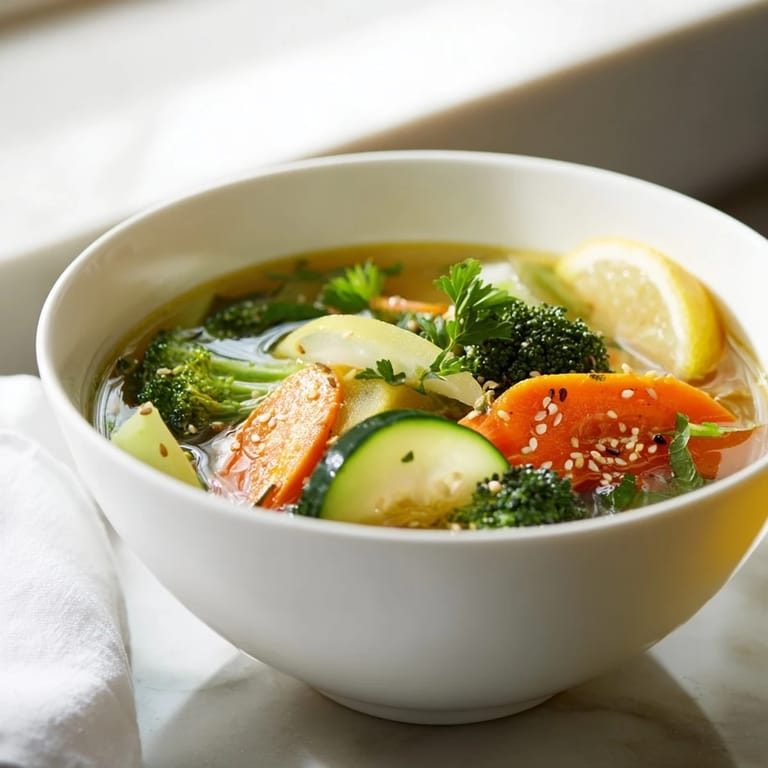
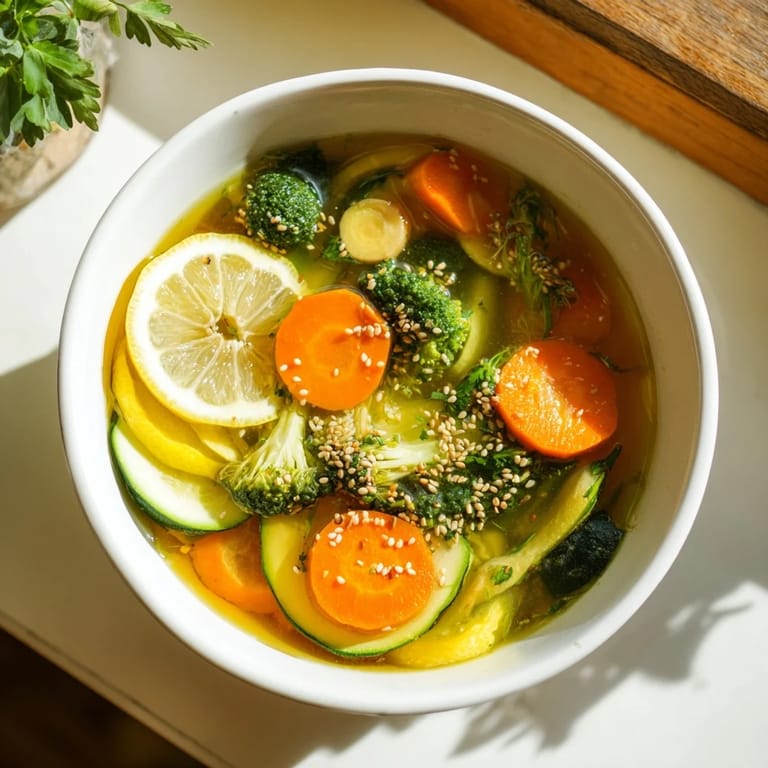
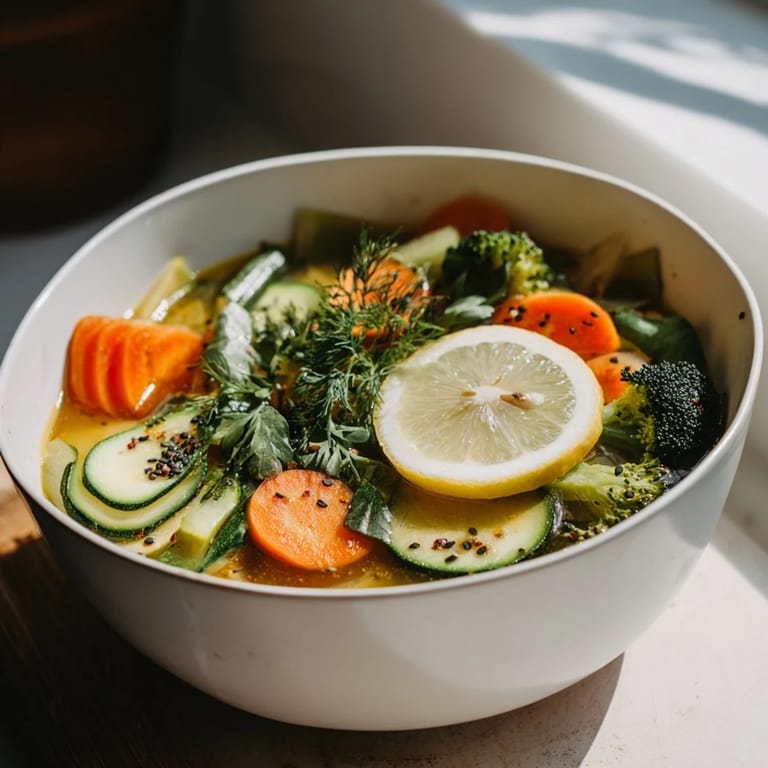
- Ladle hot broth and vegetables into bowls. Sprinkle generously with fresh herbs and sesame seeds, then serve with lemon wedges on the side for squeezing at the table.
 Save to Pinterest
 This recipe became my go to during recovery from a minor surgery when I needed something gentle but nourishing. The surgeon was surprised at how quickly I bounced back, and I honestly believe these daily bowls played a huge part in that.
Make It Your Own
Once I added shiitake mushrooms during the broth simmering stage and discovered an earthy depth that completely changed the character of the dish. Another time I threw in a piece of kombu seaweed and the broth developed this subtle savory quality that had me going back for thirds.
Timing Is Everything
I have learned the hard way that adding delicate vegetables too early turns them into sad, gray mush. Now I prep everything in separate bowls before I start cooking so I can add each ingredient at exactly the right moment without scrambling.
The Leftover Situation
This broth actually tastes better the next day when the spices have had more time to mingle. I always make a double batch and freeze portions in glass jars, leaving an inch of space at the top for expansion, which has saved me on countless busy weeknights.
- Let the broth cool completely before refrigerating to prevent condensation and bacterial growth
- Reheat gently over low heat rather than boiling to preserve the beneficial compounds
- Never freeze with the fresh herbs already added, they turn bitter and slimy
 Save to Pinterest
 There is something profoundly comforting about a bowl of broth that knows you, that heals you from the inside out. I hope this becomes your remedy too.
Recipe Questions & Answers
- → How long does this broth bowl keep in the refrigerator?
The broth bowl stores well for 4-5 days in an airtight container. The flavors actually deepen after a day or two, making it excellent for meal prep. Reheat gently on the stovetop to preserve the nutrients.
- → Can I make this vegetarian?
Yes, substitute the bone broth with high-quality mushroom or vegetable broth. Miso paste adds depth and umami flavor that typically comes from bone broth. The resulting version remains nourishing and protein-rich.
- → What vegetables work best in this bowl?
Root vegetables like carrots, parsnips, and daikon hold up well during simmering. Dark leafy greens such as kale, bok choy, or Swiss chard add nutrients. For variety, try shiitake mushrooms, bok choy, or winter squash based on seasonality.
- → Why add apple cider vinegar to the broth?
Apple cider vinegar helps extract minerals and collagen from the bones during simmering. The acidity breaks down connective tissue, releasing more nutrients into the broth. It also adds a subtle brightness that balances the earthy vegetables.
- → Can I reduce the cooking time?
While you can shorten the simmer to 45 minutes, the broth won't develop the same depth of flavor or nutrient density. For best results, maintain the full simmer time. If time is limited, use store-bought bone broth and simmer vegetables for 15-20 minutes.
- → What makes turmeric and ginger effective additions?
Turmeric contains curcumin, a powerful anti-inflammatory compound. Ginger aids digestion and adds warming flavor. Pairing them with black pepper increases curcumin absorption by up to 2000%, maximizing their health benefits.