 Save to Pinterest
 My first bouillabaisse wasn't planned—it happened on a foggy afternoon when a fishmonger friend dropped off a mysterious bag of the day's catch with a note that said "make magic." I stood in my kitchen surrounded by gleaming monkfish, red mullet, mussels still smelling of salt water, and realized I'd either create something transcendent or an expensive disaster. That's when I found my grandmother's dog-eared cookbook, opened to a recipe for this Provençal stew, and suddenly understood why she'd underlined the word "respect" next to the ingredient list.
Years later, I made this for my partner's family on their first visit, and his mother—a woman who rarely compliments anything—asked for seconds without saying a word, then thirds with tears in her eyes. She later told me it reminded her of dinners at her grandmother's house in Nice, before everything scattered. Food has a way of doing that, doesn't it? It reaches across time and makes you homesick for moments you never lived.
Ingredients
- Firm white fish fillets (monkfish, sea bass): These hold their shape beautifully and don't turn to mush—absolutely crucial for the final texture.
- Oily fish fillets (red mullet): This is where the soul of bouillabaisse lives; the richness balances the broth perfectly and adds a depth that white fish alone can't achieve.
- Mussels, cleaned and debearded: Buy them the same day you cook; they should close when tapped and smell of ocean, not ammonia.
- Small shrimp, peeled and deveined: Fresh ones make all the difference, but frozen in a pinch works if you thaw them gently.
- Sea scallops: Optional, but if your budget allows, they add a sweetness that makes people pause and wonder what you did.
- Olive oil: Use a good one you actually like drinking; you taste it throughout.
- Onion, leek, fennel, carrot: This is your aromatic foundation—don't rush the sauté or you'll miss the window where they sweeten without browning.
- Garlic cloves, minced: Fresh, never jarred; the difference is startling.
- Ripe tomatoes, peeled and seeded: If tomatoes aren't in season, use high-quality canned; water down subpar fresh tomatoes is a mistake I've made.
- Orange zest: This tiny addition is the secret handshake of authentic bouillabaisse—don't skip it.
- Saffron threads: Expensive, yes, but a little goes transformatively far; buy from a spice shop you trust, not the supermarket bin.
- Fennel seeds, thyme, bay leaf: These three create the Provençal backbone; use fresh herbs when possible.
- Dry white wine: Drink what you'd serve at dinner; cheap wine makes cheap-tasting broth.
- Fish stock or water: Homemade stock is superior, but good water simmered with these ingredients creates its own magic.
Tired of Takeout? 🥡
Get 10 meals you can make faster than delivery arrives. Seriously.
One email. No spam. Unsubscribe anytime.
Instructions
- Build your aromatic base:
- Heat olive oil in a large heavy pot over medium heat and add your onion, leek, fennel, carrot, and garlic. As they soften over eight to ten minutes, the kitchen will smell like Provence itself—let that fragrance tell you when to stop. You're aiming for tender and translucent, never golden or caramelized at this stage.
- Wake up the spices and herbs:
- Stir in tomatoes, orange zest, bay leaf, thyme, parsley, saffron threads, fennel seeds, and peppercorns with a generous pinch of salt and pepper. Let it cook for five minutes so the saffron begins to release its color and the whole pot takes on an almost amber glow.
- Deglaze and begin the simmer:
- Pour in white wine and let it bubble gently for a couple of minutes—you're not trying to burn off all the alcohol, just let the flavors marry. Add your fish stock or water and bring everything to a gentle boil, then lower the heat and simmer uncovered for twenty-five minutes, tasting occasionally and adjusting seasoning.
- Strain and refine:
- This step separates good bouillabaisse from rushed versions. Press the solids through a fine sieve with the back of a spoon—don't be gentle, you want every drop of flavor extracted. Return this golden broth to your cleaned pot; it should smell like the sea wrapped in herbs.
- Cook the seafood with intention:
- Bring the broth to a gentle simmer and add firm fish first, letting it cook for five minutes before introducing oily fish, mussels, shrimp, and scallops if using. Watch carefully—you're aiming for just-cooked, never overdone; this takes five to six minutes total and the mussels will pop open to signal they're ready.
- Make the rouille:
- In a bowl, combine egg yolk, minced garlic, chopped chili, saffron with its soaking water, and mustard. Whisk until smooth, then begin drizzling olive oil in the thinnest stream possible while whisking constantly—this is where patience becomes a virtue. The sauce will transform from loose to thick and luxurious, almost like homemade mayonnaise but better.
- Plate and present:
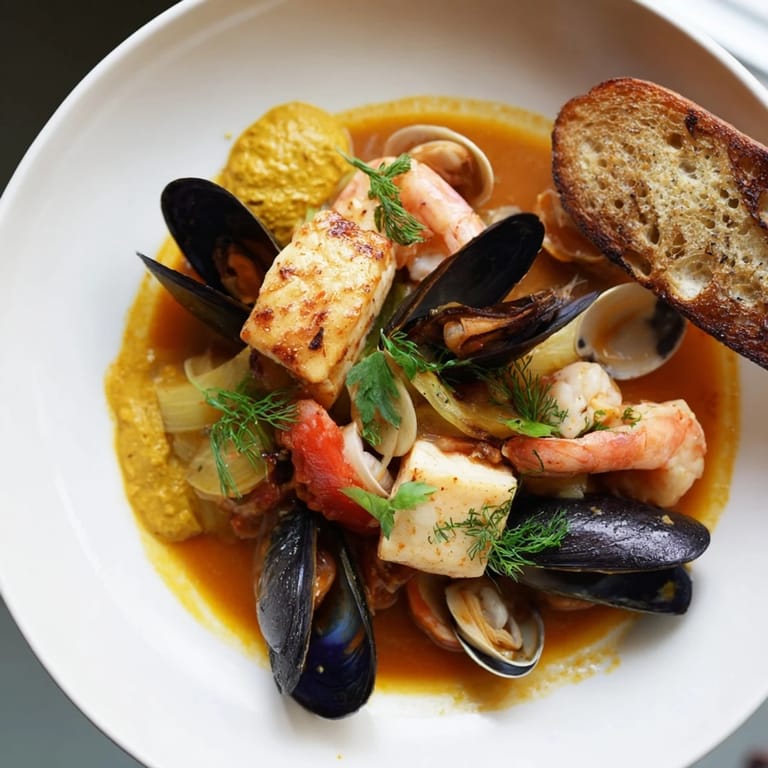
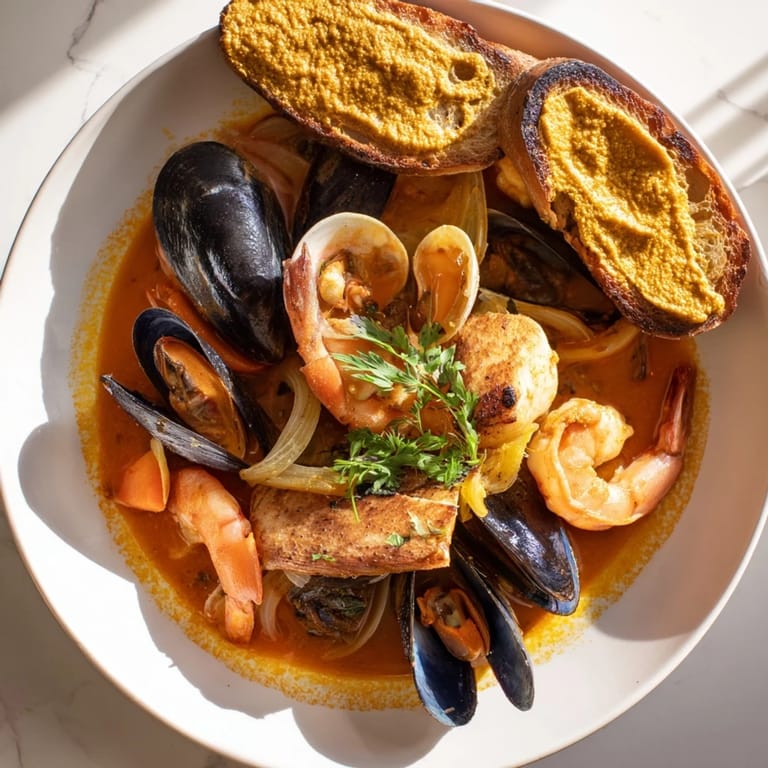
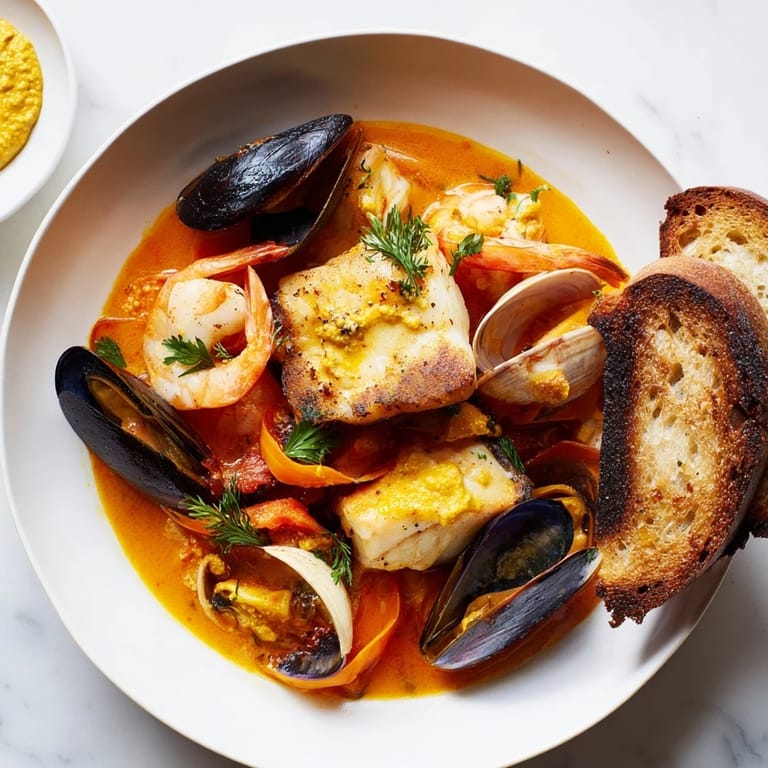
- Ladle the stew into warm bowls with an even distribution of seafood and broth. Top with fresh parsley, set a toasted baguette slice on the side brushed with olive oil, and offer a generous spoonful of rouille as the final flourish.
 Save to Pinterest
 There's a moment, right when the rouille hits the hot broth and swirls into golden clouds, when you realize you've done something worth doing. That's the moment bouillabaisse becomes more than dinner—it becomes proof that you tried, that you took time, that you cared enough about the people at your table to get the details right.
Why Saffron Matters Here
Saffron is the bridge between an ordinary fish stew and something that tastes like a place you've never been but somehow recognize. It brings a subtle earthiness and a visual warmth that turns the broth a beautiful amber color. If cost is truly prohibitive, you can omit it, but you'll taste the difference—the dish becomes flatter, less mystical. One tiny pinch per serving goes remarkably far.
The Rouille as Non-Negotiable
The rouille isn't a garnish; it's the final statement, the thing that makes people remember this meal. It's mayonnaise elevated by garlic, chili, and saffron—the same garlicky spirit of aioli but with more complexity. Some people make it with just garlic and oil, but the saffron connection to the broth below creates a dialogue that feels intentional and delicious.
Serving Suggestions and Wine Pairing
Bouillabaisse belongs alongside a chilled Provençal rosé or a crisp white wine—something that won't overpower the delicate seafood but will amplify the herbal and floral notes already singing in the pot. Crusty bread is essential; it's the vehicle for soaking up every last drop of broth, and that's not wasteful, that's the whole point.
- Make the rouille an hour or two ahead if you'd like; it keeps beautifully in the refrigerator and the flavors deepen with time.
- For a gluten-free table, swap the baguette for good gluten-free bread or skip bread entirely and serve with grilled polenta instead.
- Bouillabaisse reheats gently but should be eaten the day it's made; seafood doesn't age well, and this dish thrives on freshness.
 Save to Pinterest
 Every time I make this, I think of my friend at the fishmonger counter and my partner's mother's quiet tears. Bouillabaisse does that—it connects you to people, to places, to the idea that the best meals are the ones made with intention and respect for ingredients.
Recipe Questions & Answers
- → What types of fish are best for this stew?
Firm white fish like monkfish or sea bass combined with oily fish such as red mullet provide a balanced texture and flavor.
- → How is saffron used in the dish?
Saffron threads are soaked and added to the broth and rouille, infusing the stew with its distinctive aromatic and golden hues.
- → Can the rouille be prepared in advance?
Yes, it can be made ahead and refrigerated for up to one day, allowing flavors to meld nicely.
- → What is the purpose of straining the broth?
Straining extracts maximum flavor from the vegetable and herb base, resulting in a clear, concentrated broth.
- → What sides complement this dish well?
Traditionally, toasted baguette slices brushed with olive oil are served alongside to soak up the stew's rich broth.
- → How do you know when the shellfish is cooked?
Shellfish like mussels are ready when their shells open; discard any unopened ones to ensure freshness and safety.