 Save to Pinterest
 I discovered this dish on a winter afternoon when I was staring at my refrigerator, feeling stuck between wanting something visually striking and needing to work with what I had. The idea came from a photograph of an Arctic landscape—all white, pale, and crystalline—and I thought, why not create that on a plate? The first time I made it, my guests fell completely silent when I set it down, and that quiet moment of appreciation told me I'd found something special.
I remember making this for a small dinner party when one guest mentioned she'd just returned from Iceland. As I arranged the pale vegetables across the chilled stone, she leaned forward and said it reminded her of the landscape she'd just left behind. That moment made me realize the dish wasn't just about aesthetics—it was actually evoking a real, visceral place.
Ingredients
- Daikon radish: Its subtle peppery bite and snappy texture form the foundation; slice it thin so it stays delicate and almost translucent when chilled.
- Kohlrabi: This underrated vegetable brings a mild sweetness and keeps its firmness beautifully—it won't wilt like other raw vegetables.
- Belgian endive: The pale, elongated leaves are naturally elegant and offer just enough bitterness to balance the sweetness.
- Cauliflower florets: Finely chopped rather than minced, they add textural interest without dominating the plate.
- Coconut flakes and sesame seeds: These create visual contrast and a nutty warmth that ties everything together.
- Microgreens: A final flourish that adds brightness and a delicate peppery note at the last second.
- Extra-virgin olive oil, lemon juice, and white wine vinegar: This dressing is intentionally subtle; it enhances without overpowering the delicate vegetables.
Tired of Takeout? 🥡
Get 10 meals you can make faster than delivery arrives. Seriously.
One email. No spam. Unsubscribe anytime.
Instructions
- Chill your stage:
- Pop your stone or marble platter in the freezer for 15 minutes—this isn't just for drama, it keeps everything crisp and cold longer. A cold plate makes every bite snap.
- Make the dressing:
- Whisk together the olive oil, lemon juice, white wine vinegar, and white pepper in a small bowl until combined. Taste it and adjust; it should feel bright but delicate, like a whisper rather than a shout.
- Arrange with intention:
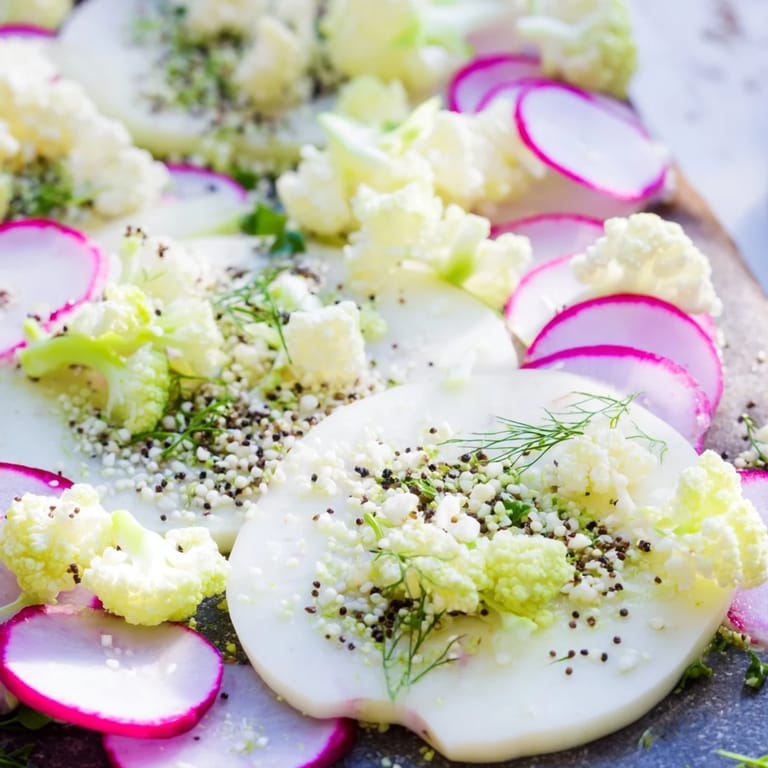
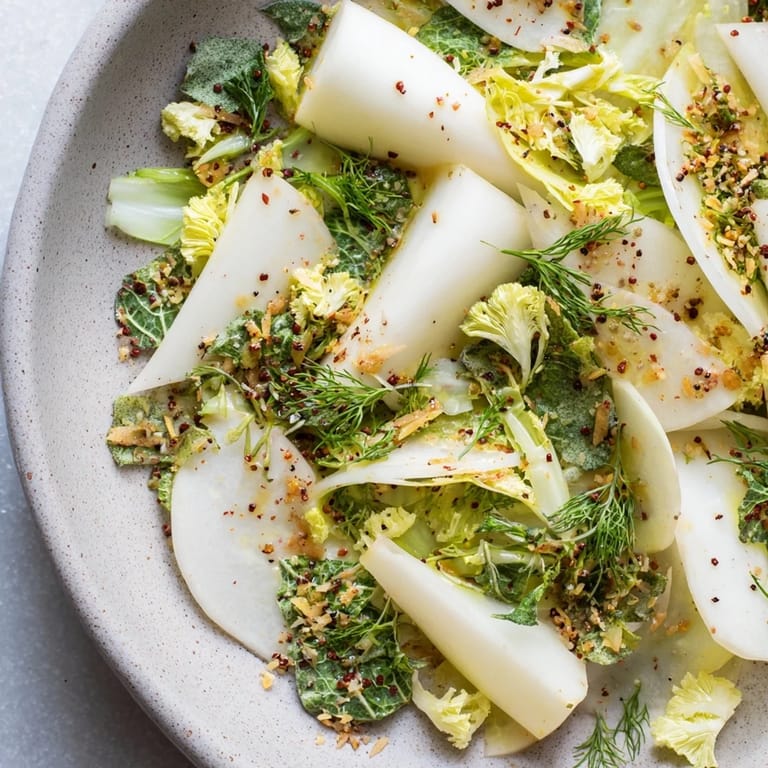
- Place the daikon, kohlrabi, and endive leaves across the cold stone in a loose, scattered pattern. Think of wind pushing things around—no symmetry, just natural spacing that feels unplanned.
- Layer in the texture:
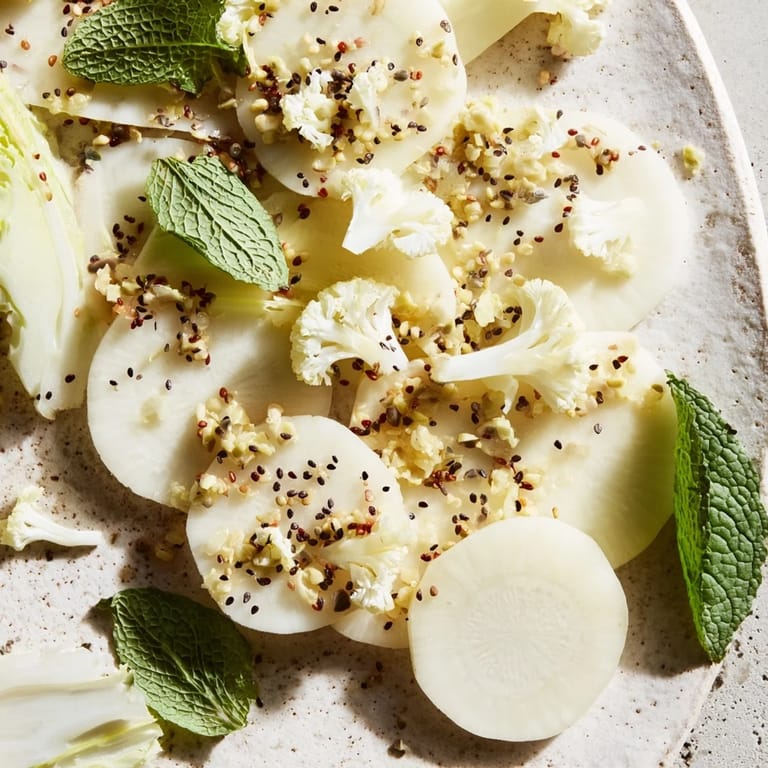
- Sprinkle the cauliflower, coconut flakes, and both sesame seeds randomly across the arrangement. Step back and look; you want pockets of white and black against the pale vegetables.
- Add the dressing:
- Drizzle the dressing lightly across everything, using your fingers to feel the distribution if you need to.
- Finish strong:
- Just before serving, top with microgreens and a small pinch of flaky sea salt. This final layer keeps those greens fresh and the salt provides a grounding note.
 Save to Pinterest
 There was an evening when a friend took one bite and closed their eyes, and I realized that restraint and simplicity can be just as moving as complexity. That's when this dish stopped being about minimalism and became about mindfulness.
The Art of Raw Vegetable Preparation
Slicing raw vegetables thin requires patience and the right tool. A sharp knife or mandoline will give you clean, almost transparent slices that catch light beautifully. Dull blades bruise the flesh and turn everything watery. I learned this the hard way after shredding daikon with a dull knife and watching it turn into mush within minutes. Now I spend an extra 30 seconds sharpening before I start, and it completely changes the result.
Playing with Color and Contrast
The genius of this dish is its monochromatic palette broken by the contrast of black and white sesame seeds. When you work with pale vegetables, every accent becomes powerful. I've experimented with adding a tiny scatter of toasted black onion seeds or a whisper of nigella, and both work beautifully. The key is restraint—you're not decorating a cake, you're creating a landscape where nothing competes for attention.
Variations and Flavor Shifts
Once you understand the architecture of this dish, you can play with it. I've tried swapping white wine vinegar for rice vinegar or yuzu juice to shift the acidity profile, and both were revelations. One afternoon I added a few flakes of smoked whitefish for a friend who eats fish, and suddenly the dish had depth and umami. The stone plate canvas is flexible—it's the restraint and chill that matter.
- Try yuzu juice or rice vinegar for a more Asian-leaning brightness.
- Add smoked whitefish, chilled poached shrimp, or a crumble of feta for protein without losing elegance.
- Experiment with toasted black onion seeds or a dusting of dried seaweed for deeper complexity.
 Save to Pinterest
 This dish taught me that sometimes the most powerful thing you can put on a table is something that makes people pause. It's a reminder that cooking doesn't always mean heat and complexity—sometimes it means listening to what the ingredients want to be.
Recipe Questions & Answers
- → What vegetables are featured in the Tundra Trek plate?
It includes thinly sliced daikon radish, kohlrabi, Belgian endive leaves, and finely chopped cauliflower florets for a crisp texture.
- → How is the dish plated to evoke the tundra theme?
The vegetables and garnishes are sparsely arranged on a chilled stone platter to mimic the scattered, windswept flora of an arctic landscape.
- → What dressing is used on the vegetable arrangement?
A simple dressing of extra-virgin olive oil, fresh lemon juice, white wine vinegar, and white pepper lightly enhances the flavors without overpowering.
- → Are there any special garnishes included?
The dish is topped with toasted white and black sesame seeds, coconut flakes, microgreens, and a pinch of flaky sea salt for added texture and flavor.
- → How long does it take to prepare the dish?
Preparation takes about 25 minutes, with no cooking required, making it quick and convenient to assemble.
- → Can this dish accommodate dietary restrictions?
Yes, it suits vegetarian and gluten-free diets, though it contains sesame and coconut allergens to consider.