 Save to Pinterest
 There's a specific evening I keep returning to—not my first time making mac and cheese, but the moment I decided it deserved better than what I'd been settling for. A friend mentioned truffle oil in passing, almost apologetically, as if admitting to a small indulgence. That single suggestion shifted everything. Now, whenever I stand at the stove whisking butter and flour together, I'm chasing that feeling of turning something familiar into something that tastes like a small celebration.
I made this for my sister on a random Tuesday when she'd had a rough week, and watching her face when she tasted it—that moment when nostalgia meets luxury—reminded me why I cook in the first place. She sat there for a minute without saying anything, just eating, and that silence felt like the highest compliment.
Ingredients
- Elbow macaroni (400 g): The shape matters more than you'd think—those little tubes catch the sauce and hold onto it, which is the whole point.
- Unsalted butter (2 tbsp for roux, 1 tbsp melted for topping): Unsalted lets you control the salt level, and fresh butter actually tastes different than the alternative.
- All-purpose flour (2 tbsp): This creates the roux that thickens your sauce; don't skip it or you'll end up with something too thin.
- Whole milk (500 ml): Full-fat milk makes the sauce silky, and yes, it matters—skim milk just doesn't have the same richness.
- Gruyère cheese (120 g): Nutty and complex, this is the backbone cheese that makes everything taste more interesting.
- Sharp cheddar cheese (120 g): Provides sharpness and tang; the age of your cheddar will affect how pronounced this becomes.
- Fontina cheese (80 g): Creamy and slightly earthy, it keeps the sauce from being one-dimensional.
- Parmesan cheese (60 g plus 2 tbsp for topping): The salt and umami booster that makes people say the sauce is somehow familiar but better.
- Dijon mustard (1 tsp): A whisper of mustard deepens the cheese flavor without making it taste like mustard—trust me on this one.
- Black truffle oil (2 tbsp): Less is more with this—the aroma is almost more important than the flavor.
- Fresh black truffle, shaved (20 g): If you're splurging here, get a proper truffle shaver or use a vegetable peeler; it makes a visible difference.
- Panko breadcrumbs (40 g): Creates that golden crust on top that gives you texture alongside the creamy pasta underneath.
- Nutmeg (pinch): Freshly grated nutmeg in cheese sauce is one of those kitchen secrets that seems small until someone asks what makes it taste so good.
Tired of Takeout? 🥡
Get 10 meals you can make faster than delivery arrives. Seriously.
One email. No spam. Unsubscribe anytime.
Instructions
- Heat your oven and prepare:
- Set the oven to 200°C and lightly butter your baking dish so nothing sticks when it comes time to plate.
- Get the pasta to al dente:
- Salt your water generously—this is your only chance to season the pasta itself—and cook the macaroni until it still has a slight firmness when you bite it. It'll cook a bit more in the oven, so resist the urge to go soft here.
- Build your roux:
- Melt butter over medium heat, add flour, and whisk for a full minute or two until the raw flour taste disappears and it turns pale gold. This step takes patience, but rushing it leads to a grainy sauce.
- Introduce the milk slowly:
- Pour milk in gradually while whisking constantly—this is where lumps happen if you're not careful, so stay present with it. Keep whisking until the sauce thickens, which usually takes about five minutes.
- Add cheeses one by one:
- Turn the heat down to low, then add each cheese separately, stirring until each one melts completely before adding the next. This controlled approach prevents clumping and ensures a smooth sauce.
- Season to taste:
- Stir in mustard, pepper, salt, and just a tiny grating of nutmeg—you want to taste cheese first, with these elements playing supporting roles.
- Combine and transfer:
- Add the drained pasta to the cheese sauce and fold it together until every piece is coated, then pour everything into your baking dish.
- Make the breadcrumb topping:
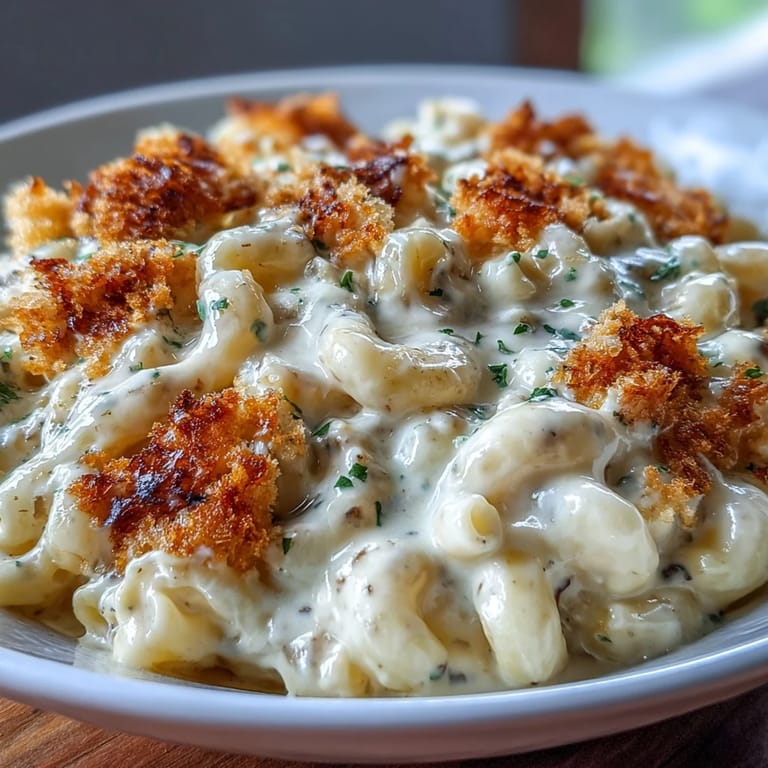
- Mix panko with melted butter and grated Parmesan in a small bowl—the butter helps it brown evenly and turn golden instead of pale.
- Toast in the oven:
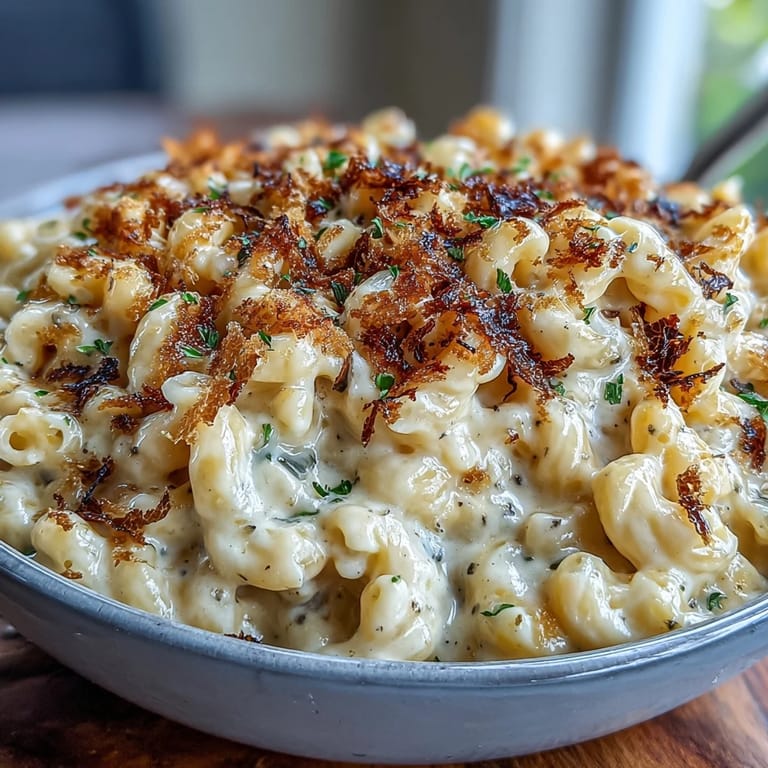
- Sprinkle the breadcrumb mixture over the top and bake for 15 to 20 minutes until the sauce bubbles at the edges and the top turns golden brown.
- Finish with truffle:
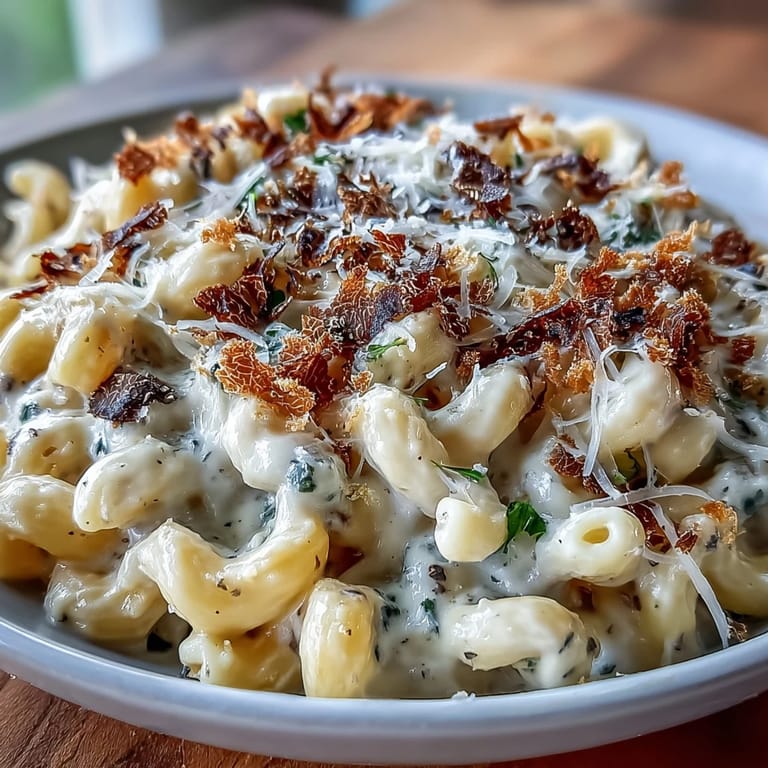
- Remove from heat, let it rest for five minutes so the sauce sets slightly, then drizzle with truffle oil and scatter shaved truffle over everything. This waiting period also makes it easier to serve without it being too loose.
 Save to Pinterest
 This dish taught me that comfort food doesn't have to stay comfortable—it can reach higher and still feel like home. Every time I make it now, I'm reminded that the best recipes are the ones that evolve because you're not afraid to try something.
The Science Behind a Perfect Cheese Sauce
A roux is essentially a safety net—flour proteins trap the fat and milk proteins, creating a stable emulsion instead of a broken, oily mess. The gentle simmer after you add the milk is crucial because high heat can cause the proteins to seize up. I learned this the hard way by rushing, and the difference between a sauce that coats a spoon and one that seems to slip off taught me to trust the process instead of the clock.
Why Four Cheeses Beat One Every Time
Each cheese brings something different to the table: Gruyère adds nuttiness, cheddar brings sharpness, Fontina contributes creaminess, and Parmesan delivers umami. Together they create a flavor that's more complex than the sum of its parts. When I tried making this with just one cheese, it tasted flat and one-dimensional by comparison—it was like listening to a song in mono when you've heard it in stereo.
Truffle: The Final Word in Elegance
Truffle oil gets a lot of criticism from food snobs, and some of it is fair, but in this context it's perfect—you're not trying to fool anyone into thinking this is a complicated dish. You're simply adding an aromatic flourish that makes people lean in and pause. If fresh truffle is out of reach or budget, truffle paste stirred into the sauce works beautifully, and truffle salt can replace the oil entirely.
- Fresh truffle shavings look stunning and add texture, but they're optional if the cost doesn't feel worth it to you.
- Store truffle oil in a cool, dark place and don't keep it longer than a year, as the flavor fades over time.
- Quality matters with truffles—cheap truffle oil often tastes synthetic and chemical, so splurge a little if you're going to use it.
 Save to Pinterest
 This is the kind of dish that proves you don't need complicated techniques to cook something memorable. Make it for someone, watch their face, and you'll understand why I keep coming back to it.
Recipe Questions & Answers
- → What type of pasta works best for this dish?
Elbow macaroni or any short pasta such as penne or rigatoni holds the cheese sauce well and bakes evenly.
- → Can I substitute the cheeses used in the sauce?
Yes, though the combination of Gruyère, cheddar, Fontina, and Parmesan delivers a balanced creamy and sharp flavor. Mozzarella can replace Fontina for milder taste.
- → How should I use truffle oil and shaved truffle?
Drizzle truffle oil over the baked dish just before serving and garnish with shaved truffle to preserve their aromatic quality and enhance flavor.
- → Is there a way to make the topping crispier?
Mixing panko breadcrumbs with melted butter and Parmesan cheese creates a crunchy and golden topping when baked.
- → Can this dish be prepared ahead of time?
You can prepare up to the baking step, refrigerate, and bake just before serving to maintain freshness and flavor.
- → What wine pairs well with this dish?
A crisp white Burgundy or Champagne complements the rich, cheesy profile and enhances the truffle aroma.