 Save to Pinterest
 My aunt brought a ham glazed with black currant jam to Christmas dinner years ago, and I remember standing in her kitchen watching the oven light flicker as something dark and glossy emerged. The kitchen smelled impossibly rich—tart jam mingling with mustard and the deep savory notes of ham. She caught me peeking and laughed, saying the secret was patience and a brush that never stopped moving. That meal changed how I thought about holiday cooking, and now this recipe feels like passing along something genuinely special.
I made this for my partner's family the first time I was cooking for them, which felt terrifying until I realized how forgiving a glazed ham truly is. Watching their faces light up as I sliced into that caramelized exterior made all my nervous prep work feel worth it. There's something about a beautiful ham that makes a table feel like an occasion, even when it's just a regular Saturday.
Ingredients
- Bone-in, fully cooked ham (6–8 lbs): Look for one with a decent fat cap because that's where the flavor lives once it caramelizes; a butcher can help you choose.
- Black currant jam (1 cup): This is the star, so grab decent quality jam if you can—it makes a real difference in the final taste.
- Dijon mustard (3 tablespoons): Don't skip this; it adds backbone and keeps the glaze from being one-note sweet.
- Apple cider vinegar (2 tablespoons): This bright acidity is what makes the glaze sing against the rich ham.
- Brown sugar (2 tablespoons): Just enough to balance the tartness without making it dessert-like.
- Freshly ground black pepper (1 teaspoon): Grind it yourself if you have a mill because pre-ground loses its personality.
- Ground allspice (1/2 teaspoon, optional): If you use it, you'll taste warmth and depth that feels almost mysterious to guests.
Tired of Takeout? 🥡
Get 10 meals you can make faster than delivery arrives. Seriously.
One email. No spam. Unsubscribe anytime.
Instructions
- Set your oven and pan:
- Heat your oven to 325°F and line a roasting pan with foil, fit it with a rack so the ham doesn't sit in its own juices. This setup matters because it lets heat circulate underneath, helping the bottom get golden.
- Prepare the ham:
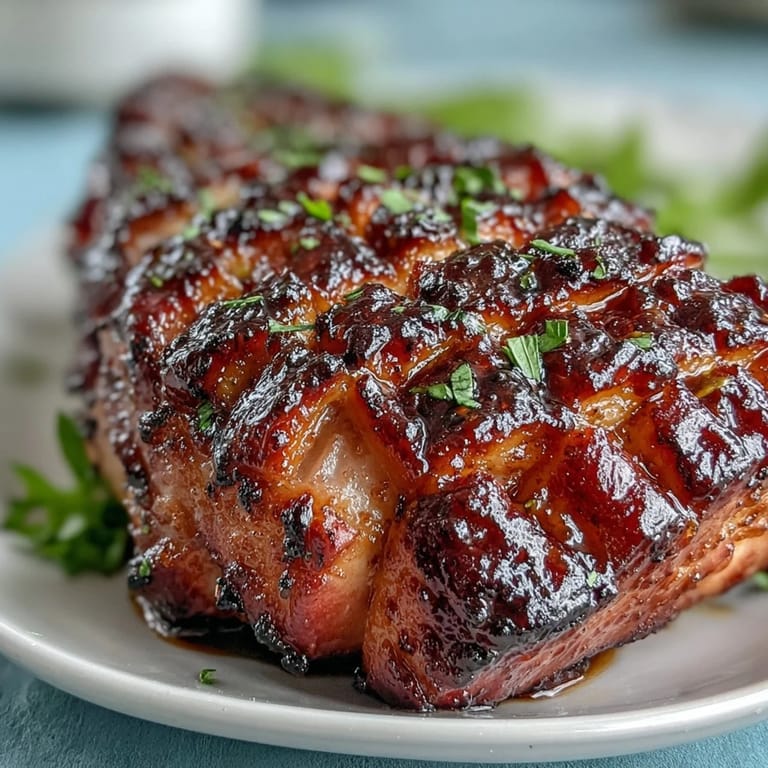
- Trim away excess skin but leave a thin fat layer, then score it in a diamond pattern using a sharp knife—not too deep, just enough to let the glaze settle in. This scoring is where the magic happens; those little cuts become caramelized pockets of flavor.
- Make the glaze:
- In a saucepan over medium heat, combine the jam, mustard, vinegar, brown sugar, pepper, and allspice, stirring until smooth and warm. You want it pourable but not thin; if it's too stiff, it won't brush on evenly.
- First coat and covered bake:
- Place the ham cut side down and brush generously with about one-third of the glaze, then cover loosely with foil and bake for 1 hour. The foil keeps the ham moist while the bottom gets a chance to start caramelizing.
- Uncover and baste:
- Remove the foil, brush with half of the remaining glaze, and bake uncovered for 30 minutes more. You'll start noticing the edges getting darker and stickier, which is exactly right.
- Final glaze and finish:
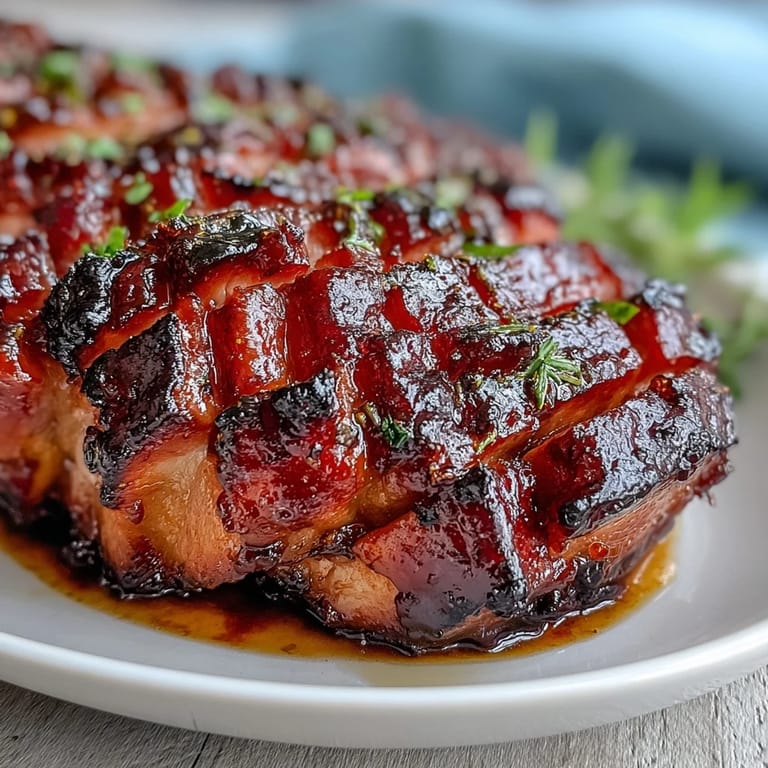
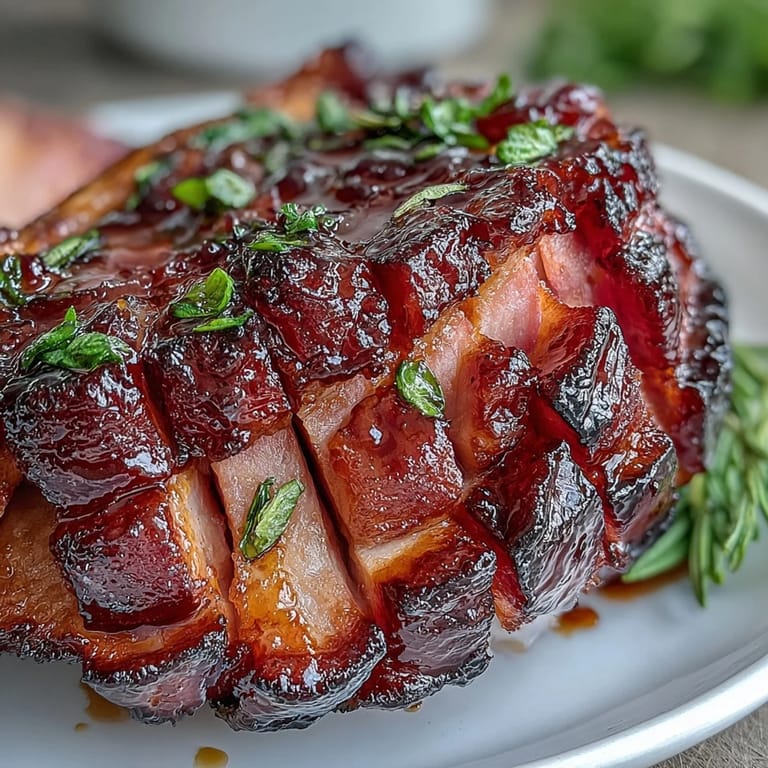
- Brush with the last of the glaze and bake for another 30 minutes until the surface is glossy and caramelized with a rich mahogany color. The internal temperature should hit 140°F if it started fully cooked, but honestly, the look and smell tell you more than a thermometer ever will.
- Rest before serving:
- Remove from the oven, tent loosely with foil, and let it rest for 15–20 minutes—this gives the juices time to settle back into the meat so your slices stay tender. The meat will stay warm enough, and this pause makes slicing so much easier.
 Save to Pinterest
 There was a moment at that first dinner when someone asked for the recipe, and instead of handing over a photocopy, I found myself actually telling the story of why I made it—how it came from watching someone I loved cook something beautiful. That's when I realized this ham isn't just about technique; it's about showing up for people with something that tastes like care.
The Glaze Is Everything
This glaze walks a tightrope between sweet and savory, and that balance is why people remember this dish. The black currant jam brings jam-like sweetness, but the Dijon mustard and vinegar refuse to let it become cloying—they pull it back toward sophistication. I've tried variations, and I always come back to this ratio because it feels right, like it's been this way for longer than I've been cooking.
Scoring and Caramelization
Those diamond-scored cuts across the fat layer aren't just decorative—they're where the glaze pools and caramelizes into little gems of flavor that burst when you bite into them. The first time I really paid attention to scoring, I used a very sharp knife and took my time, and the difference was noticeable. Now I tell people that if you're only going to fuss about one thing, make it those cuts.
Beyond the Holiday Table
While this feels festive and special enough for Christmas or Easter, I've made it on random Sundays just because I wanted something impressive without stress. The timing works beautifully for entertaining because the ham doesn't demand your attention once it's in the oven; you can focus on sides and company. Leftovers are genuinely something to celebrate—cold ham sandwiches with crusty bread feel like a reward for having made something this good.
- Try this same glaze on pork tenderloin or chicken thighs if you want to play around without the full ham commitment.
- Make extra glaze if you're feeling generous; it keeps for a week and is stunning on roasted vegetables.
- Pair this with something acidic like a green salad or roasted root vegetables to cut through the richness.
 Save to Pinterest
 This ham has become my go-to when I want to feed people something that feels like an occasion, because it genuinely is. The combination of technique and flavors is simple enough that you'll nail it the first time, and special enough that people will ask for the recipe.
Recipe Questions & Answers
- → What cut of ham works best for glazing?
A bone-in, fully cooked ham between 6 to 8 pounds is ideal for even cooking and great flavor absorption.
- → How do I ensure the glaze adheres well to the ham?
Score the fat in a diamond pattern and brush multiple layers of glaze during baking for a glossy finish.
- → Can I prepare the glaze ahead of time?
Yes, the glaze can be made in advance and warmed gently before brushing onto the ham.
- → What temperature should the ham reach when reheating?
Heat until an internal temperature of 140°F (60°C) is reached for safe and tender results.
- → Are there alternative meats suitable for this glaze?
The black currant jam glaze also complements pork tenderloin and chicken beautifully.
- → How can I add extra spice to the glaze?
Incorporate a pinch of cayenne pepper for a subtle spicy kick without overpowering flavors.