 Save to Pinterest
 There's something about the sound of a fondue fork clinking against the pot that instantly transports me back to a snowy Alpine evening, even when I'm cooking in my own kitchen miles away from Switzerland. The first time I made this properly—not from some abbreviated recipe but with actual Gruyère and Emmental melted together—I was struck by how simple it seemed and yet how easily it could go wrong. My friend Michel, who grew up in Valais, watched me nervously stir that creamy cheese mixture and said something I've never forgotten: "Fondue isn't about perfection; it's about the moment everyone stops talking and just dips." That moment, that pause, that's what this dish is really about.
I remember hosting a small dinner during the coldest part of January, and someone had mentioned being tired of complicated menus—they wanted something warm and communal. I set up the fondue pot in the center of the table with bread cubes and vegetables arranged like a still life around it, and something shifted in the room. The formality of separate plates disappeared, and instead we were all leaning in, laughing over minor cheese strings stuck to forks, passing bread cubes back and forth, staying at the table longer than anyone expected. Food as glue, really.
Ingredients
- Gruyère cheese (200 g, grated): This is the soul of the fondue—its nutty, slightly sweet flavor and reliable melting quality make it essential; I always grate it fresh rather than buying pre-grated because the coating they add interferes with smooth melting.
- Emmental cheese (200 g, grated): The gentler partner to Gruyère, Emmental adds creaminess and a mild, slightly fruity note that balances the intensity; grate it fresh alongside the Gruyère.
- Dry white wine (1 cup / 240 ml): This isn't just liquid filler—it's the foundation that keeps the cheese from seizing and adds brightness; a Swiss Fendant or similar crisp white works beautifully.
- Kirsch (1 tbsp / 15 ml): This cherry brandy is optional but genuinely worth seeking out because it adds a subtle depth that elevates the whole dish from good to memorable.
- Cornstarch (1 tbsp / 8 g): The secret to preventing graininess—coat your grated cheese in cornstarch before adding it to the wine, and you'll get that silky, smooth texture.
- Garlic clove (1, halved): Just rubbed inside the pot, not cooked into submission, so it perfumes without overpowering.
- Nutmeg (1/4 tsp, freshly grated) and white pepper (1/4 tsp): These are the whispered finishing touches that remind you this is Swiss, refined, deliberately seasoned.
- Bread for dipping: Use slightly stale baguette or rustic country bread, cut into bite-sized cubes; fresh bread falls apart on the fork, so a day-old loaf is actually your friend here.
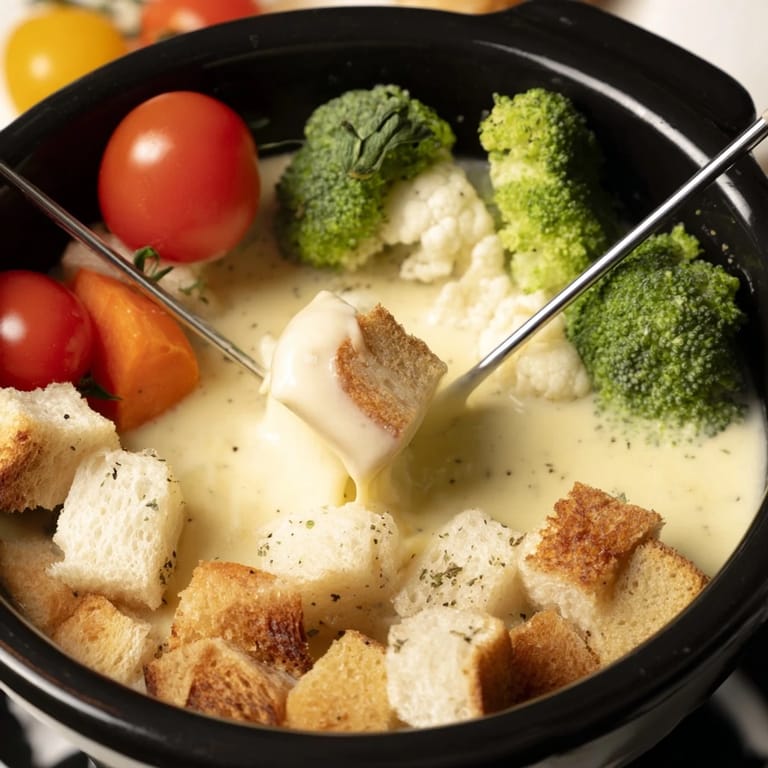
- Vegetables (blanched broccoli, cauliflower, cherry tomatoes, baby carrots): Blanching vegetables beforehand keeps them tender but with a bit of resistance; the tomatoes are raw for brightness and acidity that cuts through the richness.
Tired of Takeout? 🥡
Get 10 meals you can make faster than delivery arrives. Seriously.
One email. No spam. Unsubscribe anytime.
Instructions
- Prepare the pot with garlic:
- Cut your garlic clove in half and rub the inside of your fondue pot with the cut sides, then discard the clove. This deposits just enough garlic flavor to be sophisticated without any harshness or chunks to interfere.
- Warm the wine gently:
- Pour the white wine into the pot and place it over medium-low heat, letting it simmer softly—never aggressively boiling. You'll smell the wine warming and see just the gentlest bubbles breaking the surface.
- Coat the cheese with cornstarch:
- In a small bowl away from the pot, toss your grated Gruyère and Emmental together with the cornstarch until every strand is lightly coated. This step prevents the cheese from clumping when it hits the hot wine.
- Add cheese in a steady rhythm:
- Melt slowly and stir in figure-eights:
- Begin adding the cheese mixture a handful at a time, stirring constantly in a figure-eight motion (not circles—the figure-eight keeps you from getting stuck in one spot). The cheese will look clumpy at first, then gradually become silky; this takes patience, usually 5-7 minutes total.
- Season and finish:
- Once the cheese is completely smooth and creamy, stir in the kirsch (if using), nutmeg, and white pepper. Taste it—fondue should whisper with seasoning, not shout.
- Keep warm and serve:
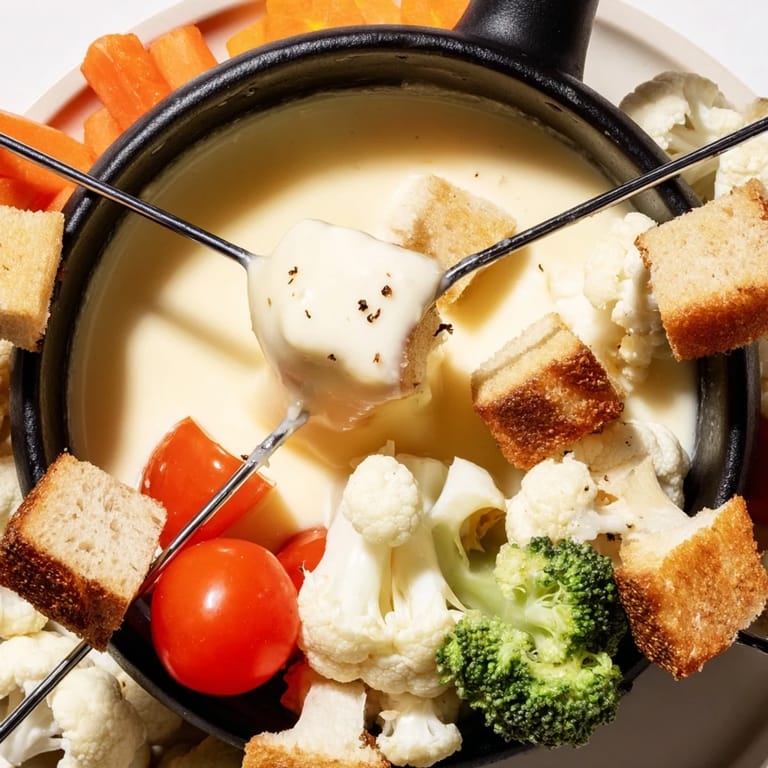
- Transfer the pot to a tabletop burner set to low heat so it stays warm and bubbling gently but never boils (boiling breaks the emulsion). Arrange your bread cubes and vegetables around it with fondue forks ready, and invite everyone to dip.
 Save to Pinterest
 What I love most about fondue isn't even the taste, though that creamy, melted richness is undeniable. It's the way it forces everyone to slow down and engage, fork in hand, completely present at the table. There's no hiding behind a phone or rushing through a meal when you're fishing in a communal pot of warm cheese.
Choosing Your Cheeses
The traditional Swiss fondue always uses Gruyère and Emmental because they were born to work together—Gruyère provides depth and character while Emmental keeps things creamy and accessible. If you want to experiment, you can substitute a small portion of either cheese with Appenzeller or even a sharp aged Cheddar, but don't stray too far from the classic combination your first time. I once tried making it with five different cheeses because I thought more variety meant better flavor, and instead I just got a confused, muddled pot that tasted like everything and nothing at once.
Wine Matters More Than You Think
The white wine in this dish isn't just a supporting player—it's essential both for flavor and chemistry, keeping the cheese emulsified and preventing graininess. A crisp, dry Swiss wine like Fendant is traditional, but a dry Sauvignon Blanc or unoaked Chardonnay works beautifully too. Avoid anything sweet or heavily oaked because those flavors will muddy the delicate cheese profile. I learned this the hard way when I used a Riesling that was slightly off-dry, thinking it would be nice, and ended up with a fondue that tasted almost caramel-like instead of savory and sophisticated.
The Dippers: Bread and Vegetables
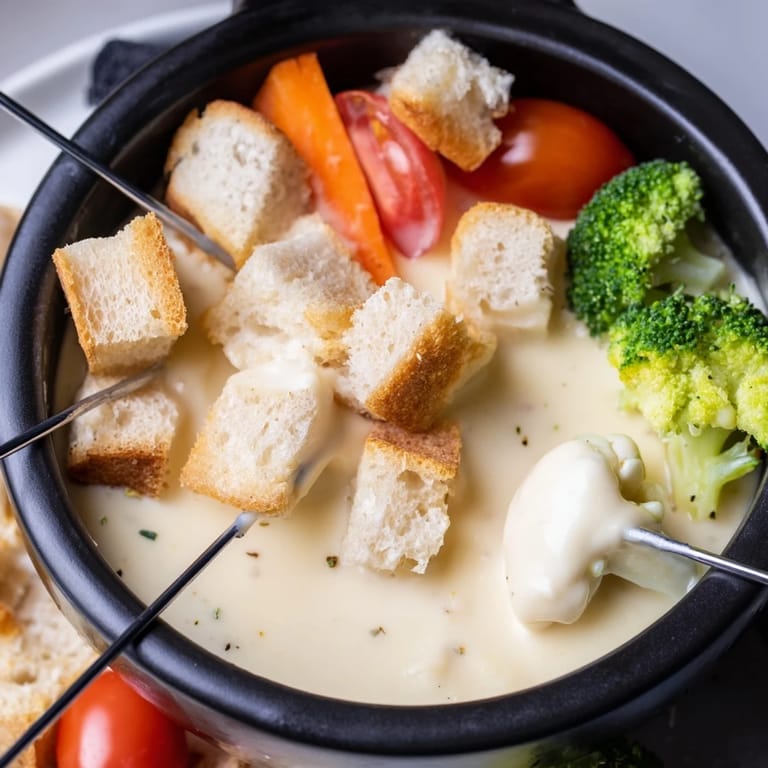
The beauty of fondue is that it's a template—you can dip almost anything, though bread cubes are traditional and vegetables add freshness that balances the richness. Blanch your broccoli and cauliflower just until they're tender but still have a little resistance (that bright green crunch is important), and keep your cherry tomatoes raw so their acidity cuts through the cheese. Slightly stale bread might sound counterintuitive, but it holds up to the weight of hot cheese and won't disintegrate on your fork mid-journey.
- Bread that's been out overnight is actually superior to fresh—it has structure and won't disappoint you halfway across the table.
- Serve vegetables at room temperature so the contrast between cold and warm is pleasant, not shocking.
- Arrange everything attractively because fondue is as much about aesthetics and ceremony as it is about eating.
 Save to Pinterest
 Fondue is one of those dishes that tastes better when shared, when there's conversation and laughter and someone inevitably loses a bread cube to the pot and everyone cheers. Make it with people you want to sit beside a little longer.
Recipe Questions & Answers
- → What cheeses work best for this dish?
Gruyère and Emmental cheeses create the ideal creamy, flavorful blend essential for this dish’s smooth texture and rich taste.
- → Can kirsch be omitted?
Yes, kirsch adds depth but is optional and can be left out without compromising the core flavors.
- → What breads pair well for dipping?
Rustic country breads or baguettes, ideally slightly stale, hold well on forks and complement the creamy cheese mixture.
- → How do you prevent cheese from clumping?
Coating grated cheese in cornstarch before melting helps keep the mixture smooth and prevents separation.
- → What vegetables are suitable for dipping?
Blanched broccoli, cauliflower florets, cherry tomatoes, and baby carrots offer fresh, crisp textures that balance the richness.