 Save to Pinterest
 Late one Tuesday night, scrolling through my phone while standing at the kitchen counter, I stumbled on a video of someone tossing ramen noodles in a wok with flames licking up the sides. The colors were electric—bright peppers, the glow of sauce coating each strand. I had instant ramen in the cupboard and about fifteen minutes before hunger got the better of me. What started as curiosity turned into something I now make constantly, and honestly, it tastes better than half the takeout I've ordered.
I made this for my roommate on a random weeknight when she came home completely defeated by work. She took one bite and just closed her eyes. We didn't talk much after that—just ate standing up at the counter, passing the pan back and forth with chopsticks. That's when I realized this dish does something special: it transforms a pantry dinner into an actual moment.
Ingredients
- Instant ramen noodles (2 packs): Throw out those flavor packets—the noodles themselves are actually perfect, with a springiness you can't replicate, and you'll build your own sauce anyway.
- Shredded cabbage (1 cup): It wilts just enough to soften but keeps some snap, and its sweetness balances the heat beautifully.
- Carrot, julienned (1 medium): Cut thin so it cooks fast and stays slightly crisp; it brings natural sweetness and color.
- Green onions (2, sliced): Add these at the very end so they stay fresh and bright—they're your flavor anchor.
- Red bell pepper, thinly sliced (1/2): The thinner you slice, the faster it cooks; any thicker and you'll be waiting for tenderness.
- Soy sauce (2 tablespoons): Use regular or low-sodium based on your salt preference; this is your umami backbone.
- Sriracha or chili garlic sauce (1 tablespoon): The heat lives here, so taste and adjust—some bottles are spicier than others.
- Oyster sauce (1 tablespoon): Swap for vegan oyster sauce or hoisin if you need it plant-based; it adds depth that soy alone can't.
- Brown sugar (1 tablespoon): It cuts through the heat and rounds out the sauce's sharpness—don't skip it.
- Sesame oil (2 teaspoons): A little goes far; it's the aromatic that makes everything smell like a proper stir-fry.
- Rice vinegar (1 teaspoon): Just enough to brighten the sauce without making it tangy.
- Ground black pepper (1/4 teaspoon): Freshly cracked if you have it; pre-ground works but adds less punch.
- Garlic, minced (2 cloves): Mince it finely so it perfumes the oil fast—chunky pieces won't cook in time.
- Vegetable oil (1 tablespoon): High smoke point is key for medium-high heat; don't use olive oil here.
- Toasted sesame seeds (1 teaspoon): Buy them already toasted or toast them yourself in a dry pan for thirty seconds; raw ones taste flat.
- Red pepper flakes (1/2 teaspoon, optional): For anyone who wants that final punch of heat.
Tired of Takeout? 🥡
Get 10 meals you can make faster than delivery arrives. Seriously.
One email. No spam. Unsubscribe anytime.
Instructions
- Prep your noodles with intention:
- Boil water, add ramen, but pull them out one minute before the package says. They'll finish cooking in the wok and stay tender instead of turning mushy. Drain them well and set aside on a plate.
- Build your sauce in a quiet moment:
- Whisk soy sauce, sriracha, oyster sauce, brown sugar, sesame oil, rice vinegar, and black pepper together in a small bowl. The sugar should dissolve mostly, and the mixture should smell simultaneously savory and hot—that's right.
- Get your wok or skillet properly hot:
- Pour in vegetable oil over medium-high heat, let it shimmer, then add minced garlic. You'll know it's ready when the garlic smell hits you immediately—about thirty seconds. Don't let it brown or it turns bitter.
- Hit the vegetables with speed:
- Toss in cabbage, carrot, and bell pepper all at once. Stir constantly for two to three minutes; they should be tender enough to eat but still have resistance when you bite them. This is where timing matters more than precision.
- Bring everything together:
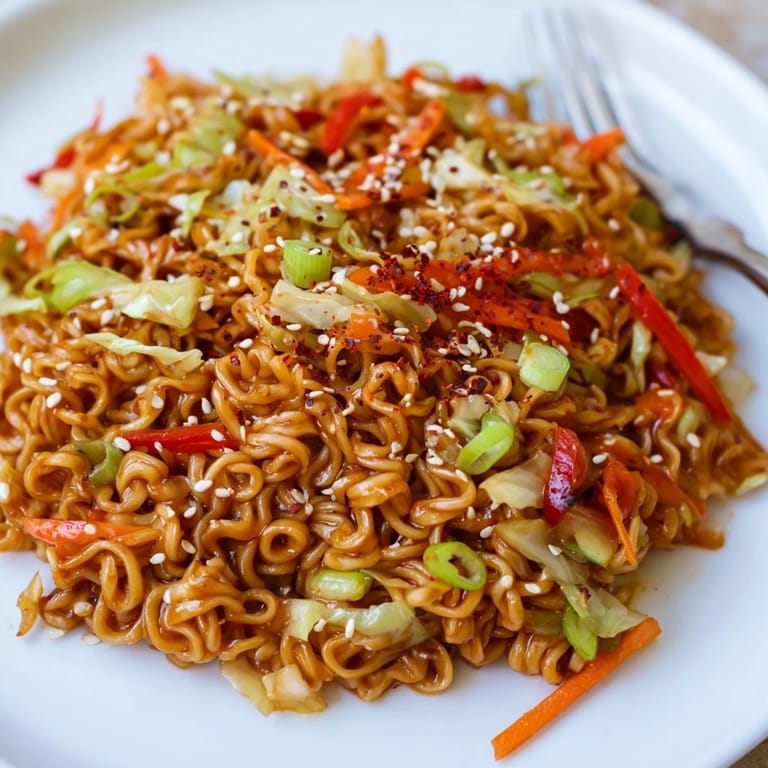
- Add your drained noodles and the sauce to the pan. Keep tossing for one to two minutes until the sauce coats every strand and the heat returns. You'll see the liquid reduce and the noodles darken slightly.
- Finish with the elements that matter:
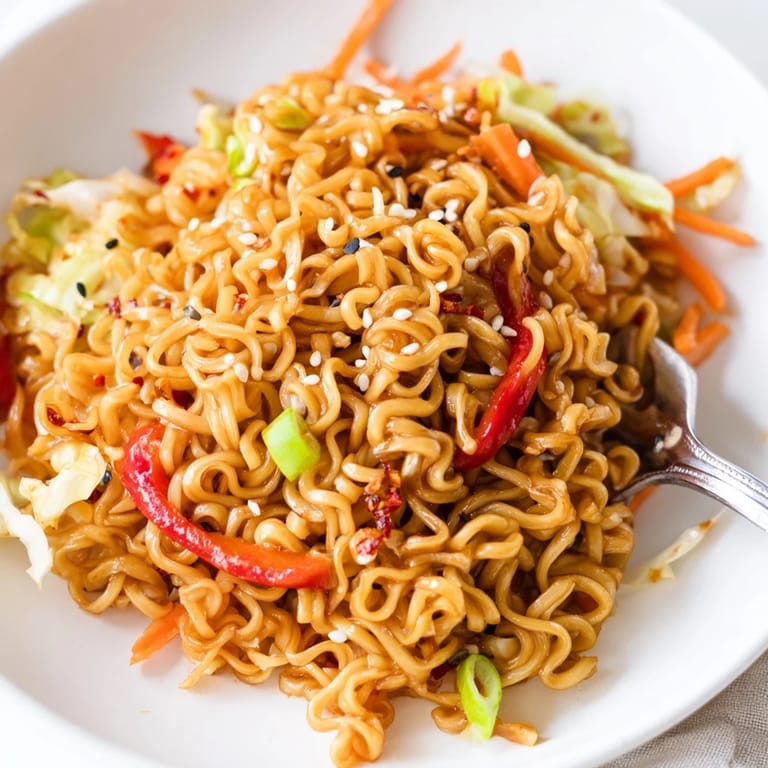
- Scatter green onions, sesame seeds, and red pepper flakes across the top, toss once more gently, then serve immediately. Heat kills the freshness of those onions, so timing this right makes all the difference.
 Save to Pinterest
 There's a moment right when everything comes together in the wok—the steam rises, the sauce darkens and clings, and the whole kitchen fills with that smell that makes people ask what you're cooking from other rooms. It's the moment I remember why I keep coming back to this.
The Heat Conversation
I've learned that spice tolerance lives in the sriracha-to-red-pepper-flakes ratio. Start with the one tablespoon of sriracha that the recipe calls for, taste it, and decide if you want to add more or lean into the optional pepper flakes. One person's perfect medium is another person's too-hot. The best part is you can taste as you go, something you never get with takeout.
Why Instant Ramen Gets a Second Chance
I used to think instant ramen was the food of last resort, something to eat when everything else failed. Then I started treating it as an ingredient instead of a finished product. The texture of these noodles, when handled right, actually outperforms fresh noodles in stir-fries because they hold their shape under the heat and sauce. It's one of those small realizations that makes you rethink what's worth cooking with.
Variations That Feel Like Discovery
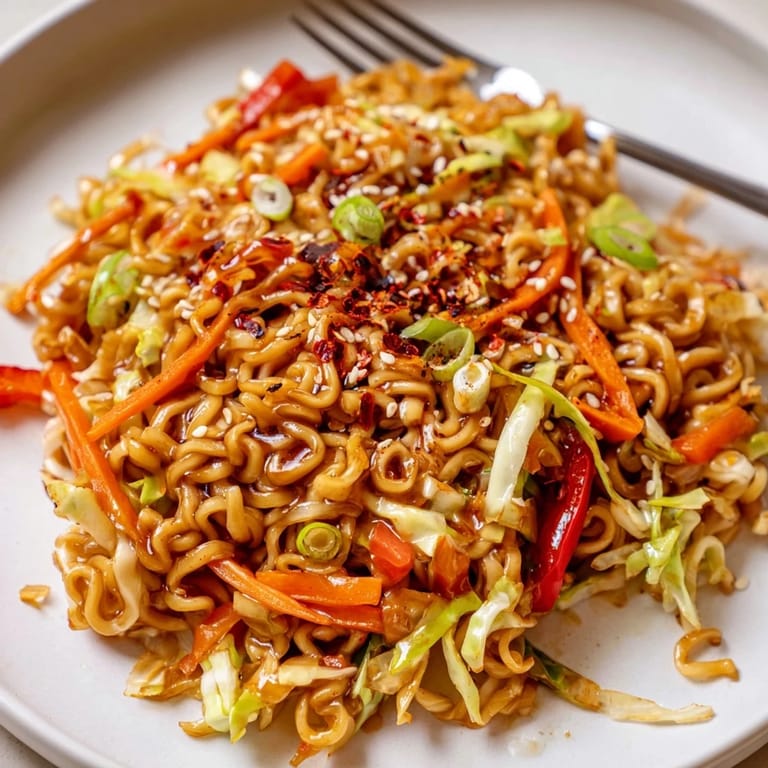
The beauty of this base is that it welcomes additions without losing its identity. I've added everything from soft-boiled eggs to sliced mushrooms to cooked tofu, and each time it feels like a new dish rather than a modification. The sauce structure is strong enough to hold whatever you add, so experimentation isn't risky here—it's invited.
- A soft-boiled or fried egg on top brings richness and visual contrast that makes it feel more substantial.
- Mushrooms, snap peas, or broccoli absorb the sauce and cook in the same timeframe as the original vegetables.
- For protein, use rotisserie chicken shredded in, cooked shrimp, or even cubed tofu if you're staying vegetarian.
 Save to Pinterest
 This ramen stir-fry became one of those meals that changed how I think about weeknight cooking. It's simple, it's fast, and it tastes deliberately made rather than thrown together.
Recipe Questions & Answers
- → Can I make this stir fry vegan?
Yes, replace the oyster sauce with vegan oyster or hoisin sauce to keep it plant-based without sacrificing flavor.
- → What noodles work best in this stir fry?
Instant ramen noodles are ideal due to their springy texture, but any thin wheat noodles can be used as an alternative.
- → How can I adjust the heat level?
Adjust spiciness by varying the amount of sriracha and red pepper flakes to suit your preferred heat tolerance.
- → What vegetables complement this dish?
Shredded cabbage, julienned carrots, bell peppers, and green onions add crispness, but feel free to include snap peas or mushrooms.
- → Can I add protein to this dish?
Absolutely! Try adding tofu, cooked chicken, shrimp, or a fried egg to boost protein and flavor.
- → Is this dish suitable for a quick weeknight meal?
Yes, it requires only 20 minutes total, making it perfect for a fast and flavorful dinner any night.