 Save to Pinterest
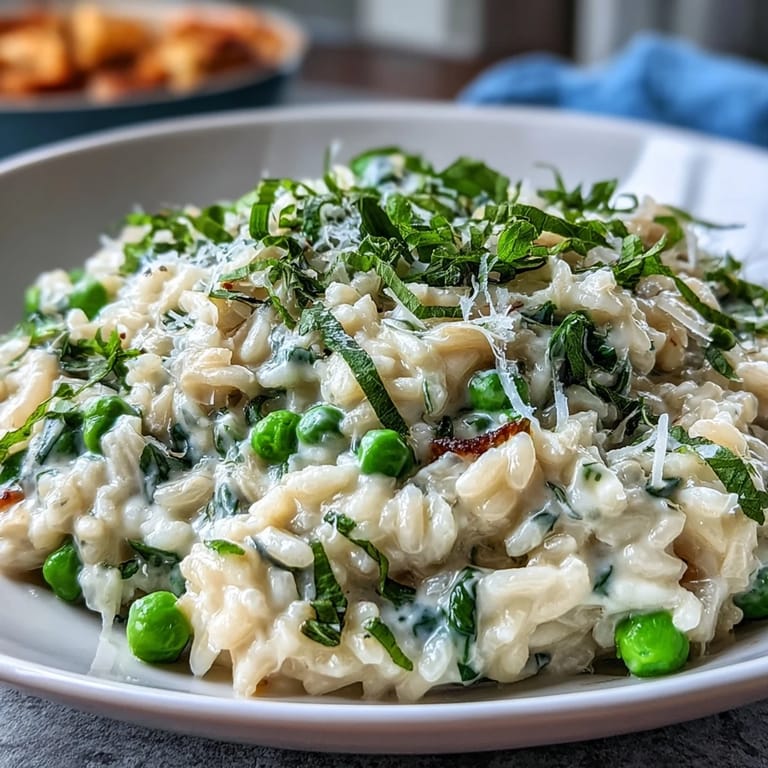
 There's something about the first warm evening of spring that makes you want to cook something green and buttery. I was standing in a farmers market on a Saturday morning, surrounded by vendors arranging their first harvest of the season, when I spotted those impossibly bright peas and a bundle of mint so fragrant it made me stop mid-stride. That afternoon, I found myself stirring rice in a quiet kitchen while the afternoon light streamed through the window, and this risotto was born—a dish that tastes like the exact moment when winter finally lets go.
I made this for my sister when she was going through a rough patch, and she sat at my kitchen counter, fork in hand, and just got quieter and quieter as she ate. When she finally looked up, she said it tasted like hope, which sounds silly but also felt completely true in that moment.
Ingredients
- Fresh or frozen spring peas, 1 cup: If you can find them fresh at the market, they're worth seeking out—frozen works beautifully too and honestly tastes just as good.
- Small onion, finely chopped: The foundation of everything; take your time chopping it small so it melts into the risotto rather than lingering in chunks.
- Garlic cloves, 2 minced: Fresh garlic makes all the difference here; that fragrant moment when you add it is non-negotiable.
- Fresh mint leaves, 2 tablespoons finely chopped: Tear or chop just before using so the oils stay vibrant and the flavor punches through.
- Lemon zest, from 1 lemon (optional but encouraged): The brightness of the zest lifts the entire dish and adds a subtle sophistication.
- Arborio rice, 1 1/2 cups: The short, starchy grains are essential—they release starches slowly and create that signature creamy texture without any cream at all.
- Unsalted butter, 3 tablespoons divided: Use butter you actually like tasting; it's a major player here, not just infrastructure.
- Grated Parmesan cheese, 1/2 cup: Grate it fresh if you can; the pre-grated stuff has anti-caking agents that prevent that silky emulsion you're after.
- Heavy cream, 1/4 cup (optional): A crutch for when you want extra insurance against a dry risotto, but honestly not necessary if you're careful with your broth.
- Vegetable broth, 4 cups kept warm: Warm broth is crucial—cold broth will shock the rice and mess with the cooking time; keep it simmering the whole time.
- Dry white wine, 1/2 cup: The acidity cuts through the richness and adds a subtle complexity; don't skip it or substitute with bad wine.
- Extra-virgin olive oil, 2 tablespoons: Good olive oil here shows itself; use something you'd actually drizzle on bread.
- Salt and freshly ground black pepper, to taste: Hold back on seasoning until the very end since the broth and Parmesan already carry salt.
Tired of Takeout? 🥡
Get 10 meals you can make faster than delivery arrives. Seriously.
One email. No spam. Unsubscribe anytime.
Instructions
- Get your mise en place ready:
- Chop your onion fine, mince the garlic, chop the mint, and zest the lemon before you start cooking. Once you begin, you won't have a free hand to do this.
- Keep the broth warm:
- Pour your vegetable broth into a medium saucepan and set it over low heat where it'll stay at a gentle simmer. This is one of those details that sounds fussy but genuinely changes how smoothly everything cooks.
- Build your flavor base:
- Heat the olive oil and 2 tablespoons of butter in a large, heavy-bottomed skillet over medium heat. Once it's shimmering and fragrant, add your chopped onion and let it soften for about 4 minutes, stirring occasionally—you want it translucent and sweet, not browned.
- Toast the garlic:
- Add your minced garlic and cook for just 1 minute until the kitchen smells incredible. This is the moment you know you're doing something right.
- Toast the rice:
- Stir in the Arborio rice and cook for 2 minutes, stirring constantly so every grain gets coated in the butter and oil. You'll notice the grains start to look slightly translucent at the edges—that's exactly what you're aiming for.
- Deglaze with wine:
- Pour in the white wine and stir until it's mostly absorbed. The rice will start to smell almost caramel-like, which is a beautiful sign.
- Begin the broth addition:
- Using a ladle, add one ladleful of warm broth to the rice and stir frequently. Wait until the liquid is mostly absorbed before adding the next ladle—this is the rhythm of risotto, and it takes patience but not much skill.
- Keep stirring and adding:
- Continue this process for 18–20 minutes, always stirring, always listening to the rice whisper as it absorbs the broth. You'll feel when it's almost there—the grains will be tender but still have the slightest resistance to your teeth.
- Add the peas at the right moment:
- When you've got about 5 minutes of cooking left, stir in the peas. They'll warm through gently without turning to mush.
- Finish with care:
- Remove from heat and stir in the remaining tablespoon of butter, the Parmesan cheese, heavy cream if you're using it, chopped mint, and lemon zest. Season with salt and pepper, tasting as you go.
- Let it rest:
- Cover the pan and let the risotto sit for 2 minutes before serving. This small pause lets everything settle into creaminess.
- Serve immediately:
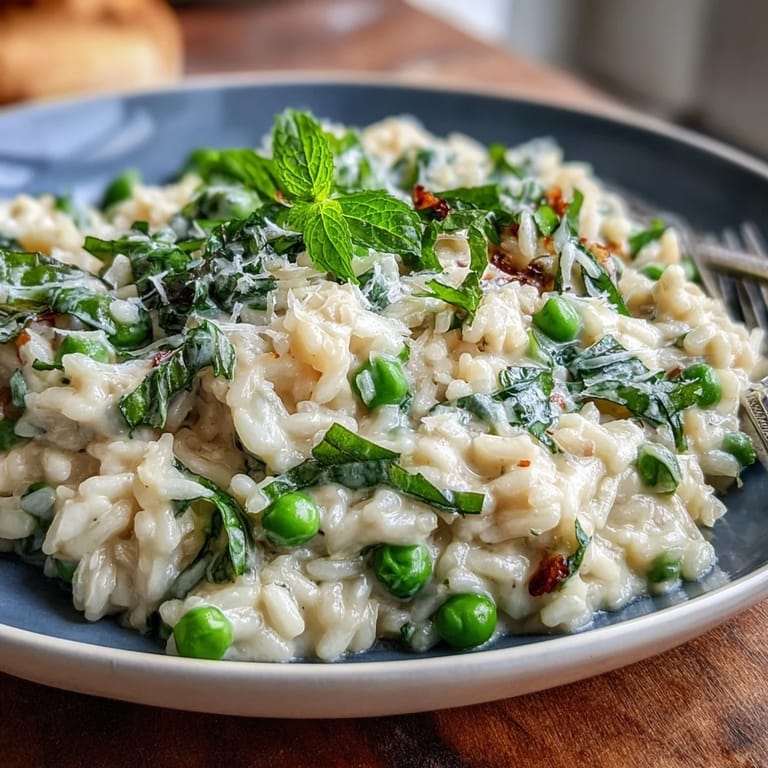
- Transfer to shallow bowls and top with extra mint and Parmesan if you're feeling generous. Risotto waits for no one.
 Save to Pinterest
 I've since made this risotto for my partner on random Tuesday nights when neither of us felt like ordering takeout, and it's become our quiet-evening dish—the kind you make when you want something comforting without the effort feeling like a chore. There's something about standing together in the kitchen, one of us stirring while the other pours wine, that makes the whole experience feel like rest instead of work.
The Technique Behind the Creaminess
Risotto seems intimidating until you realize it's just patience and starch chemistry working in your favor. The Arborio rice releases its starches slowly as it cooks, and those starches emulsify with the fat and liquid to create creaminess without needing much cream at all. The constant stirring isn't busywork—it encourages this process and keeps the rice from sticking to the bottom of the pan. Once you make one risotto successfully, you'll understand that it's not hard, just requires attention and rhythm.
Why Spring Peas and Mint Matter
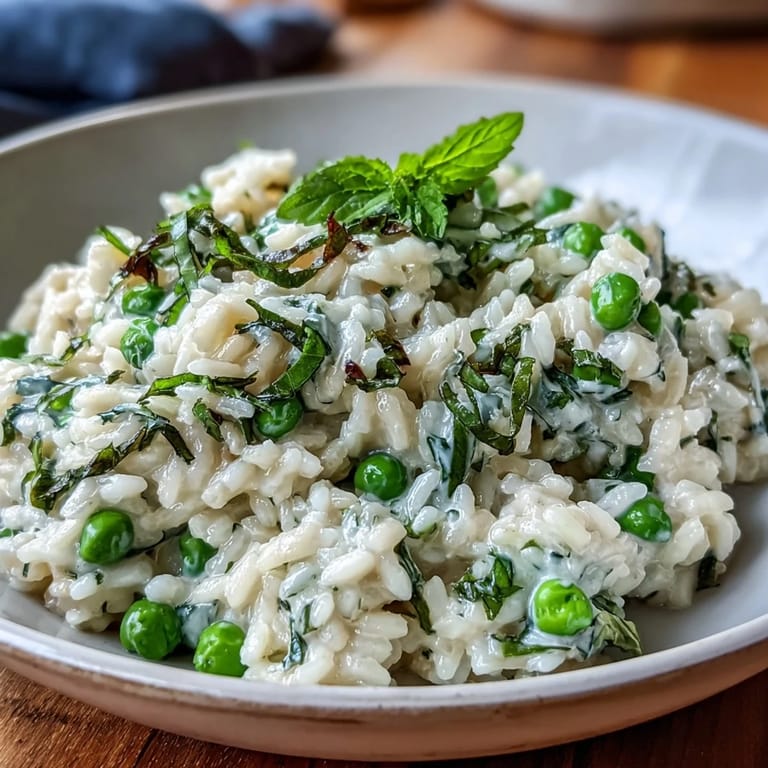
Spring peas and mint are a classic pairing for a reason—they're both fresh and slightly sweet, and together they brighten something that could otherwise feel heavy. The mint in particular does something beautiful here; it doesn't overpower, but it adds a coolness that makes you feel like you're eating something light even though the risotto is decidedly creamy and rich. The lemon zest acts as a secret amplifier, lifting all those bright flavors and making them sing.
Variations and Ways to Make It Your Own
The beauty of risotto is how adaptable it is once you understand the basic technique. I've made versions with baby spinach wilted in at the end, with toasted pine nuts stirred through for crunch, and once even with a handful of fresh basil instead of mint when that's what I had on hand. The wine can shift depending on what you're drinking—a Pinot Grigio or Sauvignon Blanc works beautifully with the peas and mint, and honestly, it's a nice excuse to open something you actually want to drink while you're cooking.
- For a vegan version, swap butter for vegan butter and use nutritional yeast or store-bought Parmesan alternative.
- Add a small splash of heavy cream only if you're nervous about the texture, but I've found it's rarely necessary if you're patient with the broth additions.
- Don't skip the final rest period—those two minutes make a real difference in the final silkiness.
 Save to Pinterest
 This risotto is the kind of dish that reminds you why people fall in love with cooking in the first place—it's simple ingredients treated with respect and attention, and the result is something that feels personal and a little bit like magic. Make it for someone you love or just for yourself on an evening when you deserve something that tastes like spring.
Recipe Questions & Answers
- → How do I achieve the creamy texture in this risotto?
Slowly adding warm vegetable broth one ladleful at a time while stirring releases the rice’s starch, creating a naturally creamy consistency.
- → Can I use frozen peas instead of fresh ones?
Yes, frozen peas work well and can be added towards the end of cooking to maintain their bright color and texture.
- → What is the purpose of adding white wine?
White wine adds acidity and depth of flavor, helping to balance the richness of butter and Parmesan.
- → Is there a substitute for Parmesan cheese?
For a dairy-free option, nutritional yeast or vegan Parmesan alternatives can provide a similar savory note.
- → How can I enhance the flavor of this dish?
Fresh lemon zest brightens the flavors, while adding fresh herbs like mint at the end keeps the dish vibrant and aromatic.
- → What wine pairs well with this dish?
Crisp Sauvignon Blanc or light Pinot Grigio complement the creamy and fresh flavors beautifully.