 Save to Pinterest
 There's something almost magical about the moment the kitchen fills with the smell of garlic and white wine hitting hot oil, and you know a really good dinner is about to happen. I discovered this seafood marinara pasta years ago when a friend casually mentioned she'd throw together whatever she had from the fishmonger with pasta and tomatoes, and it became the dish I'd make whenever I wanted to feel like I was cooking something impressive without actually stressing. The beauty of it isn't just the flavor—it's how forgiving and quick it actually is, despite looking like restaurant-level work.
I still remember the first time I made this for my partner's parents—I was nervous because his mom is an incredible cook, but the moment they tasted it, they both got quiet in that way that means it's working. My hands were shaking a little when I added the mussels because I'd heard they were temperamental, but watching them pop open in the steam felt like a small victory. That dinner became the meal I'd return to whenever I wanted to prove something without seeming like I was trying too hard.
Ingredients
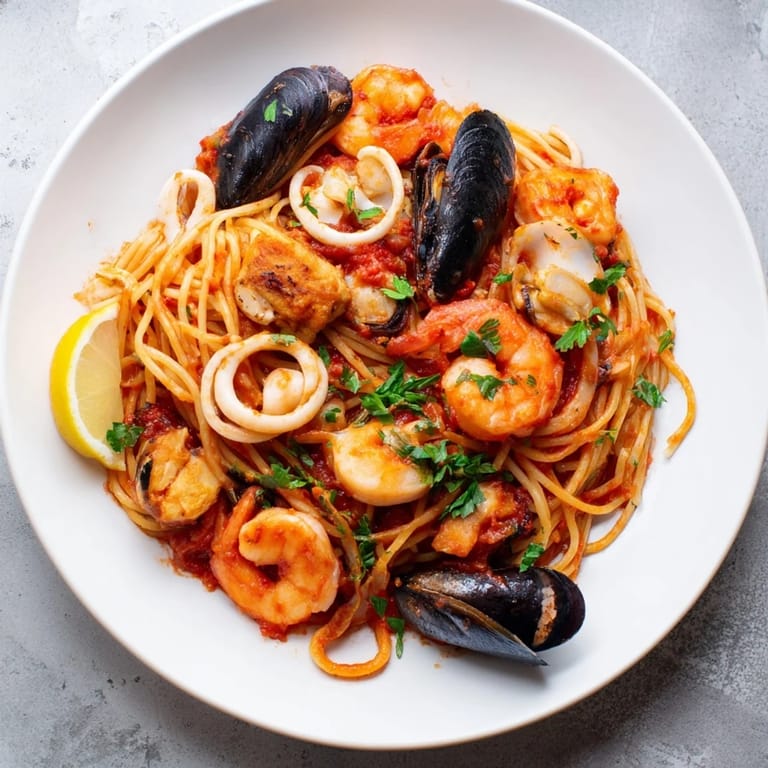
- Large shrimp (200g): Buy them with the shells on if you can, then peel them yourself—the shells make the best stock for the sauce if you're feeling ambitious, but more importantly, it helps you avoid the rubbery ones that come pre-peeled.
- Mussels (200g): Get them from a good fishmonger and ask when they came in that day, then store them on ice at home—any that don't close when tapped are dead and need to be thrown out before cooking.
- Squid rings (150g): These cook incredibly fast and turn rubbery if you're not careful, which is why adding them first gives you a buffer of time.
- Sea scallops (150g): Pat these dry before they hit the pan or they'll steam instead of sear, and look for dry scallops rather than wet ones if your store carries them.
- Spaghetti or linguine (350g): Don't skip reserving the pasta water—it's liquid gold for bringing everything together at the end.
- Olive oil (2 tbsp): Use your better oil here since it's a major flavor carrier; the heat isn't high enough to destroy it.
- Onion and garlic: The foundation that makes people ask what that incredible smell is when they walk in.
- Red pepper flakes (1/2 tsp): This is optional but it's worth including—it adds a whisper of heat that makes you taste the tomato better.
- Canned crushed tomatoes (800g) and tomato paste (2 tbsp): The tomato paste concentrate brings a richness that fresh tomatoes alone can't deliver, and good canned tomatoes matter here more than you'd think.
- Dry white wine (100ml): The acidity cuts through the richness and adds this brightness that you can't quite name but definitely notice if it's missing.
- Oregano and basil (1 tsp each): Dried herbs work beautifully in a sauce like this because they dissolve and marry with everything else.
- Sugar (1/2 tsp): Just a whisper to balance the acidity of the tomatoes—trust it even if it seems small.
- Sea salt and black pepper: The final taste adjustment is where you control the whole dish, so keep going until it tastes like you remember it tasting.
- Fresh parsley and lemon wedges: These aren't decoration—the parsley adds a grassy brightness and the lemon is the surprise your guests didn't know they needed.
Tired of Takeout? 🥡
Get 10 meals you can make faster than delivery arrives. Seriously.
One email. No spam. Unsubscribe anytime.
Instructions
- Start the pasta water and build your base:
- Get that large pot of salted water going first because it takes time, and while it's heating, warm your olive oil in the skillet and let the onions start turning soft and translucent. This overlap is how you stay ahead of the timing.
- Create the aromatic foundation:
- Once the onions are soft, add the garlic and red pepper flakes and stir constantly for just one minute—any longer and the garlic turns bitter instead of sweet. You'll know it's right when the whole kitchen smells unmistakably garlicky.
- Add brightness with wine:
- Pour in the white wine and let it bubble for a couple of minutes, which burns off the sharp alcohol and leaves behind the complexity. You'll see the liquid reduce and concentrate, which is exactly what you want.
- Build the sauce body:
- Add the crushed tomatoes, tomato paste, herbs, sugar, salt, and pepper all together, stirring until everything's combined and the color deepens. Let this simmer for about 10 minutes stirring occasionally—this isn't the time to rush, because the sauce needs to come together and deepen.
- Add the seafood in stages:
- Start with the squid and scallops first since they need the most time, giving them two minutes to begin cooking before you add the shrimp and mussels. Cover the skillet and cook for another 3-4 minutes—the shrimp will turn pink and the mussels will open, and any that stay stubbornly closed after that should be discarded.
- Marry the pasta and sauce:
- Cook your pasta to al dente, drain it while saving that pasta water, then add the hot pasta directly to the seafood sauce and toss gently. If everything feels too thick or the pasta seems dry, add a splash of that reserved pasta water—it's starchy and helps everything coat evenly.
- Taste and serve:
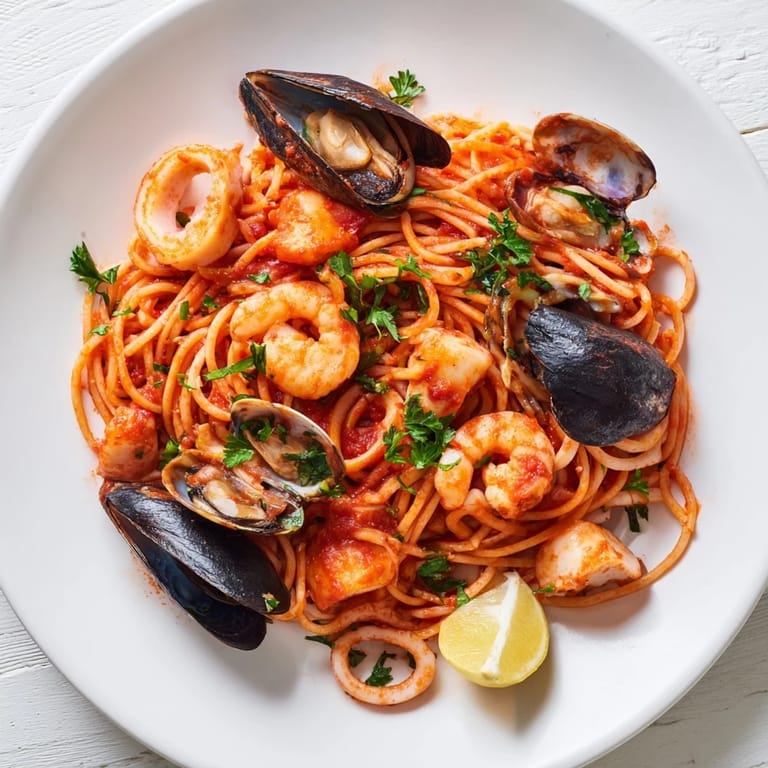
- Give the whole thing a final taste and adjust the salt and pepper—this is your moment to make it taste exactly how you want it. Serve it immediately garnished with fresh parsley and with lemon wedges on the side so people can add brightness to each bite.
 Save to Pinterest
 The thing that made me truly love this dish came during one of those nights when everything was slightly chaotic, the kids were being loud, and I made this anyway because I knew it would transform the dinner table into something calm and connected. Somehow seafood pasta has this power to make even a hectic evening feel intentional.
The Secret of Fresh Seafood
The quality of your seafood matters enormously here, more than in a lot of other dishes because there's nowhere to hide. Building a relationship with a good fishmonger changed everything for me—they'll tell you exactly when things came in, which ones are best right now, and sometimes they'll suggest combinations you wouldn't have thought of yourself. Even if you can't get to a fish counter, calling ahead to your grocery store seafood section makes a difference because they know what's coming in.
Timing Is Everything
This dish only works if you respect the timing, and the rhythm of it is actually quite beautiful once you understand it. Start your pasta water early so you're never waiting, build your sauce while the pasta cooks, and only add the seafood when you're about five minutes away from plating. The whole idea is that nothing sits around fully cooked—everything arrives at the plate in that perfect moment.
Variations and Flexibility
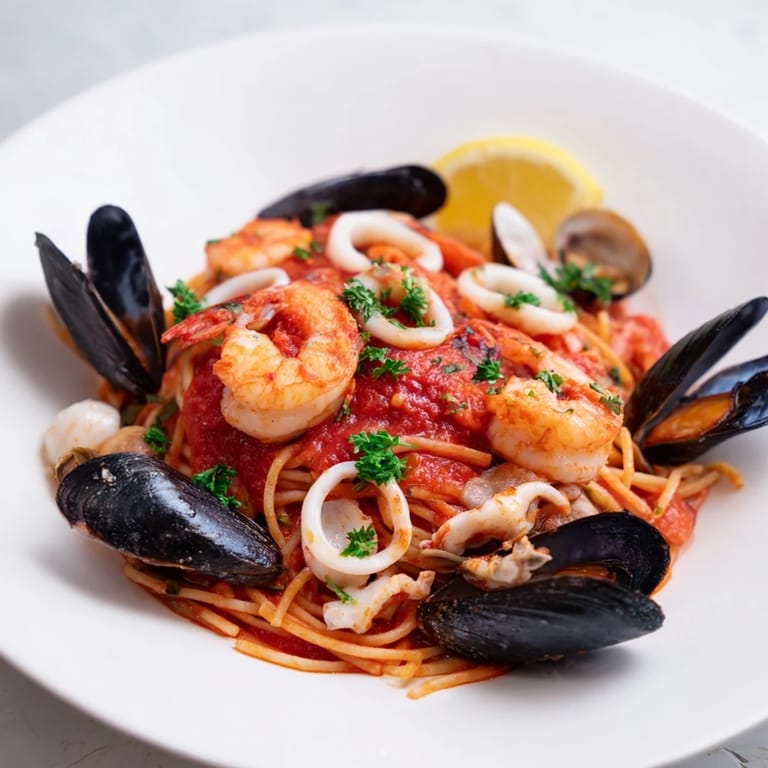
While this recipe uses four types of seafood, the wonderful thing is that you can work with what you have or what appeals to you that day. Clams work beautifully alongside or instead of mussels, firm white fish like halibut or cod can replace scallops, and even octopus adds a chewy texture if you're feeling adventurous. The sauce itself is what holds it all together, so the seafood is almost secondary to getting that tomato and wine foundation tasting the way you want.
- If you can only find frozen shrimp, thaw them thoroughly and pat them very dry so they cook evenly instead of steaming.
- A splash of seafood or vegetable stock added with the tomatoes brings an extra depth that takes the dish from good to memorable.
- Pairing this with a crisp white wine like Pinot Grigio makes the whole meal feel intentional and balanced.
 Save to Pinterest
 This is the kind of dish that reminds you why cooking matters—not because it's complicated, but because it brings people to the table feeling cared for. Make it when you want to feel like you're both relaxed and doing something special.
Recipe Questions & Answers
- → What seafood works best in this dish?
Large shrimp, mussels, squid rings, and sea scallops provide a balanced mix of flavors and textures, ideal for this preparation.
- → How can I ensure the pasta doesn’t get mushy?
Cook pasta al dente according to package instructions and reserve some pasta water to adjust sauce consistency if needed.
- → Can I make the sauce spicier?
Yes, add red pepper flakes as desired during the garlic sauté stage to introduce a gentle heat.
- → Is it necessary to use white wine in the sauce?
White wine adds depth and acidity but can be omitted or replaced with seafood stock for similar flavor complexity.
- → How should I serve the dish for best flavor?
Serve immediately after tossing pasta with the sauce, garnished with fresh parsley and lemon wedges for brightness.