 Save to Pinterest
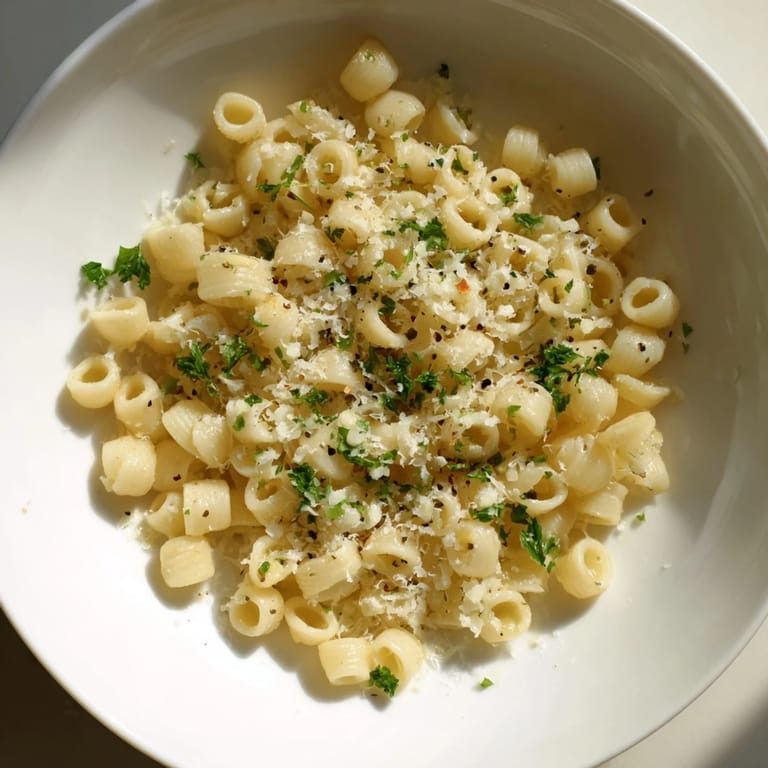
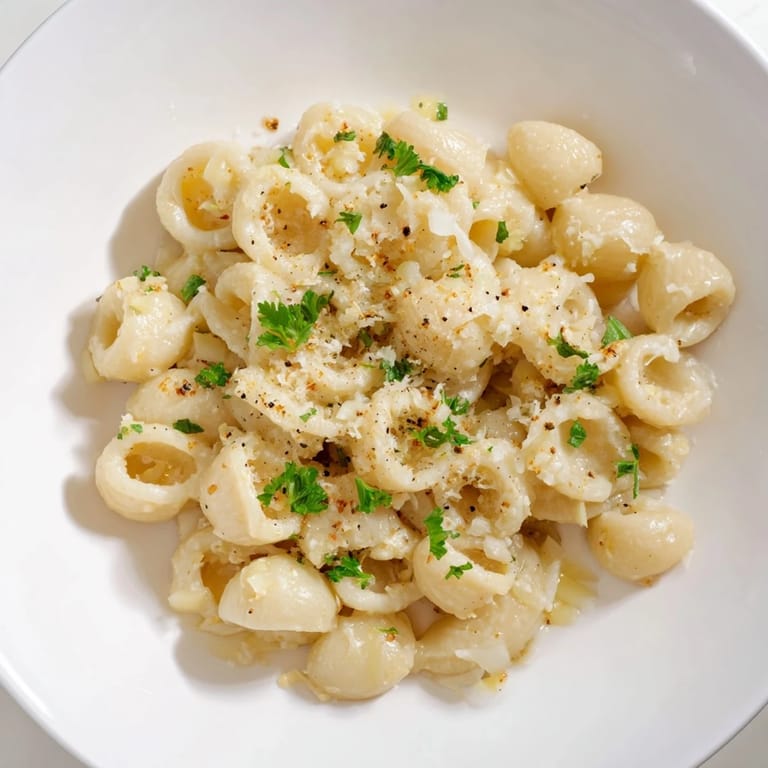
 There's something magic about the sound of butter hitting a hot pan—that gentle sizzle that promises something warm and simple is about to happen. This one-pot garlic butter ditalini came together on a Tuesday night when I had fifteen minutes and very little patience for complexity. The pasta cooks right in the broth, soaking up every bit of garlicky, buttery flavor, and by the time you stir in the Parmesan, you've got something that tastes like you've been at it for hours.
I made this for my neighbor last month when she mentioned having a brutal day at work. She came over expecting tea and conversation, and instead walked into her kitchen smelling like caramelized garlic and butter. She sat at the counter, twirled her fork through the warm pasta, and didn't say much for a few bites—which, honestly, felt like the highest compliment.
Ingredients
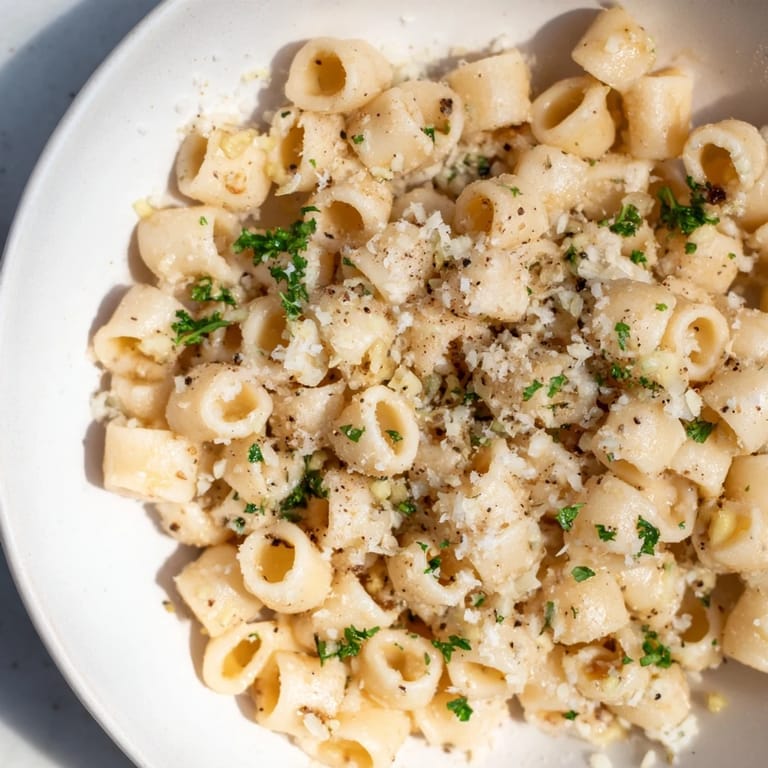
- Ditalini pasta (340 g): These small, tube-shaped pieces are perfect here because they trap the broth and butter inside, making every bite creamy rather than just coating the outside like longer pastas would.
- Chicken broth (1 liter): Use low-sodium so you can taste the garlic and butter without competing salt; vegetable broth works just as well if you're leaning vegetarian.
- Unsalted butter (3 tablespoons): This is where richness lives—don't skip it or substitute, because the emulsion it creates with the broth is the whole point.
- Garlic cloves (4 large, minced): Mince them yourself; pre-minced garlic tastes like cardboard compared to fresh cloves that hit the hot butter.
- Shallot (1 small, optional): If you add it, it softens into sweet undertones that make the dish taste more sophisticated than it has any right to.
- Parmesan cheese (60 g, freshly grated): Grate it fresh from a block—pre-grated has cellulose that prevents it from melting smoothly into the pasta.
- Black pepper and red pepper flakes: Black pepper should be freshly ground; red pepper flakes are optional but give you a subtle heat that lingers pleasantly.
- Fresh parsley (2 tablespoons, chopped): It's a finishing touch that adds color and brightness that the dish needs after simmering.
Tired of Takeout? 🥡
Get 10 meals you can make faster than delivery arrives. Seriously.
One email. No spam. Unsubscribe anytime.
Instructions
- Melt the butter with garlic:
- Cut your heat to medium and let the butter melt slowly, then add your minced garlic. You'll smell it transform from raw to fragrant in about a minute—stop when it smells good but before it turns golden, because burned garlic tastes bitter and ruins everything.
- Toast the pasta briefly:
- Stir the ditalini into that garlicky butter for a minute or so, coating every piece. This small step flavors the pasta from the inside out before the liquid even touches it.
- Add the broth and simmer:
- Pour in your broth, bring it to a rolling boil, then drop the heat back to medium-low and let it bubble gently. Stir every few minutes so nothing sticks to the bottom, which changes the flavor to something burnt and harsh.
- Cook until the pasta absorbs the liquid:
- This takes about 10 to 12 minutes depending on your stove. The pasta should be tender but with a tiny bit of firmness when you bite it, and most of the broth should be absorbed into the pasta rather than pooling at the bottom. If it looks too dry before the pasta is ready, add a splash of hot water.
- Finish with cheese and seasoning:
- Turn off the heat and stir in your Parmesan, black pepper, and red pepper flakes if you want them. Taste it and add salt gradually—you might need less than you think because the cheese and broth are already salty.
- Rest and serve:
- Let the pot sit off heat for two minutes so the residual warmth thickens everything slightly and lets the flavors settle. Scoop it into bowls, scatter parsley on top, and serve with extra Parmesan on the side.
 Save to Pinterest
 My daughter asked me once why homemade pasta dishes taste different from what she makes in her dorm room, and I realized it wasn't technique—it was that I cooked the pasta in broth instead of water. That one change is what transforms this from a quick weeknight thing into something worth talking about.
Why This Works So Well
The beauty of a one-pot pasta is that every grain of ditalini becomes a tiny vessel for the broth and butter, instead of sitting in plain salted water and then absorbing sauce after the fact. You're not building layers—you're creating one unified, cohesive dish where the pasta itself tastes like garlic and butter from the start. It's the cooking method, not the ingredients, that makes this feel like more than the sum of its parts.
Making It Your Own
This dish is a canvas if you want it to be. Stir in a handful of fresh spinach in the last minute and it wilts into something elegant. Add a chicken breast that you've diced and cooked separately, or a cup of peas, or both. Some people finish with a splash of heavy cream, which makes it richer and more sauce-like. The core recipe never changes, but the variations are endless depending on what you have and what you're hungry for.
The Small Things That Matter
Temperature control is quieter than it sounds but crucial—if your heat is too high, the pasta cooks unevenly and the bottom scorches. If it's too low, the broth never really comes alive and everything tastes a bit flat. Medium heat with occasional stirring is genuinely all you need.
- If your broth is cold when you pour it in, the cooking time stretches because you're bringing the temperature back up; warm broth is faster and more even.
- Don't wander away from the stove—this cooks too fast to ignore, and the difference between perfect and overcooked is about three minutes.
- Taste the pasta one minute before you think it's done, because it'll keep softening slightly as the liquid absorbs even after you've turned off the heat.
 Save to Pinterest
 This is the kind of dish you make when you want something satisfying without the fuss, or when you're cooking for someone who needs comfort more than complexity. It asks very little of you and gives back generously in every warm, garlicky spoonful.
Recipe Questions & Answers
- → Can I use vegetable broth instead of chicken broth?
Yes, vegetable broth works well and keeps the dish suitable for vegetarians while maintaining the rich flavor base.
- → How can I achieve a creamier texture?
Stir in a couple of tablespoons of heavy cream or milk at the end to make the pasta creamier and richer.
- → What’s the best way to prevent pasta from sticking?
Stir frequently while simmering and add a splash of hot water or broth if the mixture becomes too dry before the pasta finishes cooking.
- → Can I add vegetables or proteins to this dish?
Yes, sautéed spinach, peas, or cooked chicken can be added to make the meal heartier and increase nutritional value.
- → How should I adjust seasoning if omitting red pepper flakes?
Focus on balancing salt and pepper and consider adding a pinch of smoked paprika or chili powder for subtle heat.