 Save to Pinterest
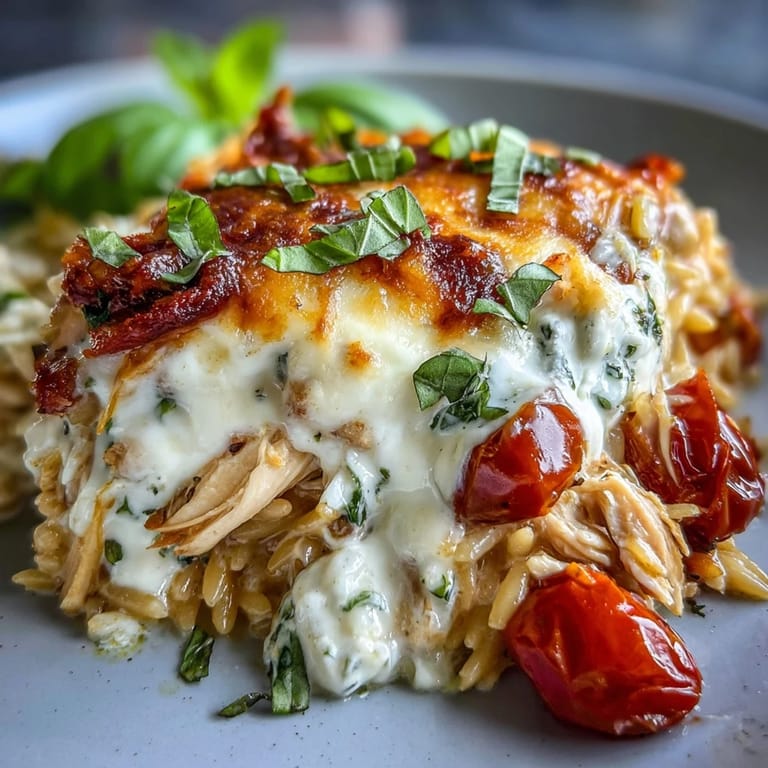
 There's something magical about weeknight shortcuts that somehow taste like you've been cooking all day. I discovered this creamy orzo trick on a Tuesday when I was staring at leftover chicken and wondering how to make it feel special without hauling out the baking dish. Twenty minutes later, my kitchen smelled like an Italian grandmother had been simmering sauce all afternoon, and honestly, nobody needed to know it came together in a single skillet.
My partner walked in mid-cook and asked what I was making before the spinach even hit the pan. When I said lasagna orzo and they got excited thinking it'd take an hour, I felt oddly proud serving it steaming hot within minutes. They came back for seconds without hesitation, which is really all the validation any weeknight dinner needs.
Ingredients
- Cooked chicken breast, shredded or diced (2 cups): Use rotisserie if you're short on time, or poach your own if you want to control the seasoning from the start.
- Olive oil (1 tablespoon): Just enough to get things sizzling without making this feel heavy.
- Yellow onion, finely chopped (1 small): The foundation that makes everything taste intentional.
- Garlic, minced (2 cloves): Add it after the onion softens so it doesn't burn and turn bitter on you.
- Cherry tomatoes, halved (1 cup): They break down into the sauce and add natural sweetness that balances the savory elements.
- Fresh spinach leaves (2 cups): It wilts down dramatically, so don't be intimidated by the volume.
- Orzo pasta (1 1/4 cups): Those tiny rice-shaped noodles absorb flavor beautifully and cook right in the broth.
- Crushed tomatoes, canned (14 oz): San Marzano if you can find them, but honestly any quality brand works.
- Low-sodium chicken broth (2 1/2 cups): Low-sodium matters here because you're controlling the salt yourself.
- Tomato paste (2 tablespoons): This concentrated umami is what gives it that slow-simmered depth.
- Heavy cream (1/2 cup): What transforms it from tomato-forward into creamy and luxurious.
- Shredded mozzarella cheese (1 cup): The melting cheese that ties everything together.
- Grated Parmesan cheese (1/2 cup): Adds a sharp, salty note that keeps it from tasting one-dimensional.
- Ricotta cheese for dolloping (3/4 cup): Those creamy pockets scattered on top are what make people think you actually made lasagna.
- Dried Italian herbs (1 teaspoon): Oregano, basil, thyme blend that you probably already have.
- Crushed red pepper flakes (1/4 teaspoon optional): For anyone who likes a whisper of heat without announcing it.
- Kosher salt and black pepper, to taste: Taste as you go because everything's seasoning at different rates.
- Fresh basil leaves for garnish: The final touch that makes it look intentional rather than rushed.
Tired of Takeout? 🥡
Get 10 meals you can make faster than delivery arrives. Seriously.
One email. No spam. Unsubscribe anytime.
Instructions
- Start with the foundation:
- Heat olive oil in your large deep skillet over medium heat and add the chopped onion. Let it soften for two to three minutes until it's translucent and starting to smell sweet, then add the minced garlic and let it toast for just thirty seconds so it releases its fragrance without burning.
- Coax flavor from the fresh tomatoes:
- Stir in your halved cherry tomatoes and let them cook down for about two minutes until they start to collapse and release their juices into the bottom of the pan.
- Build the base sauce:
- Add the dry orzo pasta and tomato paste, stirring everything together so the paste coats the grains and starts to caramelize slightly. Pour in your crushed tomatoes and chicken broth, then season with Italian herbs, red pepper flakes if using, salt, and pepper.
- Let it simmer into magic:
- Bring the whole thing to a simmer, then cover and cook for eight to ten minutes, stirring occasionally, until the orzo is tender and most of the liquid has been absorbed into the grains. You want it saucy but not soupy.
- Introduce the proteins and greens:
- Stir in your shredded chicken, spinach, and heavy cream, and cook for about two minutes until the spinach wilts down and the chicken heats through. The whole thing should smell impossibly good by now.
- Melt the cheese together:
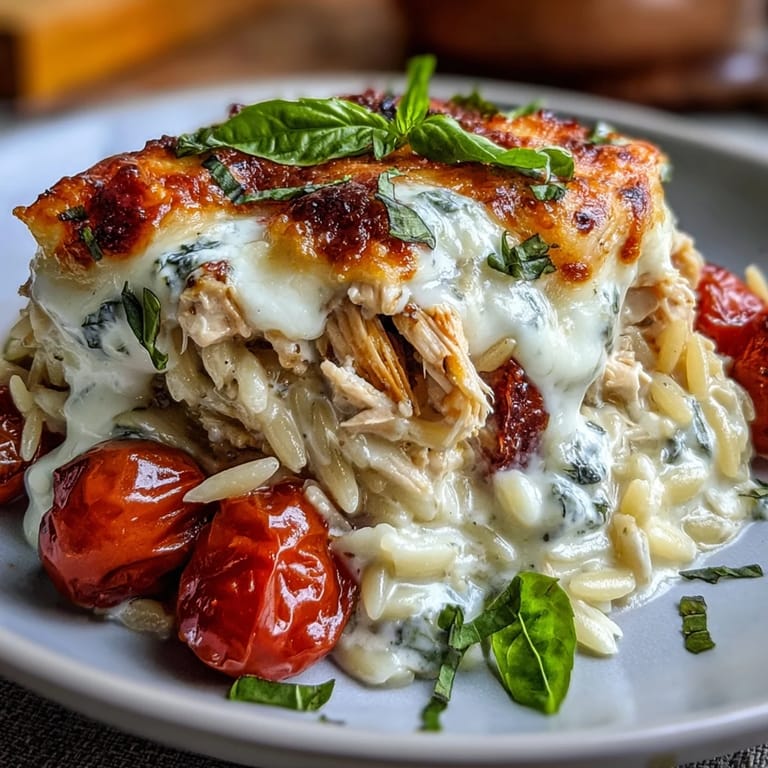
- Sprinkle the mozzarella and Parmesan over the top and gently fold everything together, letting the heat melt the cheeses throughout and thicken the sauce into something silky.
- The final touch:
- Remove from heat and dollop generous spoonful of ricotta across the top, then scatter fresh basil over everything. Serve hot while the ricotta's still soft and the whole pan is steaming.
 Save to Pinterest
 A friend mentioned she'd been trying to eat healthier but wasn't willing to sacrifice comfort food, so I made her a bowl of this and watched her expression shift from skepticism to genuine satisfaction. Sometimes the best meals are the ones that sneak up on you and prove that shortcuts don't mean sacrifice.
Why This Works as a Weeknight Dinner
The genius of cooking the pasta directly in the broth instead of in a separate pot means it absorbs all those tomato and garlic flavors as it cooks, so you get way more complexity than you would from plain boiled pasta. Plus, there's no draining, no extra dishes, and the starch from the pasta actually helps thicken the sauce naturally. It's the kind of shortcut that actually improves the dish rather than diminishing it.
Flexibility is Built In
I've made this when I had no fresh spinach and swapped in frozen, which thawed right into the sauce without changing anything. I've also done versions with mushrooms when I was out of chicken, or added extra zucchini that was sitting in my crisper drawer about to go bad. The formula is sturdy enough to handle whatever vegetables you have on hand, so it never feels like you're following orders.
Pairing and Storage Thoughts
Serve it alongside a crisp green salad dressed simply with lemon and olive oil to cut through the richness, and garlic bread if you want people to feel truly taken care of. Leftovers actually taste even better the next day as the flavors settle together, though the ricotta will firm up a bit, so consider warming gently and stirring in a splash of extra cream.
- Make it vegetarian by omitting the chicken and doubling down on mushrooms or adding roasted zucchini for substance.
- Use gluten-free orzo if you need to, and it'll cook the same way with the same timing.
- Taste and adjust seasoning at the end because every brand of broth tastes slightly different.
 Save to Pinterest
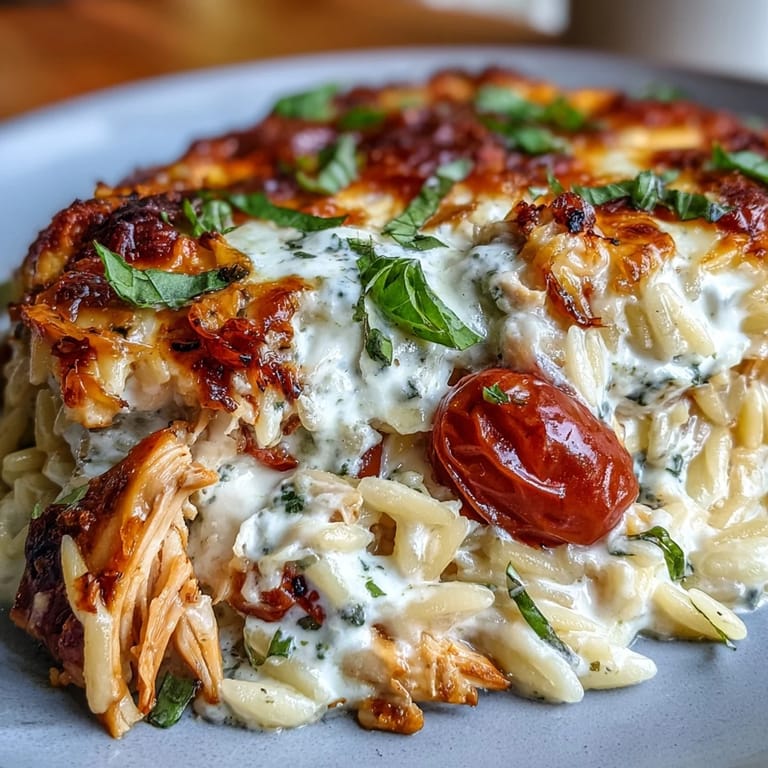
 The best part about this dish is how it feels like you've done something elaborate when really you've just orchestrated a thirty-minute dinner that tastes like love. That's the real magic right there.
Recipe Questions & Answers
- → Can I make this dish vegetarian?
Yes, simply omit the cooked chicken and substitute with sautéed mushrooms, diced zucchini, or extra spinach. You may want to increase the vegetables to 2-3 cups total to maintain heartiness.
- → What can I substitute for orzo pasta?
Small pasta shapes like pastina, acini di pepe, or even broken spaghetti pieces work well. For gluten-free options, use rice-shaped gluten-free pasta or quinoa. Adjust cooking liquid as needed since different pastas absorb liquid differently.
- → How do I store and reheat leftovers?
Store cooled leftovers in an airtight container in the refrigerator for up to 4 days. The orzo will continue absorbing liquid, so add a splash of chicken broth or water when reheating on the stovetop or in the microwave. Reheat gently over medium-low heat, stirring occasionally.
- → Can I use uncooked chicken instead of pre-cooked?
Absolutely. Dice raw chicken breast into bite-sized pieces and cook it with the onion in step 1 for 5-7 minutes until browned and cooked through before proceeding with the garlic. This adds about 5 minutes to the prep time but eliminates the need for pre-cooked chicken.
- → Why is my orzo sauce too thick or dry?
Orzo continues absorbing liquid as it sits. If the mixture becomes too thick, simply add warm chicken broth 1/4 cup at a time until you reach the desired creamy consistency. The sauce should be loose enough to coat the pasta generously but not soupy.
- → Can I freeze this dish?
While possible, freezing may affect the creamy texture. The dairy can separate slightly upon thawing. If freezing, do so before adding the final cheeses and ricotta. Thaw overnight in the refrigerator, reheat with additional broth, then add fresh cheeses before serving.