 Save to Pinterest
 There's something about opening the vegetable drawer on a warm afternoon and finding everything you need for a proper salad staring back at you. I'll never forget the summer my neighbor handed me a bag of tomatoes so ripe they were practically splitting open, and I suddenly understood what Mediterranean cooking was really about—it's not trying too hard, just letting good ingredients speak for themselves. That's when I stopped overthinking salads and started making this one.
I made this for a dinner party once where I was convinced I'd messed something up because it seemed too simple. My friend took a bite, closed her eyes for a second, and said nothing needed fixing—sometimes the best things are just vegetables and salt and oil, and people forget that's allowed.
Ingredients
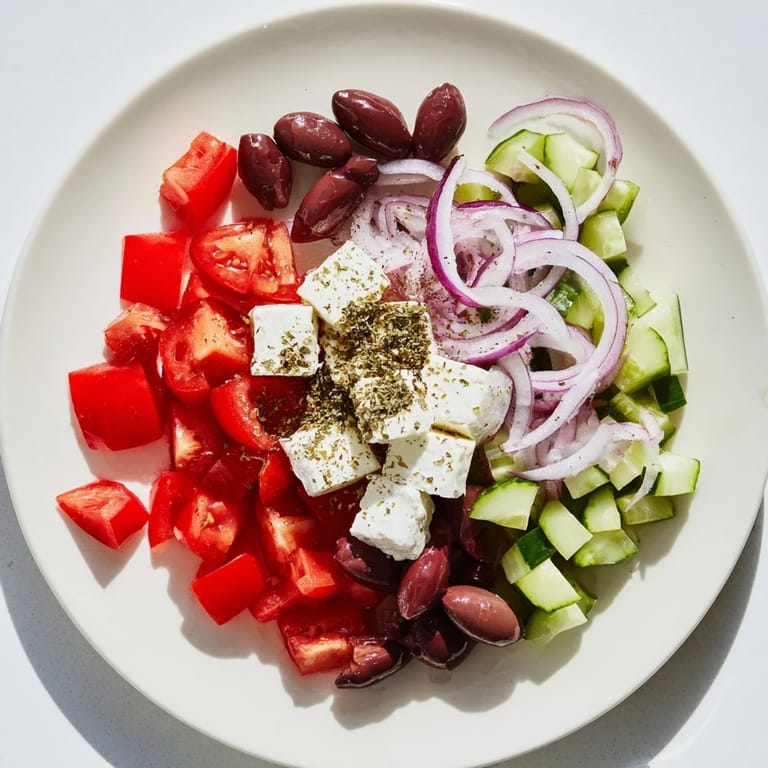
- Ripe tomatoes: Use ones that smell like tomato, not the pale imposters that taste like water. The ripeness is everything here because you've got nothing else to hide behind.
- Crisp cucumber: A standard English cucumber works, but Persian cucumbers are smaller and sweeter if you can find them. Dice it the same size as your tomatoes so everything feels balanced.
- Red onion: Thin slices matter—thick ones will take over the whole salad and overpower everything else like they're the star of a movie that's actually an ensemble piece.
- Feta cheese: Buy a block if you can and crumble it yourself. Pre-crumbled feta gets dusty and weird; it needs to be in larger pieces so it stays creamy.
- Kalamata olives: Pit them yourself if they're not already pitted, or buy the good ones that come pre-pitted. Their salty brine is basically half your dressing already.
- Extra virgin olive oil: This is not the time to use the cooking oil. Find one with some personality, something that tastes alive when you taste it plain.
- Red wine vinegar: It has just enough bite without being aggressive, which is exactly the personality this salad needs.
- Dried oregano: Fresh is lovely but dried oregano actually adds something here—a Mediterranean herb note that feels right at home.
Tired of Takeout? 🥡
Get 10 meals you can make faster than delivery arrives. Seriously.
One email. No spam. Unsubscribe anytime.
Instructions
- Gather and cut:
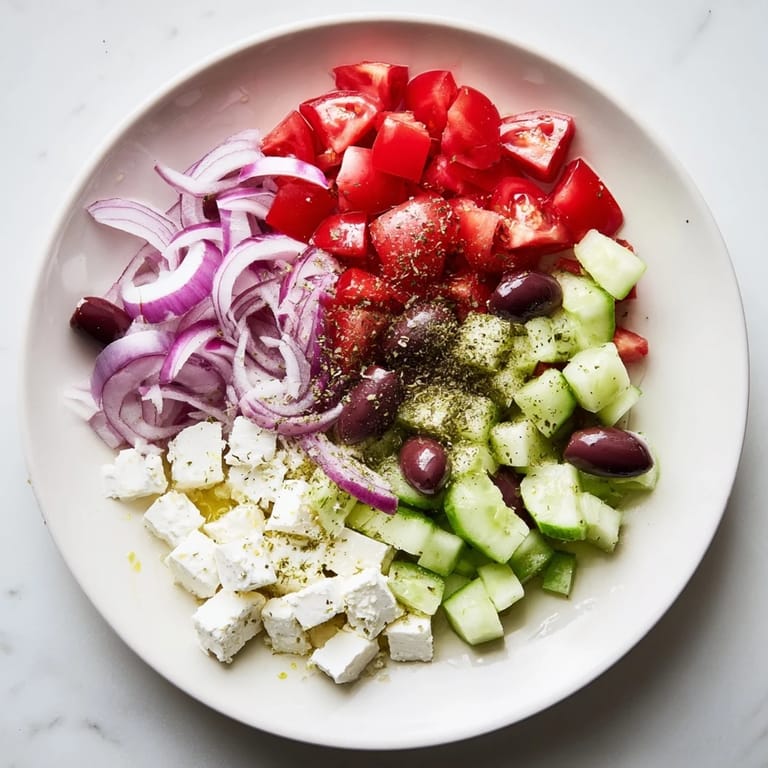
- Line up your tomatoes, cucumber, and onion and cut them all to roughly the same size. This doesn't have to be perfect, but it matters—you want each bite to have a little bit of everything.
- Make the base:
- Pile the tomatoes, cucumber, onion, and olives into your bowl. Don't stress about them rolling around; they're about to get tossed anyway.
- Add the cheese:
- Scatter the feta over the top and barely touch it. Toss just enough to distribute it, not so much that you're pulverizing it into submission.
- Build the dressing:
- Whisk together the oil, vinegar, oregano, salt, and pepper in a small bowl until it looks like something worth drizzling. Taste it on a piece of vegetable if you're nervous—adjustments are easy at this point.
- Bring it together:
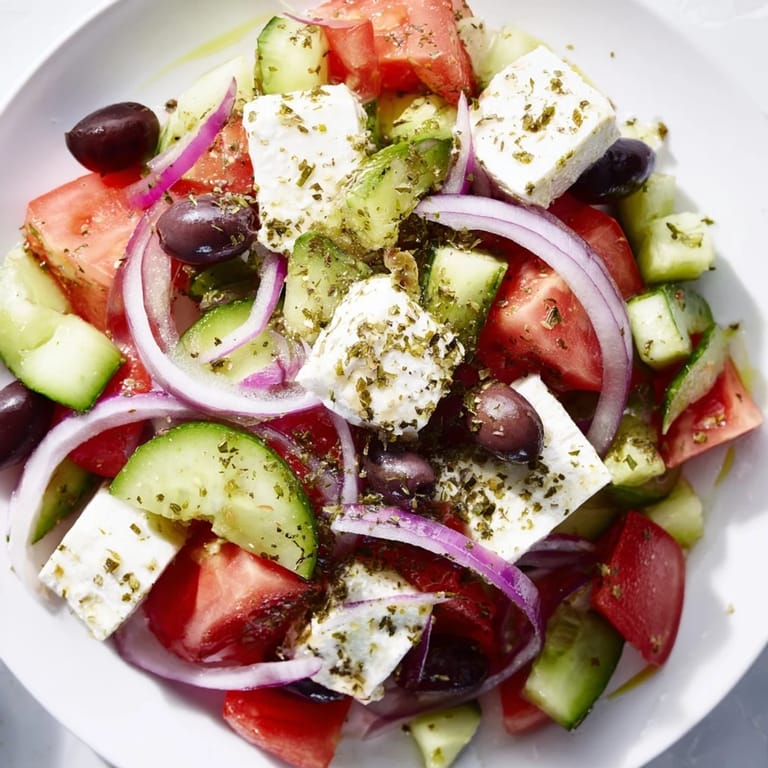
- Pour the dressing over everything and toss gently, almost like you're handling something delicate. Serve it right away while the vegetables are still crisp.
 Save to Pinterest
 My grandmother used to make a version of this with whatever vegetables were ripest that day, and she'd sit outside to eat it in the evening light. I never realized until much later that she was teaching me that food doesn't need to be complicated to make someone feel cared for.
Why This Salad Works
Mediterranean cooking is about restraint and respect for ingredients. When you've got tomatoes that actually taste like tomatoes and olives that are briny and real, you don't need much else. The dressing isn't trying to be fancy; it's just oil and vinegar and one herb that reminds you where this salad comes from. That simplicity is what makes it feel right for a summer dinner, a picnic, or just Wednesday night when you want something that tastes like it matters without spending hours in the kitchen.
How to Make It Your Own
This salad is a canvas, honestly. I've added crumbled feta with roasted red peppers, I've thrown in capers when I had them, I've even stirred in white beans to make it more of a meal. The structure stays the same—good vegetables, good cheese, good dressing—but the details can shift based on what your garden or market is offering that day.
Serving and Storage
Serve this right away while the vegetables are at their crispest, even though it won't suffer if you wait a bit. It actually keeps well in the refrigerator for a couple of days, though the tomatoes will get softer and the cucumber will gentle down. Pair it with crusty bread for soaking up the dressing, or let it sit alongside grilled fish or chicken where it refreshes your palate between bites.
- Make this an hour ahead and let it chill if you're bringing it somewhere, but don't dress it until right before you serve it.
- If you're feeding a crowd, keep the dressing separate and let people dress their own portion—everyone has different feelings about how wet their salad should be.
- Leftover dressing gets better as it sits, so make extra and use it on tomorrow's vegetables.
 Save to Pinterest
 This salad asks so little of you and gives so much back—bright and clean and completely itself. Make it when you want to remember why you love vegetables in the first place.
Recipe Questions & Answers
- → What type of cheese is used?
Crumbled or cubed feta cheese adds a creamy, tangy element that complements the vegetables.
- → Can olives be substituted?
Kalamata olives provide a briny depth, but other black olives can be used based on preference.
- → Is there a recommended dressing?
A simple mix of extra virgin olive oil, red wine vinegar, oregano, salt, and pepper creates a zesty dressing.
- → What herbs can enhance this salad?
Fresh parsley or mint work well as garnishes, adding brightness and aroma.
- → How long does it take to prepare?
The salad can be prepared in about 15 minutes, making it a quick, fresh option.