 Save to Pinterest
 I discovered this bowl on a Tuesday afternoon when I had exactly nothing in my fridge except a forgotten can of chickpeas and a determined hunger. Twenty minutes later, I was eating something that tasted like a Mediterranean vacation, all crispy edges and bright lemon, and I realized I'd stumbled onto something I'd be making constantly. It's become my go-to lunch when I want to feel nourished without spending hours in the kitchen.
My roommate came home to the smell of paprika and cumin filling our tiny kitchen, and before I could even finish assembling my bowl, they were asking for their own. We sat on the balcony with these colorful bowls, and somehow it turned into one of those unexpected moments where simple food feels like celebration.
Ingredients
- Chickpeas: Two cans, drained and rinsed really well—this removes the starchy liquid that would make them less crispy when roasted.
- Olive oil: Essential for getting those chickpeas golden and crunchy; don't skip this.
- Ground cumin and smoked paprika: These two are the soul of the dish, building warmth and depth without overwhelming.
- Garlic powder, salt, and black pepper: The supporting cast that ties everything together.
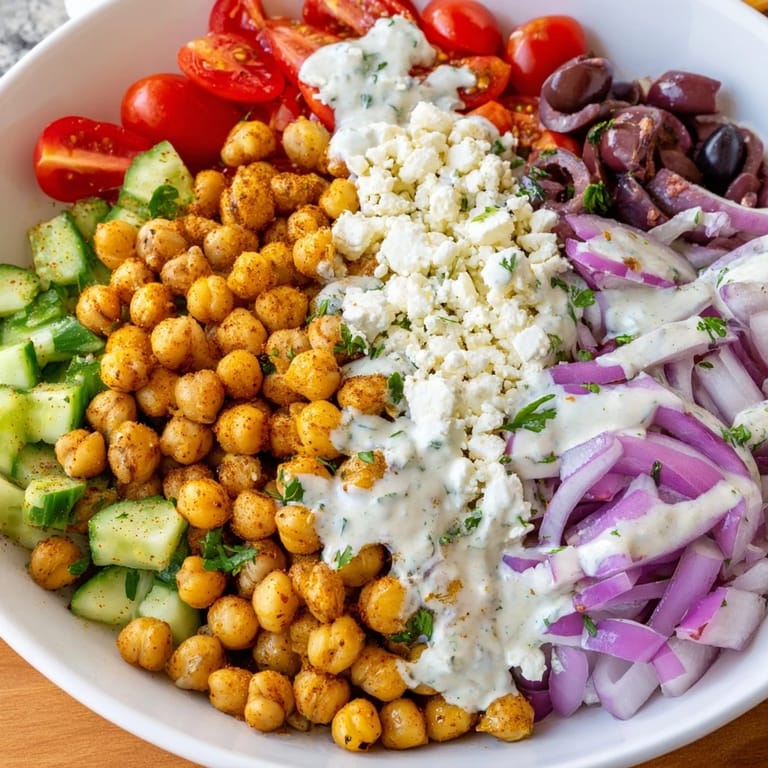
- Cherry tomatoes: Halve them so they release their juice and flavor into every forkful.
- Cucumber: Diced cucumber stays crisp and cool, a textural contrast to the roasted chickpeas.
- Red onion: Thinly sliced so it softens slightly but keeps its bite and sweetness.
- Red bell pepper: Diced and raw, it adds sweetness and bright color that makes the bowl look alive.
- Kalamata olives: Pitted and sliced, these contribute a salty, briny punch that makes you taste the Mediterranean.
- Fresh parsley: Chopped just before serving so it stays vibrant and herbaceous.
- Cooked quinoa or brown rice: Optional but recommended if you want this to be truly filling as a main dish.
- Tahini: The creamy anchor of the dressing, made from sesame seeds and worth using good quality.
- Lemon juice: Fresh squeezed if you can manage it; it brightens and balances the tahini beautifully.
- Feta cheese: Crumbled over top for creaminess and tang, but easy to omit if you're keeping it vegan.
Tired of Takeout? 🥡
Get 10 meals you can make faster than delivery arrives. Seriously.
One email. No spam. Unsubscribe anytime.
Instructions
- Start your oven and prep your chickpeas:
- Preheat to 400°F and pat your drained chickpeas very dry with paper towels—any moisture clinging to them will steam instead of roast. In a bowl, toss them with olive oil, cumin, smoked paprika, garlic powder, salt, and pepper until every chickpea is coated.
- Roast until golden:
- Spread them on a baking sheet in a single layer and roast for 20 to 25 minutes, shaking the pan halfway through. You're looking for that moment when they've turned golden and crispy, with some darker edges.
- Prep your vegetables:
- While the chickpeas roast, halve your cherry tomatoes, dice your cucumber and bell pepper, thinly slice your red onion, and pit and slice your olives. Chop your parsley fresh just before assembling so it stays bright.
- Make the tahini dressing:
- In a small bowl, whisk tahini, fresh lemon juice, olive oil, minced garlic, salt, and a few tablespoons of water until it's smooth and pourable. Start with 2 tablespoons of water and add more a little at a time until you reach the consistency you want.
- Assemble your bowls:
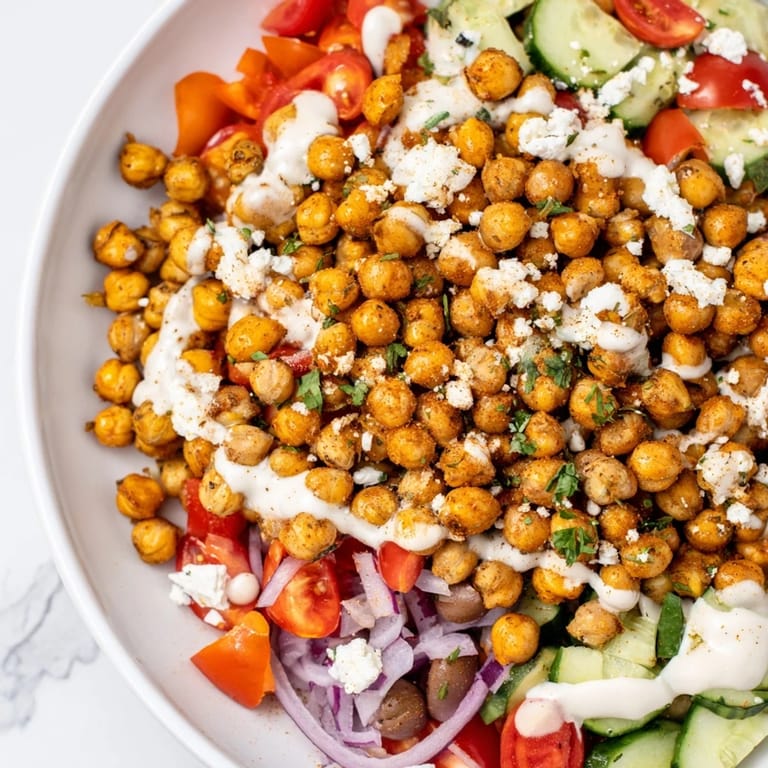
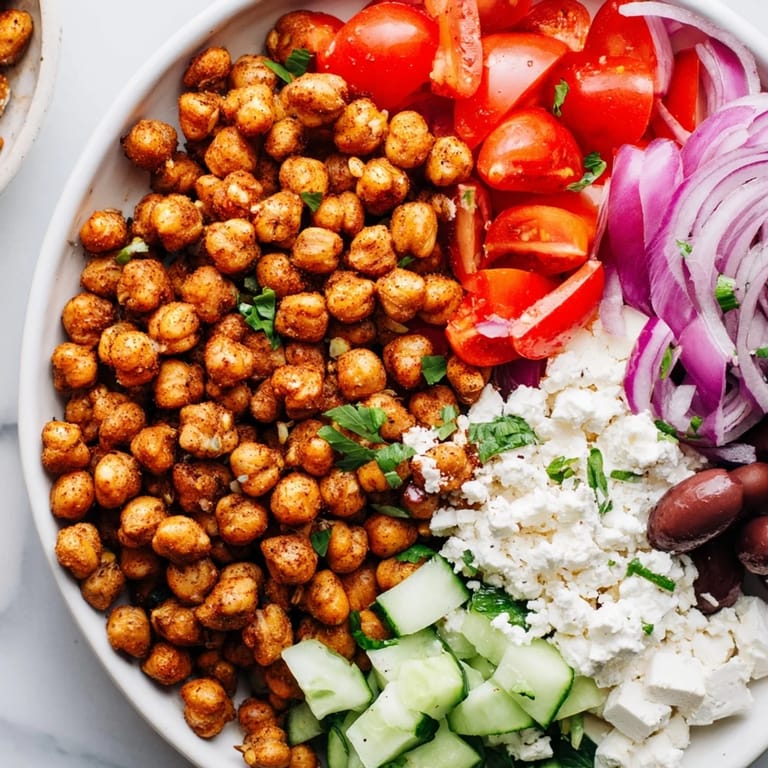
- If using grains, divide your cooked quinoa or rice among four bowls. Top each with roasted chickpeas, then scatter your vegetables around—tomatoes, cucumber, onion, bell pepper, olives, and parsley. Drizzle generously with tahini dressing, sprinkle feta if you're using it, and finish with a lemon wedge.
 Save to Pinterest
 There's something grounding about building a bowl by hand, choosing where each element goes, tasting as you build. It stopped feeling like just lunch and started feeling like creating something that reflected how I wanted to eat.
Make It Your Own
This bowl is endlessly adaptable, which is part of why it works so well as a go-to meal. If quinoa doesn't appeal, brown rice or farro work beautifully, or skip grains entirely if you want something lighter. In summer, I add grilled zucchini and artichoke hearts; in cooler months, I'll roast chickpeas with more cumin and add roasted sweet potato instead of some of the fresh vegetables. The dressing stays the same, but everything else is open to interpretation.
Batch Cooking Strategy
I learned early on that prepping components in advance is a game-changer. You can roast the chickpeas up to three days ahead, chop all your vegetables the night before and store them separately, and make the tahini dressing in the morning. Then at lunchtime, you're just assembling, which takes five minutes and makes it genuinely easy to eat well on busy days.
Serving and Storage
Eat these bowls fresh and assembled, right when you've finished drizzling on the dressing. If you're packing this for lunch, keep the components separate in containers and assemble just before eating. The tahini dressing can be stored in an airtight container in the fridge for up to four days, and the roasted chickpeas will stay crispy in a sealed container for three days.
- Pack the dressing on the side so vegetables don't get soggy hours later.
- If you're making ahead, skip the fresh parsley and add it right before eating so it stays vibrant and herbaceous.
- Leftover roasted chickpeas are irresistible as a snack straight from the container or scattered over salad.
 Save to Pinterest
 This bowl has become my answer to the question of how to eat well without overthinking it. It's colorful, satisfying, and tastes like care without demanding hours of your time.
Recipe Questions & Answers
- → How do I roast the chickpeas for crispiness?
Pat chickpeas dry, toss with olive oil and spices, then spread on a baking sheet. Roast at 400°F (200°C) for 20–25 minutes, shaking halfway to ensure even crisping.
- → Can I substitute the grains in this bowl?
Yes, quinoa can be swapped with brown rice, farro, or omitted entirely for a lighter dish.
- → Is the tahini dressing easy to prepare?
Absolutely. Whisk tahini with lemon juice, olive oil, minced garlic, salt, and water until smooth and pourable.
- → What makes this bowl suitable for a vegan diet?
All components are naturally plant-based; simply omit feta cheese to keep the bowl fully vegan.
- → How can I add extra protein to this meal?
Incorporate grilled chicken or tofu for additional protein without altering the bowl’s vibrant flavors.