 Save to Pinterest
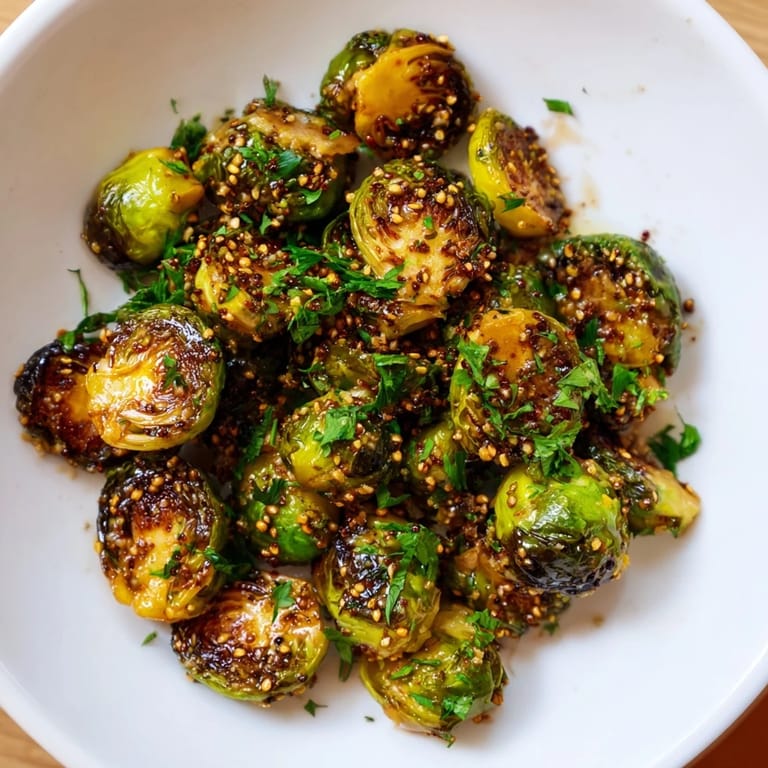
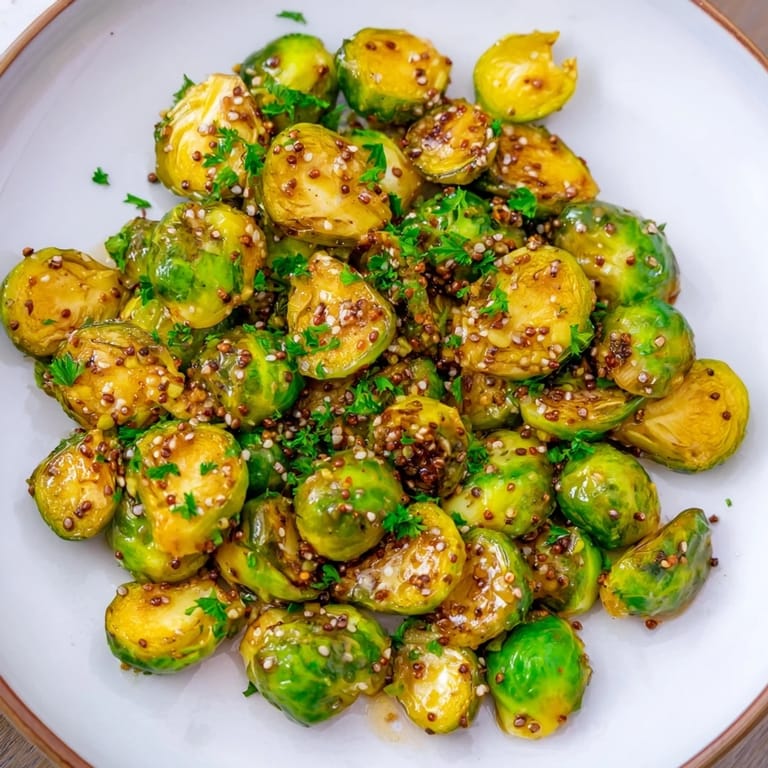
 My neighbor brought over a roasted vegetable platter one Sunday, and I immediately zeroed in on the Brussels sprouts—they were caramelized, gleaming, nothing like the bitter versions I'd avoided for years. She mentioned a honey-mustard glaze and I was skeptical until I tasted one, warm from her kitchen. That bite changed how I cook vegetables entirely. Now I make these constantly, and they've become my secret weapon for converting vegetable skeptics.
I served these at a holiday potluck last year, and a friend who claimed to hate Brussels sprouts asked for the recipe before even finishing her plate. The funny part was watching her face when she realized what she was eating—pure delight mixed with mild betrayal that vegetables could taste this good. That moment, more than anything, proved this dish has real staying power.
Ingredients
- Brussels sprouts: One pound halved and trimmed—the flat cut side is crucial because it touches the pan and becomes gorgeously caramelized.
- Olive oil: Two tablespoons to help everything brown and carry the glaze's flavors.
- Honey: Two tablespoons of sweetness that caramelizes beautifully at high heat.
- Dijon mustard: One and a half tablespoons providing that classic sharp tang.
- Whole-grain mustard: One tablespoon adds texture and a slightly different mustard depth that prevents the glaze from tasting one-dimensional.
- Garlic powder: Half a teaspoon rounds out the savory notes without adding moisture.
- Apple cider vinegar: One tablespoon keeps the sweetness honest with brightness and acidity.
- Salt and black pepper: Half teaspoon and quarter teaspoon respectively, adjusted to your taste.
- Fresh parsley: Two tablespoons chopped and optional, but a handful scattered on top adds color and a fresh note that completes the dish.
Tired of Takeout? 🥡
Get 10 meals you can make faster than delivery arrives. Seriously.
One email. No spam. Unsubscribe anytime.
Instructions
- Set your oven to 425°F:
- Line a baking sheet with parchment paper and preheat for about 5 minutes so it's properly hot when the Brussels sprouts go in. This initial heat is what jumpstarts the caramelization.
- Make the glaze:
- Whisk together the olive oil, honey, both mustards, garlic powder, apple cider vinegar, salt, and pepper in a large bowl until smooth and combined. The glaze should be pourable but thick enough to cling to the sprouts.
- Coat the Brussels sprouts:
- Add your trimmed and halved Brussels sprouts to the bowl and toss gently but thoroughly until every piece is coated with the glaze. This takes about a minute and is worth doing carefully so nothing gets left behind.
- Arrange on the baking sheet:
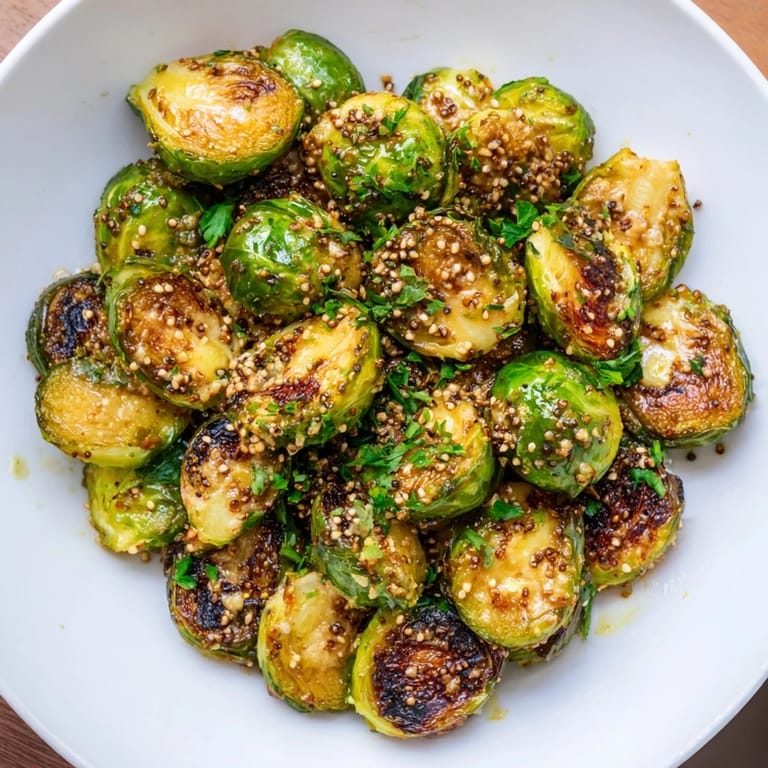
- Spread the Brussels sprouts in a single layer with the flat cut side down against the parchment. This positioning is what creates those deeply browned, caramelized faces.
- Roast until golden:
- Place in the preheated oven for 20 to 25 minutes, flipping halfway through with a spatula so both sides get that caramelized finish. You'll know they're done when the edges are dark brown and the insides feel tender when pierced.
- Garnish and serve:
- Transfer to a serving dish, sprinkle with fresh parsley if using, and serve immediately while everything is warm and the outsides are still crispy.
 Save to Pinterest
 The moment I realized this dish had become part of my regular rotation was when my partner, unprompted, started halving Brussels sprouts without being asked. No words needed—he just knew these were happening on the stove tonight.
Why the Glaze Makes All the Difference
Raw Brussels sprouts can taste bitter and cabbage-like, but roasting them brings out their natural sweetness, and the honey-mustard glaze amplifies everything that makes them delicious. The two types of mustard—Dijon and whole-grain—create a complex flavor that simple honey alone could never achieve. The apple cider vinegar keeps the sweetness from becoming cloying, so each bite feels balanced rather than dessert-like. I've tried versions with balsamic vinegar or red wine vinegar, and they work fine, but apple cider vinegar has a gentleness that lets the caramelization shine.
Storage and Make-Ahead Ideas
These are best eaten fresh from the oven when the edges are still crispy, but leftovers keep in an airtight container in the refrigerator for three days and reheat beautifully at 350°F for about 8 minutes. I've also made the glaze ahead of time and stored it separately, then tossed and roasted everything fresh the day of serving. They're not quite as spectacular reheated as they are fresh, but the flavor remains excellent and they make a great cold salad component the next day if you let them cool and toss them with a simple vinaigrette.
Variations and Creative Additions
The base recipe is perfect on its own, but I've experimented with additions that play nicely with the honey-mustard flavor profile. The most successful tweaks are the ones that add texture or a subtle heat kick without overwhelming the glaze. Beyond the obvious garnish of parsley, I've found that toasted nuts add a wonderful crunch that contrasts with the tender sprouts, and spice can brighten the whole dish if you're in the mood.
- Toss in toasted chopped pecans or walnuts just before serving for crunch and richness that complements the glaze.
- Add a light pinch of chili flakes or cayenne pepper to the glaze for subtle heat that never overpowers the sweet-tangy balance.
- Swap maple syrup for honey if you prefer a deeper, earthier sweetness or need to keep the recipe vegan.
 Save to Pinterest
 This dish has quietly become one of my most reliable side dishes, the kind I turn to when I want something that looks and tastes like I actually know what I'm doing. Serve these warm alongside roasted chicken, pork, or fish, or let them cool slightly and toss them into a grain bowl—they belong anywhere.
Recipe Questions & Answers
- → What is the best way to roast Brussels sprouts for caramelization?
Roast Brussels sprouts cut side down on parchment-lined baking sheets at 425°F (220°C). This helps achieve a deep caramelized crust and tender interior.
- → Can I substitute honey in the glaze for a vegan option?
Yes, maple syrup works well as a vegan-friendly alternative, providing similar sweetness and consistency.
- → How do Dijon and whole-grain mustard affect the glaze flavor?
Dijon adds smooth sharpness while whole-grain mustard contributes texture and a more robust tang, creating a balanced glaze.
- → Is garlic powder necessary in the glaze?
Garlic powder enhances savory depth without overpowering, complementing the sweet and tangy elements perfectly.
- → Can I add nuts to this dish?
Toasted chopped pecans or walnuts add a satisfying crunch and nutty richness when sprinkled on top before serving.
- → How long should I roast the Brussels sprouts?
Roast for 20–25 minutes, flipping halfway through, until the sprouts are golden brown and caramelized.