 Save to Pinterest
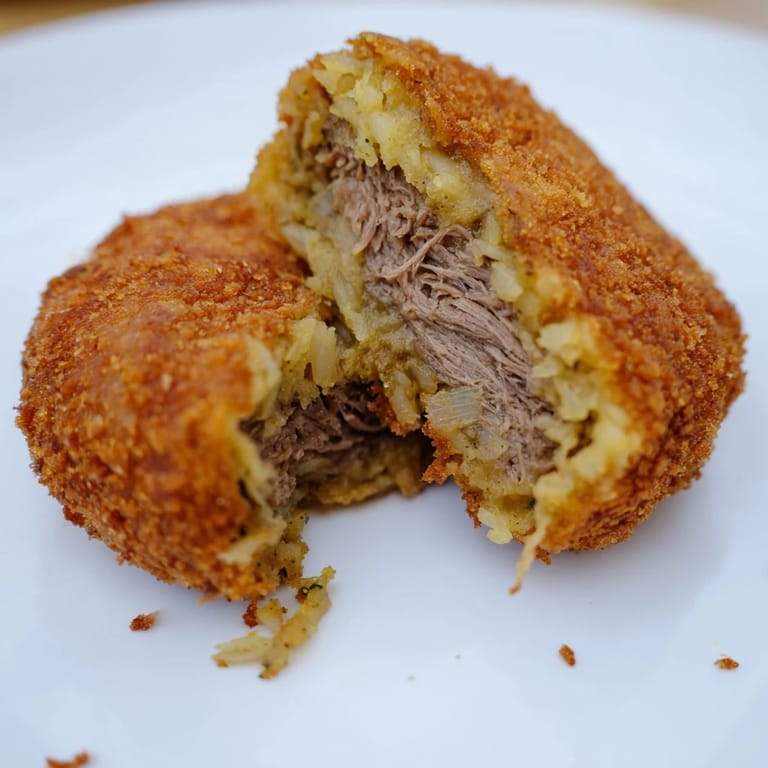
 My first Dutch croquette was unexpected—a friend's grandmother pressed one into my hand at a bustling Amsterdam market, still warm from the fryer. The moment I bit through that shattering golden shell and hit the creamy beef ragout inside, I understood why these humble cylinders are treated like treasure in the Netherlands. There's something almost architectural about them, the way texture stacks on texture, the way simplicity becomes sophistication through patience and technique. I've been chasing that exact moment ever since, learning to build them in my own kitchen with the same quiet confidence she had.
I made these for a dinner party that threatened to be awkward—too many people who didn't know each other, one quiet corner, and no conversation starter. Then I set down a platter of golden croquettes with mustard, and something shifted. Suddenly everyone was reaching for the same thing, talking with their mouths full, debating the perfect dipping angle. By the end of the night, the platter was empty and people were asking for the recipe, which felt like the highest compliment.
Ingredients
- Stewing beef (250 g): Chuck works beautifully here because it breaks down into tender shreds during the long simmer—this is where all the flavor lives, so don't rush it or substitute with a leaner cut that'll stay tough.
- Beef broth (500 ml): Use homemade if you have it; the quality really matters since this liquid becomes your foundation.
- Onion (1 small, finely chopped): This adds sweet depth to the filling—finely chopped means it disappears into the ragout rather than announcing itself.
- Unsalted butter (40 g + 1 tbsp): Keep it separate for clarity, as some goes into the beef mixture and the rest builds your roux.
- All-purpose flour (40 g for roux + 100 g for coating): The roux flour must be whisked in smoothly to avoid lumps; the coating flour is your first breading layer and sets everything up.
- Whole milk (150 ml): This is what transforms the roux into that silky béchamel base—don't use a substitute.
- Ground nutmeg (1/2 tsp): Just a whisper of this spice elevates the entire filling; I learned this the hard way by overseasoning.
- Fresh parsley (1 tbsp, optional): I skip it sometimes and the croquettes are still magnificent, but it adds a fresh note if you want it.
- Eggs (2 large, beaten): These bind the breadcrumbs and create the seal that keeps oil out during frying.
- Fine dry breadcrumbs (150 g, preferably Panko): Dutch paneelmeel is traditional, but good Panko gives you that shatter factor that makes people notice.
- Neutral oil for frying: Sunflower or canola at 180°C (350°F) is non-negotiable—too cool and they absorb oil, too hot and they burn before the inside heats through.
Tired of Takeout? 🥡
Get 10 meals you can make faster than delivery arrives. Seriously.
One email. No spam. Unsubscribe anytime.
Instructions
- Simmer the beef until it surrenders:
- Combine your beef cubes, broth, bay leaf, and salt in a saucepan, bring to a boil, then reduce to a gentle simmer for about an hour. You want the beef so tender it shreds with a fork, filling your kitchen with a deep, savory aroma. Let it cool slightly before shredding and setting aside.
- Build your aromatic base:
- Melt a tablespoon of butter in a skillet and cook your chopped onion until it's soft and translucent—about three minutes of gentle heat. Stir in your shredded beef, taste it, and adjust seasoning with salt and pepper, understanding that this mixture is the soul of your croquettes.
- Make the roux that holds everything together:
- In a clean saucepan, melt 40 grams of butter over low heat, then whisk in your flour immediately, stirring constantly for two full minutes. This cooking time matters because it removes the raw flour taste; don't skip it by rushing.
- Create the creamy binding ragout:
- Gradually pour in your reserved beef broth while whisking constantly to avoid lumps, then add the milk in the same patient way. Once smooth and thickened, fold in your beef-onion mixture, nutmeg, and parsley, tasting as you go—this thick, creamy filling is what makes people fall silent when they bite into one.
- Chill until firm enough to shape:
- Spread the filling in a shallow dish, cover it, and refrigerate for at least an hour, preferably longer. The cold makes shaping possible; warm filling will slump like it has no backbone.
- Shape with confident hands:
- Using your hands or two spoons, form the filling into 10 cylinder-shaped croquettes about 8 centimeters long. Work quickly so the filling doesn't warm up too much; a light touch and an even shape mean more surface area for that crunch you're after.
- Set up your breading station like an assembly line:
- Arrange three shallow bowls with flour in the first, beaten eggs in the second, and breadcrumbs in the third. Roll each croquette in flour first, dip it in egg, coat it in breadcrumbs, then for extra crispiness, repeat the egg and breadcrumb step—this double coating is where magic happens.
- Fry until the shell shatters:
- Heat your oil to exactly 180°C (350°F) and fry croquettes in batches for three to four minutes, watching as they transform from pale to deep golden brown. Drain them immediately on paper towels, and don't crowd the pan—patience here means better texture throughout.
- Serve while the contrast is still dramatic:
- Serve hot with mustard for dipping, and watch people pause before that first bite, hearing the crisp shell announce itself.
 Save to Pinterest
 There was a moment during a quiet Sunday morning when I was making these for no occasion at all, just because the ingredients were there and I had time. My partner wandered into the kitchen at the exact moment I was pulling them from the oil, and before I could say anything, they grabbed one, burned their mouth, and said it was worth it. That's when I realized these aren't restaurant food or party food—they're the kind of thing that turns an ordinary moment into something worth pausing for.
The Science of the Shatter
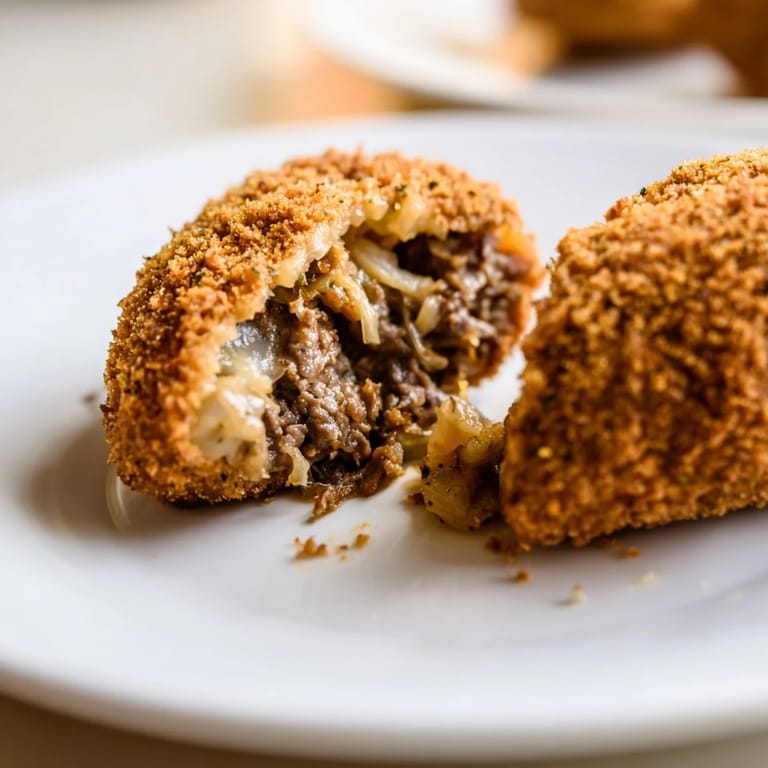
That crackling sound when your teeth break through the breadcrumb crust isn't luck—it's the result of moisture escaping during frying while the breadcrumbs stay dry. The double coating traps a thin air layer between the two breadcrumb layers, which amplifies that texture. When you skip the second coating, you lose that acoustic drama and the textural complexity that makes people reach for another one.
Make-Ahead Strategy
I've learned that these croquettes are some of the most make-ahead-friendly food I know—you can bread them, freeze them on a tray, then fry them straight from frozen without thawing. They take an extra minute or two in the oil, but the timing is forgiving and the results are identical to fresh-breaded ones. This is the secret to looking effortlessly prepared when unexpected guests arrive.
Serving and Pairing
These shine brightest as a standalone snack or appetizer, but they're equally at home alongside fries and a cold pilsner or pale lager. The mustard pairing isn't optional—it cuts through the richness and adds a sharp note that makes the beef shine even brighter. I've served them at everything from casual weeknight dinners to formal gatherings, and they work everywhere because they're substantial enough to respect and casual enough to enjoy without ceremony.
- A crisp mustard—Dijon or wholegrain—is non-negotiable as your dipping partner.
- If you make extra filling, it's excellent cold the next day spread on dark bread with a sharp cheese.
- These keep in an airtight container for three days, but they're best eaten within hours of frying when the contrast between textures is most dramatic.
 Save to Pinterest
 There's something quietly satisfying about mastering a recipe that seems intimidating at first but reveals itself to be fundamentally simple once you understand its logic. These croquettes are that recipe—crispy shells and creamy filling, yes, but really just a conversation between technique and time. Once you've made them once, you'll make them again.
Recipe Questions & Answers
- → How do I achieve a creamy filling inside the croquettes?
Simmer the beef until very tender, shred finely, and combine with a thickened béchamel sauce to ensure a smooth, creamy texture that holds shape after chilling.
- → What type of breadcrumbs work best for coating?
Fine dry breadcrumbs like Panko or Dutch paneermeel give an extra crispy and golden crust when fried.
- → Can the croquettes be prepared in advance?
Yes, the shaped and breaded croquettes can be frozen and fried from frozen, adding 1–2 minutes to the frying time.
- → What oil is recommended for frying?
Use neutral oils with high smoke points such as sunflower or canola oil for even frying and a crisp finish.
- → How do I prevent the filling from becoming too runny?
Make sure the béchamel is thickened properly and chill the filling thoroughly to firm it before shaping and breading.