 Save to Pinterest
 There's something about the smell of butter and lemon zest hitting a hot pan that stops me mid-thought every time. I discovered this creamy dill pasta on an ordinary Tuesday when I had cream in the fridge, fresh dill from the farmer's market, and absolutely nothing else in the mood for heavy. What came together was so unexpectedly bright and elegant that I've made it countless times since—it's become the dish I reach for when I want something that feels fancy but takes barely longer than boiling water.
I made this for my sister's surprise dinner last spring when she was going through a rough patch, and she took one bite and just smiled. She didn't say anything fancy—just pushed her bowl slightly away and said it tasted how she wanted to feel again. That's when I realized this dish is more than creamy pasta; it's somehow both comforting and energizing at once.
Ingredients
- Dried pasta (350 g): Fettuccine or linguine clings beautifully to cream sauces, but penne works too if that's what you have—the shape matters less than the sauce coating every bite.
- Unsalted butter (2 tbsp): Use real butter here; it's the foundation of the sauce and deserves to taste like itself.
- Garlic (2 cloves): Minced fine so it melts into the cream rather than leaving little chunks.
- Lemon zest (1 lemon): Get the bright yellow only, not the bitter white pith underneath—a microplane zester is your friend.
- Heavy cream (200 ml): The richness that makes this sauce silk, though half-and-half works if you're watching fat.
- Fresh lemon juice (2 tbsp): Squeeze it fresh right before you need it; bottled tastes flat by comparison.
- Dijon mustard (1 tsp): Just a tiny amount that you won't taste directly but that brightens and stabilizes the sauce.
- Salt and pepper: Taste as you go; cream needs more seasoning than you'd expect.
- Parmesan (40 g grated): Adds umami depth and helps emulsify the sauce into something silky rather than oily.
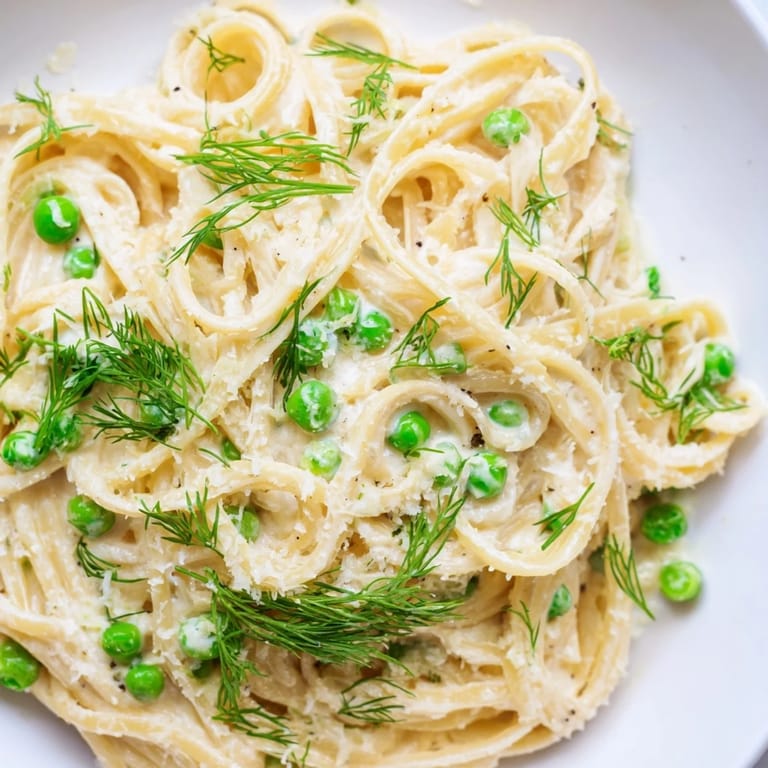
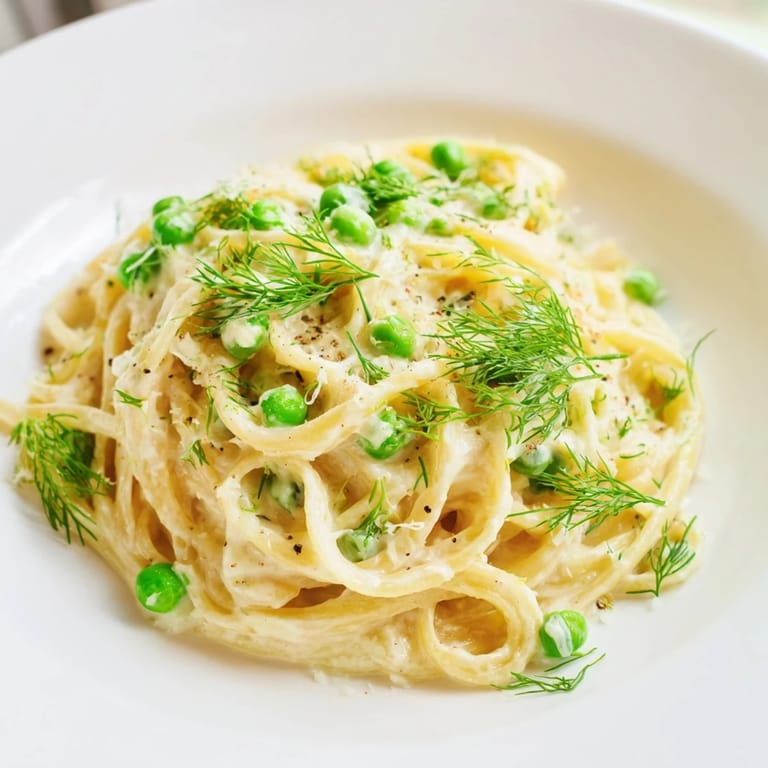
- Fresh dill (3 tbsp): The star of the show—its anise-like brightness is what makes this dish sing instead of whisper.
- Peas and smoked salmon (optional): Peas add sweetness and texture, salmon adds smokiness, but neither is needed for the dish to be complete.
Tired of Takeout? 🥡
Get 10 meals you can make faster than delivery arrives. Seriously.
One email. No spam. Unsubscribe anytime.
Instructions
- Get your water going:
- Fill a large pot with water, add a generous pinch of salt (it should taste like the sea), and bring it to a rolling boil. This is your pasta's seasoning from the inside out, so don't skip this step.
- Cook the pasta:
- Add the pasta and stir it immediately so it doesn't stick together. Cook until it's tender but still has a slight bite when you test it—that al dente texture matters because the sauce will keep cooking it slightly as it coats.
- Make the sauce base:
- While pasta cooks, melt butter in your skillet over medium heat until it's foaming and smells almost nutty. Add garlic and lemon zest, and let them sit for just a minute until the kitchen smells like something good is happening.
- Build the creaminess:
- Pour in the cream, lemon juice, and mustard. Let it bubble gently—not hard—for a couple of minutes. This is when the sauce starts to thicken and come together.
- Add the richness:
- Stir in Parmesan, salt, and pepper until the cheese fully melts and the sauce becomes impossibly smooth and glossy. Taste a tiny spoonful and adjust seasoning; it should taste slightly salty because it's about to coat all that pasta.
- Bring it together:
- Add your drained pasta to the skillet and toss gently, adding reserved pasta water a splash at a time until the sauce coats every strand without pooling at the bottom. Think of it as creating a silky gloss rather than a sauce.
- Finish with fresh dill:
- Stir in the dill and peas if using, just until everything is warm and the dill's bright color glows through the cream. Serve immediately with extra dill scattered on top.
 Save to Pinterest
 I once served this to a friend who said they didn't like pasta, and halfway through she stopped talking entirely and just kept eating. When I asked if it was okay, she told me pasta never tasted like this before—like it was actually supposed to taste light. That's the moment I understood this dish isn't about cream at all; it's about balance.
Why Fresh Dill Changes Everything
Dried dill lives in a completely different universe from fresh, and I learned this the expensive way by substituting once when my dill had wilted. What came out was pleasant but flat, like someone had whispered the recipe instead of sung it. Fresh dill brings this subtle sweetness and an almost floral quality that makes your brain register the dish as spring itself on a plate, no matter what season it actually is.
The Lemon-Cream Balance
The first time I made this, I was nervous about mixing something so acidic with something so rich. But that's exactly the point—the lemon stops the cream from feeling heavy and instead creates this bright, almost refreshing sensation. It's the kitchen equivalent of opening a window, and it's why people come back to this dish even in summer when they're usually avoiding cream entirely.
Making It Your Own
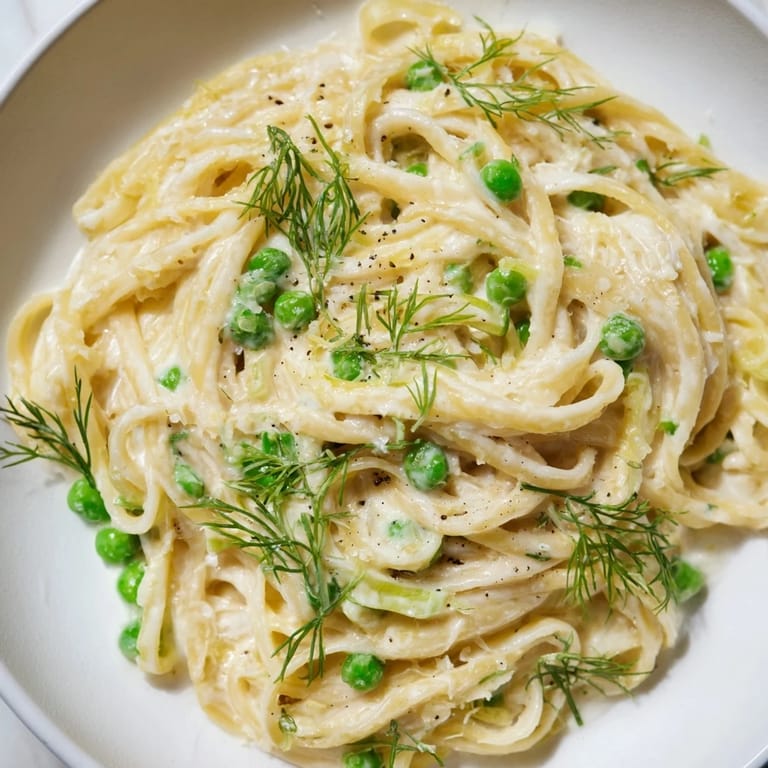
This sauce is like a blank canvas in the best way, so don't be afraid to experiment. I've added soft peas, smoked salmon, sautéed mushrooms, and even thin asparagus, and each version felt like its own complete dish. The foundation of butter, cream, lemon, and dill is strong enough to support whatever vegetables you feel like adding.
- If you add proteins like salmon or shrimp, cook them separately and fold them in gently at the very end so they don't break apart.
- Mushrooms and asparagus work best when quickly sautéed in a separate pan first, then added to the sauce.
- Keep tasting and adjusting seasoning as you go, because cream masks salt more than you'd expect.
 Save to Pinterest
 This is the kind of dish that feels like an hug in food form, but one that doesn't leave you feeling sluggish afterwards. Pair it with a crisp Sauvignon Blanc and let the sauce remind you why simple, fresh ingredients matter so much.
Recipe Questions & Answers
- → What type of pasta works best with this sauce?
Fettuccine, linguine, or penne are ideal as their shapes hold the creamy sauce well.
- → Can I substitute heavy cream for a lighter option?
Yes, half-and-half can be used for a lighter but still creamy result.
- → What role does fresh dill play in the dish?
Fresh dill adds a bright, herbaceous note that complements the lemon and cream beautifully.
- → Is it possible to add vegetables to the pasta?
Yes, peas are included optionally, and sautéed mushrooms or asparagus can be added for extra texture and flavor.
- → How should I adjust seasoning for smoked salmon inclusion?
Since smoked salmon adds saltiness, reduce additional salt when seasoning.
- → What wine pairs well with this dish?
A chilled Sauvignon Blanc enhances the fresh citrus and herbal flavors.