 Save to Pinterest
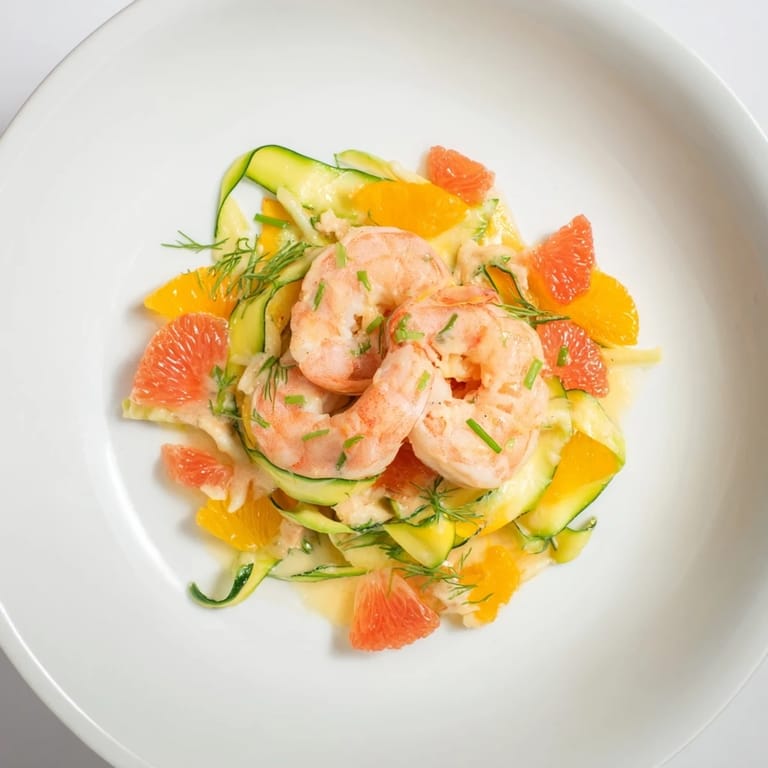
 The first time I arranged this dish on a platter, I was thinking about a trip to the Great Barrier Reef I'd seen in a documentary—all those impossible colors stacked on top of each other. I wanted to capture that chaos and beauty in something I could actually cook and eat. The shrimp turned out to be the perfect anchor, those coral-pink curves catching the light just right, and when I scattered the citrus segments around them, something clicked. This became the dish I make when I want to feel like I'm cooking with the ocean itself.
I made this for my sister on a Tuesday night when she showed up unannounced, exhausted from work, and I had maybe 20 minutes before we needed to eat. She watched me layer everything on the platter with this skeptical expression, like seafood and cheese and citrus didn't belong in the same universe. Then the Gruyère bubbled under the broiler and she actually laughed—that real, surprised kind of laugh. She said it tasted like what happiness looks like, which is the kind of compliment that makes you keep making a dish over and over.
Ingredients
- Large pink shrimp, 500 g: Look for shrimp that still curl slightly when you buy them—they cook more evenly that way, and they stay tender instead of turning rubbery.
- Oranges and pink grapefruit: The acidity here does the real work, cutting through the richness of the cheese and keeping everything bright.
- Gruyère cheese, grated 120 g: Don't skip this for something milder—Gruyère has that nutty depth that makes the whole dish sing.
- Ricotta cheese, 50 g: This softens as it melts, creating little creamy pools that catch the heat unevenly and become irresistible.
- Zucchini and carrot ribbons: Steam these just until they bend without breaking—they're the delicate scaffolding of your coral reef.
- Fresh chives and dill: These aren't afterthoughts; they're what make you taste the ocean and the garden at the same time.
- Olive oil and lemon juice: The lemon juice marinates the shrimp and keeps them from drying out during that brief sauté.
Tired of Takeout? 🥡
Get 10 meals you can make faster than delivery arrives. Seriously.
One email. No spam. Unsubscribe anytime.
Instructions
- Season and marinate the shrimp:
- Toss your shrimp with olive oil, lemon juice, and a good pinch of salt and pepper, letting them sit for a minute or two so the flavors can start working their way in.
- Sauté the shrimp quickly:
- In a hot skillet, cook them for exactly two minutes per side—you want them just cooked through, still tender, with that slight sweet brine coming through.
- Prepare the citrus:
- Segment your oranges and grapefruit directly over a bowl so you catch the juice, then toss gently with the zest and a tiny pinch of salt to let the fruit relax into itself.
- Soften the vegetables:
- Steam your zucchini ribbons and carrot strips for just a minute or two until they're flexible enough to drape on the platter without snapping.
- Build your coral reef:
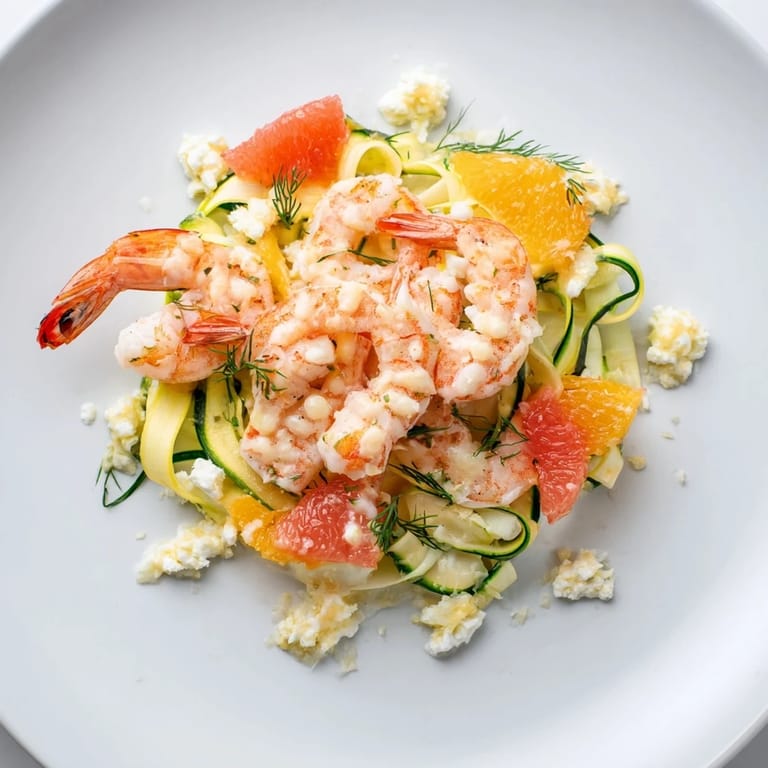
- Arrange the steamed vegetables as your base, creating peaks and valleys where the shrimp and citrus can nestle in naturally, layering them for color and dimension.
- Add the cheese:
- Scatter the Gruyère evenly across the top and dot it with little spoonfuls of ricotta, making sure both get equal time under the broiler.
- Broil until bubbly:
- Place the whole platter under a hot broiler for 2-3 minutes, watching carefully so the cheese bubbles and browns without the vegetables scorching underneath.
- Finish and serve:
- Pull it out while everything is still sizzling, scatter your chives and dill across the top, drizzle with the remaining olive oil, and serve immediately before anything cools down.
 Save to Pinterest
 There's a moment right after you pull the platter from the broiler when the cheese is still popping and everything is at its most beautiful. My nephew pointed at it once and said it looked like something you'd see in a fancy restaurant, and I realized that's what I love about this dish—it bridges that gap between impressive and actually doable. You don't need special training or rare ingredients, just attention and a little bit of theater.
The Color Strategy
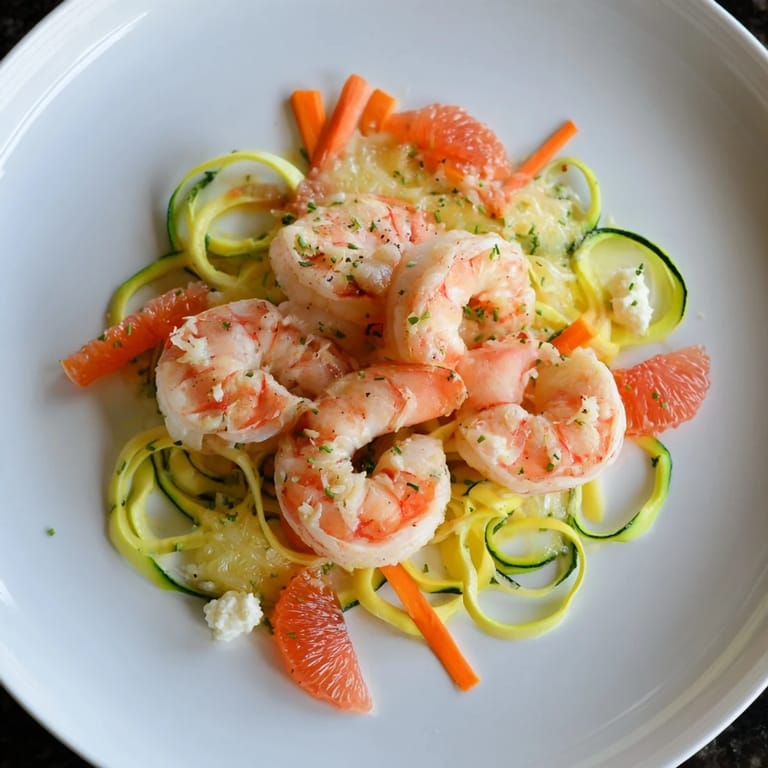
The entire point of this dish is the visual contrast, so don't be shy about it. The pink shrimp, the golden cheese, the bright orange segments, and the pale green zucchini all need to be visible and distinct. I've seen people make this and arrange everything too densely, and it just looks muddy. Leave some white space on the platter—let people see what they're about to eat. The vegetables are really your canvas here, so arrange them thoughtfully before you add anything else.
Playing with Texture
The magic moment happens in your mouth when you get all the textures at once—the tender shrimp, the slight crunch of the barely-steamed vegetable ribbons, the burst of citrus juice, and that melted cheese anchoring everything. If your vegetables get too soft, they disappear into the background. If the shrimp overcooks even slightly, it fights against the tenderness of everything else. This is why timing matters more than technique here, and why paying attention during those last few minutes is non-negotiable.
Wine and Serving Notes
A crisp Sauvignon Blanc cuts through the richness beautifully, or if you want something more elegant, a dry rosé echoes the colors on your platter and feels like it was meant to be there. The dish serves four, but I've learned that it's actually meant to be shared straight from the platter, everyone eating around it like you're gathered around something precious. Serve it on your nicest platter and bring it straight to the table—the theater of the moment is part of the meal.
- If you're making this ahead, prepare everything and broil it just before serving.
- Watermelon radish slices add extra visual pop if you can find them at your market.
- This is naturally elegant enough for a dinner party but casual enough for a Tuesday night with people you love.
 Save to Pinterest
 This dish became what it is because I stopped thinking about cooking as following instructions and started thinking about it as telling a story. The coral reef isn't just a visual metaphor—it's permission to be a little bold, a little playful, and to trust that color and flavor and texture arranged with intention will create something that feels both surprising and exactly right.
Recipe Questions & Answers
- → What type of shrimp works best?
Large pink shrimp, peeled and deveined, provide the best texture and flavor for this dish.
- → How should the citrus be prepared?
Segment oranges and pink grapefruit carefully, removing membranes to keep the sections tender and juicy.
- → Can Gruyère be substituted?
Emmental or bubbly mozzarella are excellent alternatives that melt well and complement the flavors.
- → What’s the best way to cook the shrimp?
Sauté shrimp in olive oil with lemon juice, salt, and pepper for a quick, flavorful sear before assembling.
- → How do the vegetables contribute to the dish?
Steamed zucchini ribbons and julienned carrots create a tender, colorful coral base that balances the shrimp and citrus.
- → What herbs enhance this preparation?
Fresh chives and dill add a bright, aromatic finish when sprinkled on top after broiling.