 Save to Pinterest
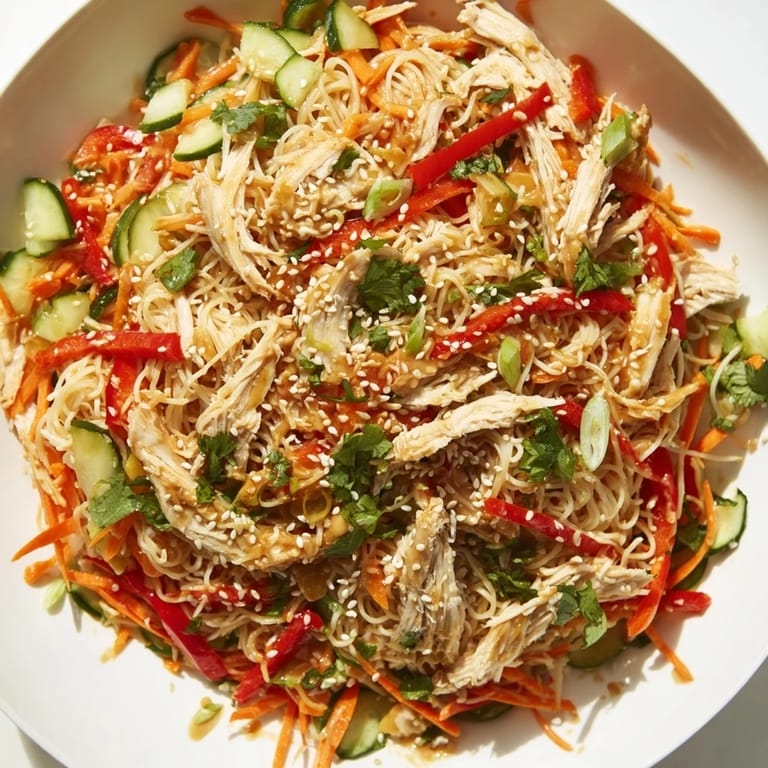
 One sticky summer afternoon, my neighbor stopped by with leftover rotisserie chicken and asked if I could turn it into something cold and light. I'd been standing in front of an open fridge, wilting slightly, when she arrived with that perfectly golden bird. Within twenty minutes, we had something alive on the table—noodles glistening with sesame oil, vegetables bright and crisp, the whole thing humming with ginger and garlic. That day taught me that the best meals often arrive unplanned, built from whatever's at hand and the willingness to try something new.
I made this for a small garden gathering once, and watching people go back for thirds while sitting under string lights was the moment I knew this recipe had staying power. Someone asked for the dressing recipe right there at the table, pen in hand, which felt like the ultimate compliment. That's when I realized it wasn't just about feeding people—it was about giving them something they'd want to recreate at home.
Ingredients
- Thin egg or rice noodles (250 g): These cook quickly and have a delicate texture that doesn't get weighed down by the dressing—rice noodles are your friend if anyone at the table needs gluten-free.
- Cooked shredded chicken (300 g): Pre-cooked rotisserie chicken saves your sanity on hot days when turning on the stove feels criminal.
- Carrot, julienned: Cut them thin and they'll soften just slightly from the warm noodles without losing their snap.
- Red bell pepper, thinly sliced: The sweetness balances the savory dressing and adds visual brightness that makes people want to eat it.
- Cucumber, deseeded and julienned: Deseeding matters more than you'd think—it keeps everything from getting watery as it sits.
- Spring onions, sliced: These add a gentle sharpness that keeps the whole dish from feeling one-note.
- Fresh cilantro, chopped: About two tablespoons gives herbaceous lift without overpowering everything else.
- Toasted sesame oil (3 tbsp): This is the soul of the dish—toasted, not raw—and worth buying from a quality source.
- Soy sauce (2 tbsp): Use full-sodium if you can; it carries flavor better than low-sodium versions.
- Rice vinegar (2 tbsp): The mild acidity brightens without harsh edges.
- Honey or maple syrup (1 tbsp): Just enough to round out the dressing's edges and make it sing.
- Smooth peanut butter or tahini (1 tbsp): This creates body and richness; tahini keeps it dairy-free and slightly more elegant.
- Fresh ginger, grated (1 tsp): Grate it right before mixing so you get the living heat of it.
- Garlic clove, minced (1): One clove is enough—any more and it bullies the other flavors around.
- Chili flakes (1 tsp optional): Add these if you want a whisper of heat rather than a shout.
- Toasted sesame seeds (2 tbsp) for garnish: Toast them yourself if possible—the difference is worth the extra two minutes.
Tired of Takeout? 🥡
Get 10 meals you can make faster than delivery arrives. Seriously.
One email. No spam. Unsubscribe anytime.
Instructions
- Cook the noodles until just tender:
- Follow package timing—you want them soft but with a tiny bit of resistance still there. The residual heat from the warm noodles will slightly soften the vegetables, so don't overcook them now. Drain, then rinse under cold running water until they stop steaming and feel completely cool to the touch.
- Combine everything in a large bowl:
- Toss the chicken, noodles, carrot, pepper, cucumber, spring onions, and cilantro together gently, as if you're trying not to bruise anything. This is where you get everything to know each other before the dressing arrives.
- Whisk the dressing smooth:
- In a separate small bowl, combine sesame oil, soy sauce, rice vinegar, honey, peanut butter, ginger, garlic, and chili flakes if using. Whisk steadily until the peanut butter releases and everything becomes glossy and cohesive, with no visible streaks of oil.
- Dress and toss until glossy:
- Pour the dressing over the salad mixture and toss with purpose—you want the noodles and vegetables evenly coated, with the dressing clinging rather than pooling at the bottom. Taste a bite and adjust for salt or acid if needed.
- Chill or serve right away:
- You can eat it immediately while there's still some contrast between cold vegetables and warm-from-the-dressing noodles, or let it rest in the fridge for up to two hours, which allows all the flavors to settle into familiarity. Either way, top with sesame seeds and lime wedges just before serving.
 Save to Pinterest
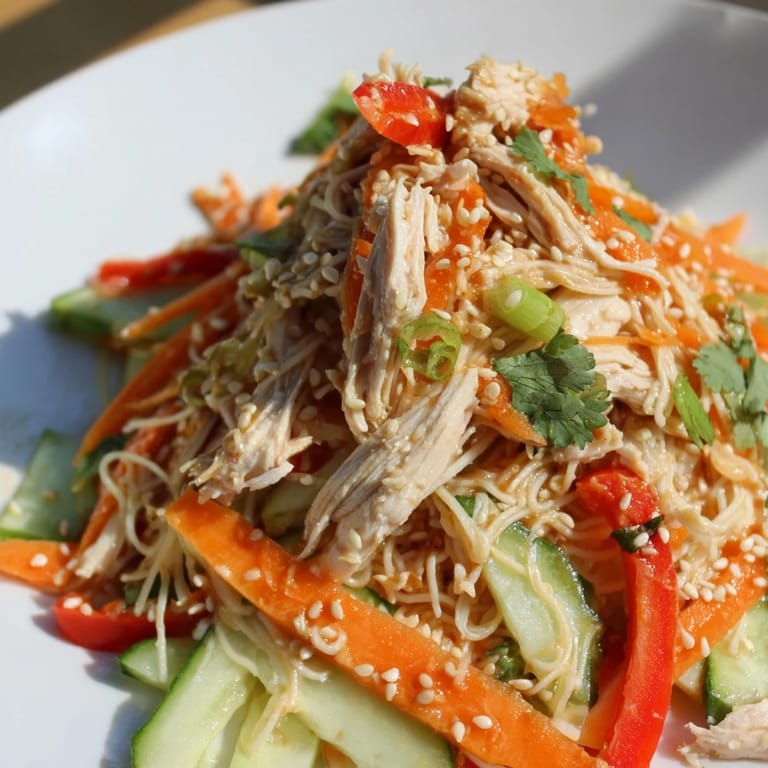
 There's a quiet satisfaction in making something from scratch that tastes so perfectly balanced you want to sit with it for a moment before eating. This dish has that quality—it never feels like you're doing anyone a favor by serving it.
Why This Stays Fresh Longer Than You'd Expect
Most cold salads begin to weep and collapse within a few hours, but this one actually improves as it sits. The noodles absorb the dressing gradually, the vegetables soften just enough to let the flavors in, and everything settles into something better than what you started with. I've kept it in the fridge for a full day and found it actually more flavorful the next morning, which is rare enough that it bears mentioning.
Building on the Base
Once you understand how this salad works, you can bend it toward whatever you have on hand. Shredded tofu works beautifully if chicken doesn't fit your table, and edamame or snap peas add protein and a different kind of crunch. I've added everything from shredded beets to roasted cashews, and as long as you keep the dressing the same, the salad stays true to itself.
Making It Your Own
The real skill here isn't in following steps—it's in tasting as you go and understanding that your sesame oil might be more assertive than mine, your garlic might be gentler, your preference for heat might differ entirely. Build it as written the first time so you know what you're working with, then next time, trust your instincts about what needs more or less.
- If the dressing feels too thick, loosen it with a splash of rice vinegar or a teaspoon of water at a time.
- Prepare your vegetables the morning of serving so they're at their crispest when everything comes together.
- Save extra dressing in a jar in the fridge—it's excellent on grilled vegetables or as a dip for crispy tofu.
 Save to Pinterest
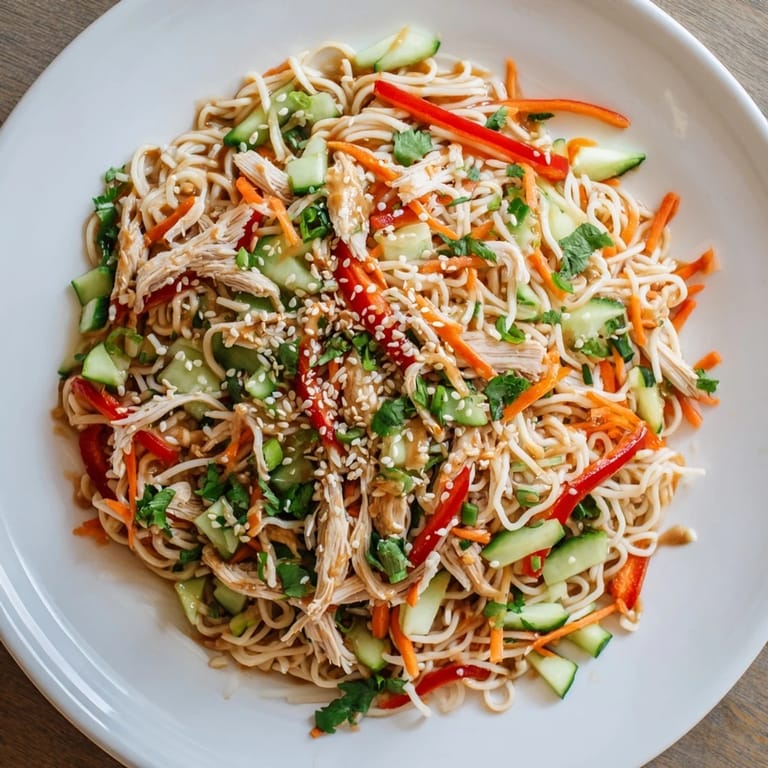
 This salad has become my answer to the question of what to bring, what to make, what to serve on days when you want something that feels both effortless and thoughtful. It sits at that perfect intersection of easy and elegant, which is exactly where the best recipes live.
Recipe Questions & Answers
- → Can I use different noodles for this salad?
Yes, both thin egg noodles and rice noodles work well. For gluten-free options, rice noodles are recommended.
- → Is it possible to make this dish vegetarian?
Absolutely, substitute shredded tofu for the chicken to keep it plant-based while maintaining protein content.
- → How long can this salad be stored chilled?
It can be chilled for up to 2 hours before serving to allow the flavors to meld without compromising freshness.
- → What alternatives exist for the sesame dressing ingredients?
You can swap peanut butter with tahini for a different nutty flavor or adjust the honey/maple syrup for sweetness levels.
- → Are there common allergens to be aware of?
This dish contains soy, sesame, peanuts (if used), and wheat if egg noodles are included. Gluten-free choices like rice noodles and tamari can reduce allergen risks.
- → What beverages pair well with this chilled salad?
Light white wines such as Riesling or cold green tea complement the salad's fresh and tangy flavors nicely.