 Save to Pinterest
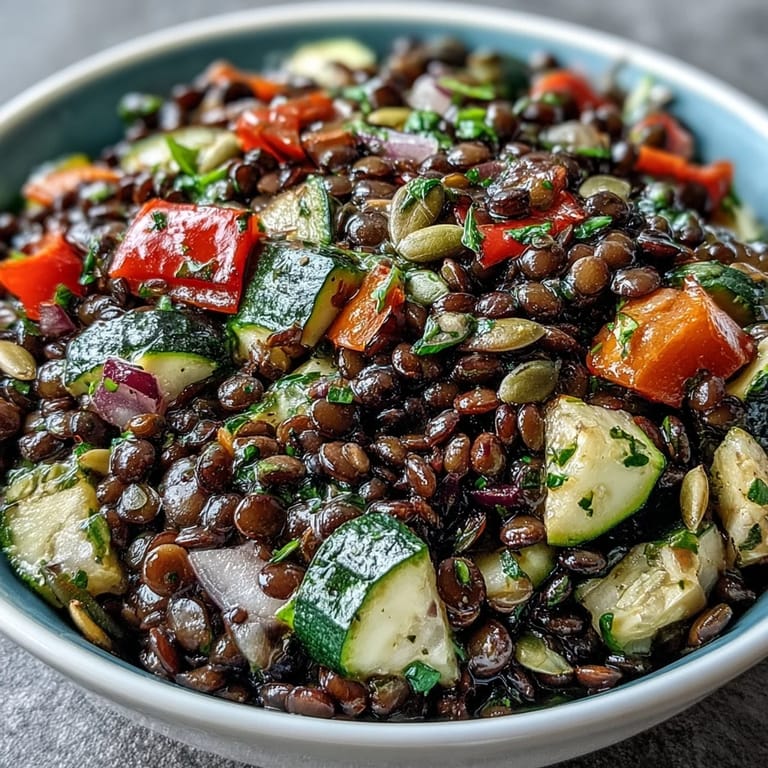
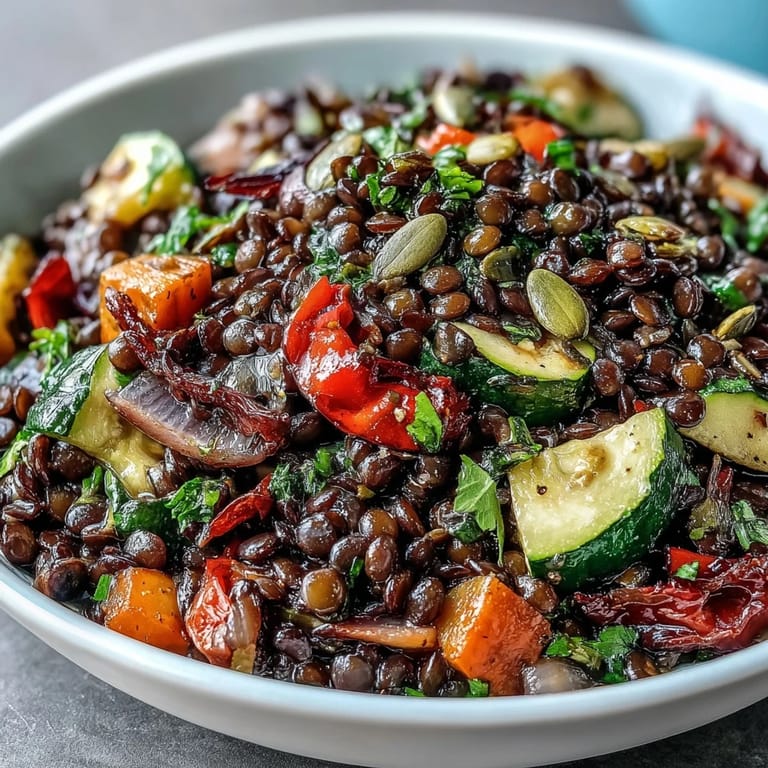
 There's something about black lentils that caught me off guard the first time I really paid attention to them—those tiny, glossy little discs hold their shape like they're determined to prove they're not mushy like their cousins. I was standing in my kitchen on a Tuesday afternoon, exhausted from the day, and I wanted something that felt alive on the plate but didn't demand hours of my time. This salad came together almost by accident, born from whatever vegetables needed rescuing from the back of my fridge, but it became the thing I keep making because it somehow tastes better the next day, and because it finally convinced me that eating well doesn't have to feel like punishment.
I made this for a friend who'd recently gone vegetarian, and I watched her face as she took the first bite—that moment when someone realizes that eating plants doesn't mean missing out on anything. She came back three times that week asking how I made it, and I realized it wasn't just about the ingredients, it was about how it actually tastes like something, not like virtue.
Ingredients
- Black Beluga lentils, 1 cup dry: These tiny lentils are the whole reason this salad works—they stay intact instead of collapsing into mush, and they have this earthy depth that makes everything around them taste better.
- Water, 3 cups: Just enough to cook them through without drowning them out.
- Bay leaf, 1: This single leaf transforms plain cooking water into something aromatic, something worth tasting.
- Salt for lentils, ½ tsp: Add it to the cooking water so the lentils absorb flavor from the start, not just at the end.
- Red bell pepper, 1 medium diced: The sweetness intensifies when roasted, almost like the pepper discovers who it's meant to be.
- Zucchini, 1 medium diced: Roasting it brings out a nutty quality that raw zucchini never hints at.
- Red onion, 1 small in wedges: The sharp bite mellows into something almost caramelized and sweet when it hits the heat.
- Carrot, 1 medium diced: Adds natural sweetness and a subtle crunch that survives the roasting beautifully.
- Olive oil for roasting, 2 tbsp: This is where the magic starts—good oil makes the difference between steamed and caramelized.
- Dried thyme, ½ tsp: A quiet herb that whispers rather than shouts, tying the roasted vegetables together.
- Salt and pepper for vegetables, ½ tsp and ¼ tsp: Season generously because roasted vegetables need it to shine.
- Cherry tomatoes, ½ cup halved: Add these raw so they stay bright and juicy, a textural contrast that keeps things interesting.
- Feta cheese, ¼ cup crumbled optional: The tang cuts through the earthiness, but the salad stands perfectly fine without it if you're going vegan.
- Fresh parsley, 3 tbsp chopped: Adds a fresh note that prevents everything from feeling too heavy, a last-minute brightness that matters.
- Toasted seeds, 2 tbsp pumpkin or sunflower: Toast them yourself if you can—the difference between raw and toasted seeds is the difference between texture and a moment in your mouth.
- Extra-virgin olive oil for dressing, 3 tbsp: Use something you actually enjoy tasting straight, because this dressing needs to be good.
- Fresh lemon juice, 2 tbsp: Fresh is non-negotiable here; bottled lemon juice tastes like regret.
- Dijon mustard, 1 tsp: The emulsifier that holds the dressing together and adds a subtle sophistication.
- Garlic clove, 1 small minced: Raw garlic in the dressing gives it backbone without overpowering the delicate vegetables.
- Honey or maple syrup, ½ tsp: Just enough to balance the acidity and add depth that sweetness alone can't reach.
- Salt and pepper for dressing, ¼ tsp and ⅛ tsp: Season to taste because dressing is where you correct the whole dish's flavor.
Tired of Takeout? 🥡
Get 10 meals you can make faster than delivery arrives. Seriously.
One email. No spam. Unsubscribe anytime.
Instructions
- Get your oven ready to roast:
- Preheat to 425°F and line your baking sheet with parchment paper so nothing sticks and cleanup stays simple. This is the foundation for vegetables that taste like something, not like they went through the oven by accident.
- Cook the lentils until they're just right:
- Combine the rinsed lentils with water, bay leaf, and salt in a pot, bring it all to a boil, then drop the heat and let it simmer uncovered for 20 to 25 minutes. You want them tender but still holding their shape—cook past that point and you've got paste instead of salad, a lesson I learned the hard way.
- Roast the vegetables into caramelized perfection:
- Toss the diced peppers, zucchini, onion, and carrot with olive oil, thyme, salt, and pepper, then spread them on your prepared sheet and get them in the oven for 20 to 25 minutes, stirring halfway through. You're looking for those slightly darkened edges and that smell that fills your whole kitchen and makes you realize roasting isn't just cooking, it's transformation.
- Build the dressing while everything cooks:
- Whisk together the olive oil, lemon juice, mustard, minced garlic, honey, salt, and pepper in a large bowl until it emulsifies into something golden and balanced. This is where you taste and adjust—if it's too sharp, add more honey; if it's too sweet, squeeze more lemon.
- Bring it all together:
- Once the lentils and vegetables have cooled just enough to handle, add them to the bowl with the dressing along with the cherry tomatoes, parsley, and seeds, and toss everything gently so the dressing coats everything without breaking apart the vegetables. The whole thing comes alive when you combine it, colors mixing with the golden dressing.
- Finish and serve:
- Sprinkle feta over the top if you're using it, then serve it warm, room temperature, or even chilled—it's good at all temperatures, which is part of why it keeps becoming your solution to what's for lunch.
 Save to Pinterest
 There was this moment at a family dinner when my dad took a second helping without being asked, and my mom looked at me like I'd finally figured out something worth knowing. It wasn't complicated food, but it was real food—the kind that doesn't apologize for being good for you because it actually tastes remarkable, and maybe that's what being a grown-up in the kitchen finally means.
How to Make It Your Own
This salad becomes something different depending on what you have available and what you're craving. Swap the red bell pepper for yellow or orange if you want something sweeter, or add roasted eggplant or sweet potato if you're feeling like something richer. The vegetables are just the framework—the lentils and the dressing are what hold everything together, so trust that and experiment with whatever needs cooking.
Making It Ahead
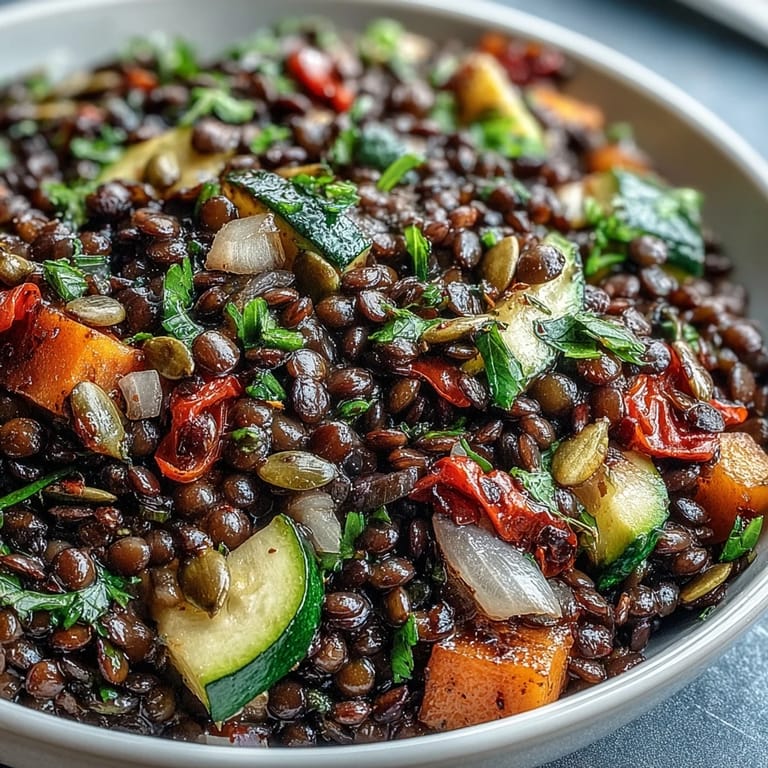
This is one of those rare salads that actually improves as it sits, the flavors settling into each other overnight like they're finally comfortable. Make it the morning before you need it, keep it in an airtight container in the fridge, and it'll be waiting for you as a ready-made meal that somehow tastes intentional instead of like leftovers.
Pairing and Serving Ideas
Serve this warm as the centerpiece of a meal, or cold as part of a spread with bread and a simple green salad on the side. It works alongside grilled chicken, salmon, or goat cheese if you want to build out the meal, but it's also confident enough to stand alone as a complete dinner.
- Pair it with a crisp white wine if you're eating it as a main, something with enough acidity to match the lemon in the dressing.
- Toast thick slices of sourdough bread and rub them with garlic for scooping up the dressing and gathering the ingredients that fall to the bottom of the bowl.
- Store leftovers in an airtight container for up to four days, and bring it back to room temperature before serving so the flavors aren't muted by cold.
 Save to Pinterest
 This salad taught me that eating well doesn't require being complicated or sacrificing taste, and that's a lesson I keep coming back to whenever I'm standing in front of the fridge wondering what's for dinner. It's become the answer to that question more times than I can count, and it never gets old.
Recipe Questions & Answers
- → Can I make this ahead of time?
Yes, this salad actually improves with time. The flavors meld together beautifully, making it perfect for meal prep. Store in an airtight container in the refrigerator for up to 4 days. Add the fresh parsley and toasted seeds just before serving to maintain their texture.
- → What type of lentils work best?
Black Beluga lentils are ideal because they hold their shape beautifully during cooking and have an elegant, earthy flavor. French green lentils (Puy) are an excellent alternative. Avoid red or yellow lentils as they tend to become mushy and won't maintain the desired texture in this salad.
- → Is this suitable for meal prep?
Absolutely! This is an excellent meal prep option. The lentils and roasted vegetables reheat well, though it's equally delicious served at room temperature. Portion into individual containers and store in the refrigerator. Keep the dressing separate if planning to store for more than 2 days.
- → Can I substitute the roasted vegetables?
Certainly! Sweet potato, eggplant, butternut squash, or Brussels sprouts work wonderfully. For a quicker version, you can even use grilled vegetables during warmer months. Just aim for roughly 4 cups of roasted vegetables to maintain the proper ratio with the lentils.
- → How do I know when the lentils are done?
Taste a few lentils after 20 minutes of simmering. They should be tender but still retain a slight bite in the center—al dente, not mushy. Remember that they'll continue cooking slightly from residual heat, so remove from heat while they still have a tiny bit of firmness. Drain promptly to stop the cooking process.
- → Can I make this vegan?
Yes, simply omit the feta cheese or substitute with a plant-based feta alternative. The salad is equally delicious and satisfying without it. You might add a sprinkle of nutritional yeast or extra toasted seeds to maintain the savory, protein-rich element.