 Save to Pinterest
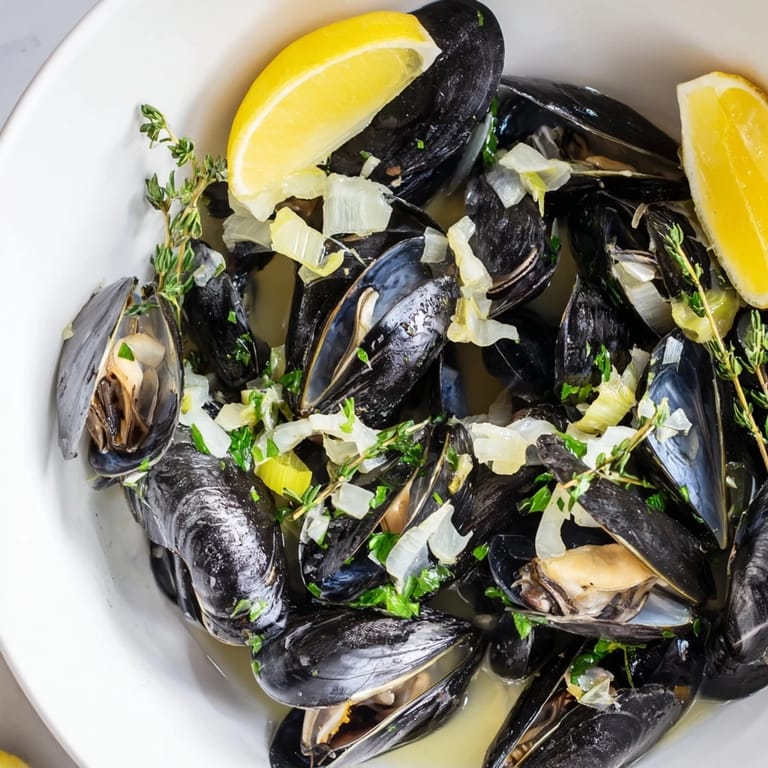
 There's something almost meditative about the quiet moment when you lift the lid off a pot of steaming mussels and the briny aroma hits your face. My first attempt at moules marinière happened on a rainy Tuesday night when I had exactly four ingredients and an urge to cook something that felt more impressive than it actually was. The magic, I learned, isn't in complexity but in treating those dark shells with respect—and letting the wine do the heavy lifting.
I made this for my sister one winter when she was between jobs and needed something to feel hopeful about. She sat at the kitchen counter while I shook the pot, and when those shells popped open, she actually applauded. We polished off two kilos with barely any conversation, just the sound of shells clinking against bowls and satisfied sighs. That's when I understood that some meals don't need ceremony—just good ingredients and someone to share them with.
Ingredients
- Fresh live mussels (2 kg): Look for ones with tightly closed shells or ones that close when you tap them gently; those are alive and ready to cook. Buy them the day you plan to use them and store in the coldest part of your fridge in a bowl covered with a damp cloth.
- Shallots (2 medium): They add a sweet depth that regular onions can't quite match, and they dissolve slightly into the broth, making it silky and sophisticated.
- Garlic (2 cloves): Fresh garlic minced fine prevents any harsh or overpowering notes, letting it blend into the aromatics instead.
- Leek (white part only, 1 small): The subtle sweetness of leek is what separates homemade marinière from a one-note wine reduction.
- Celery (2 stalks): It adds umami and a gentle earthiness that balances the briny bivalves perfectly.
- Flat-leaf parsley (1 small bunch): Add it at the very end so it keeps its fresh, grassy brightness against all that ocean flavor.
- Fresh thyme and bay leaf: These two work together to anchor the broth with herbaceous warmth without taking over.
- Dry white wine (300 ml): Choose something you'd actually drink; it becomes the soul of the dish, so skip the cheap stuff labeled cooking wine.
- Olive oil (2 tbsp): It's your first foundation, helping soften the vegetables before they meet the heat and the wine.
- Black pepper and sea salt: The mussels themselves are already salty from the ocean, so taste as you go and season gently.
- Lemon wedges: These are essential—a squeeze of bright citrus just before eating cuts through the richness and wakes up your palate.
Tired of Takeout? 🥡
Get 10 meals you can make faster than delivery arrives. Seriously.
One email. No spam. Unsubscribe anytime.
Instructions
- Prepare your mussels:
- Rinse them under cold running water with your hands, rubbing off any visible sand or barnacles. If any don't close when you tap them, discard them—they're already gone. This step takes only a few minutes but changes everything about texture and flavor.
- Build the aromatic base:
- Heat olive oil over medium heat in a large pot, then add shallots, garlic, leek, and celery together. You're not trying to brown them; just let them soften and become fragrant, about 3 to 4 minutes. The kitchen should smell almost sweet at this point.
- Add herbs and wine:
- Stir in thyme and bay leaf, then pour the white wine slowly so you can hear it sizzle. Bring it to a gentle simmer and let it bubble for just a minute to cook off any harsh alcohol edge.
- Introduce the mussels:
- Dump all your cleaned mussels into the pot with the aromatic broth. Cover tightly with the lid and turn the heat up to high—this is the only time you want aggressive heat.
- Steam and shake:
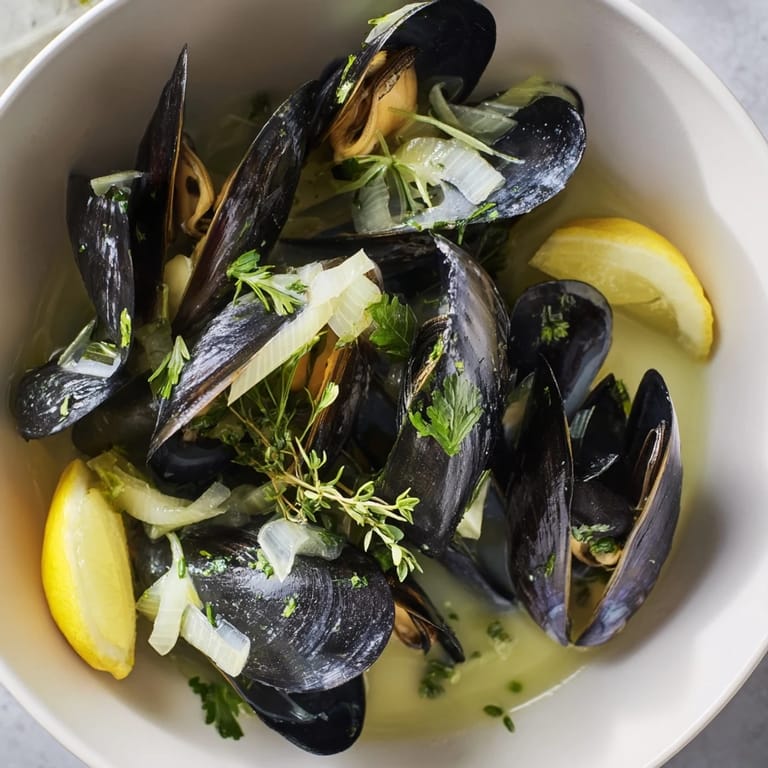
- After about a minute, you'll hear them start to pop open. Give the pot a gentle shake every couple of minutes (about 5 to 7 total) to help them cook evenly. When they've all opened, they're done—overcooked mussels become rubbery and sad.
- Finish with care:
- Pull the pot off heat, stir in the fresh parsley, and taste the broth. Season with black pepper and just a pinch of salt if it needs it. The ocean is already in there.
- Serve with ceremony:
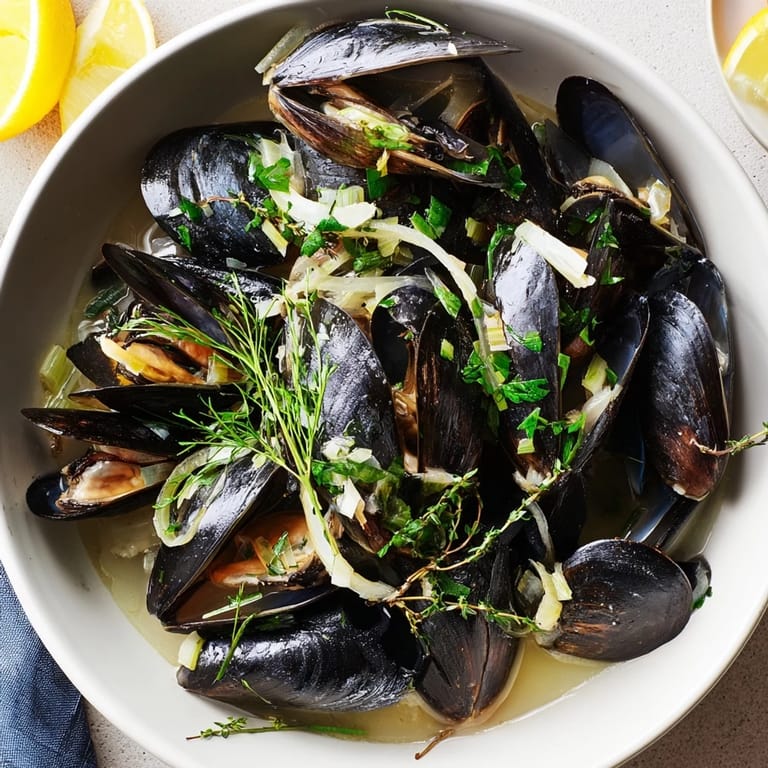
- Divide the mussels and broth into deep bowls, scatter a few more parsley leaves on top if you like, and serve immediately with lemon wedges and crusty bread. The whole meal is in that broth, so don't waste a drop.
 Save to Pinterest
 There's a specific sound when you shake a pot of opening mussels—a soft clicking, almost musical. It became my favorite kitchen sound, the audio proof that something alive was transforming into something delicious. My teenage nephew, who claimed he hated seafood, watched the whole process and then ate five bowls without saying much of anything. Sometimes the most meaningful meals are the ones that change someone's mind without them realizing it.
Why This Belgian Classic Endures
Moules marinière survives because it respects the ingredient more than it manipulates it. Belgians have been cooking mussels this way for centuries, and there's wisdom in that simplicity. The wine becomes a gentle bath, the aromatics a quiet chorus, and the mussels themselves get to shine. It's one of those rare dishes where doing less is actually doing more, and that's probably why it feels so effortless on the plate.
The Broth Is Where the Magic Lives
Most people focus on the mussels and forget that the real treasure is the liquid gold they've been swimming in. Every drop has picked up briny, herbaceous, winey richness, and if you're not dragging bread through it like you're cleaning the last bit of dinner, you're missing the point. I've started saving leftover broth in the freezer because seafood soups, risotto finishes, and simple pasta sauces all taste exponentially better with it.
Making It Your Own
The beauty of this recipe is that it's a framework, not a prison. Some nights I add a splash of Pernod or a pinch of saffron if I'm feeling fancy. Other times I swear by a knob of cold butter stirred in at the end for silkiness. The fundamentals stay the same—clean mussels, hot broth, quick cooking—but the details can bend to whatever you have on hand or whatever mood you're in.
- If you're making this for someone who's skeptical about seafood, don't oversell it; just let them taste the broth and watch their eyes change.
- Crusty bread is non-negotiable, and Belgian fries with mayo on the side is the traditional way, though honestly, a simple salad works too.
- Leftover broth keeps for three days in the fridge and is liquid gold for any quick seafood situation.
 Save to Pinterest
 This dish became a regular in my kitchen because it proved that restaurant-quality meals don't require hours or fancy techniques. They just require attention, good ingredients, and the willingness to let them speak for themselves.
Recipe Questions & Answers
- → How do you clean mussels before cooking?
Scrub mussels under cold running water and debeard them by pulling out the fibrous threads. Discard any that are broken or remain open when tapped.
- → What wine pairs best for steaming mussels?
Dry white wine such as a Sauvignon Blanc or Pinot Grigio complements the briny flavors and enhances the aromatic broth.
- → Can I add butter to the broth?
Yes, adding unsalted butter at the end enriches the broth, giving it a silky texture and deeper flavor.
- → What herbs enhance the flavor of steamed mussels?
Fresh thyme, bay leaf, and flat-leaf parsley provide aromatic and savory notes that balance the seafood's natural brininess.
- → How do you know when mussels are cooked?
Mussels are done when their shells open after steaming, usually within 5 to 7 minutes. Discard any that remain closed.