 Save to Pinterest
 I'll never forget the first time I attempted to create an edible centerpiece for Thanksgiving—it was my third year hosting, and I wanted something that would make my guests pause and smile the moment they walked into the dining room. A friend had mentioned the idea of a cornucopia arrangement, and something clicked. Instead of a traditional horn sitting empty beside the table, why not fill it with abundance? That year, I discovered that the most memorable dishes aren't always hot off the stove—sometimes they're the ones that celebrate simplicity, generosity, and the art of gathering.
I remember my neighbor peeking over the counter that first Thanksgiving, her eyes lighting up as she spotted the cornucopia overflowing with jewel-toned dried fruits and glossy nuts. She plucked a dried apricot, then a handful of almonds, and said, 'This is the most beautiful thing I've eaten at a table.' That moment taught me that food isn't just nourishment—it's an invitation to slow down and appreciate abundance.
Ingredients
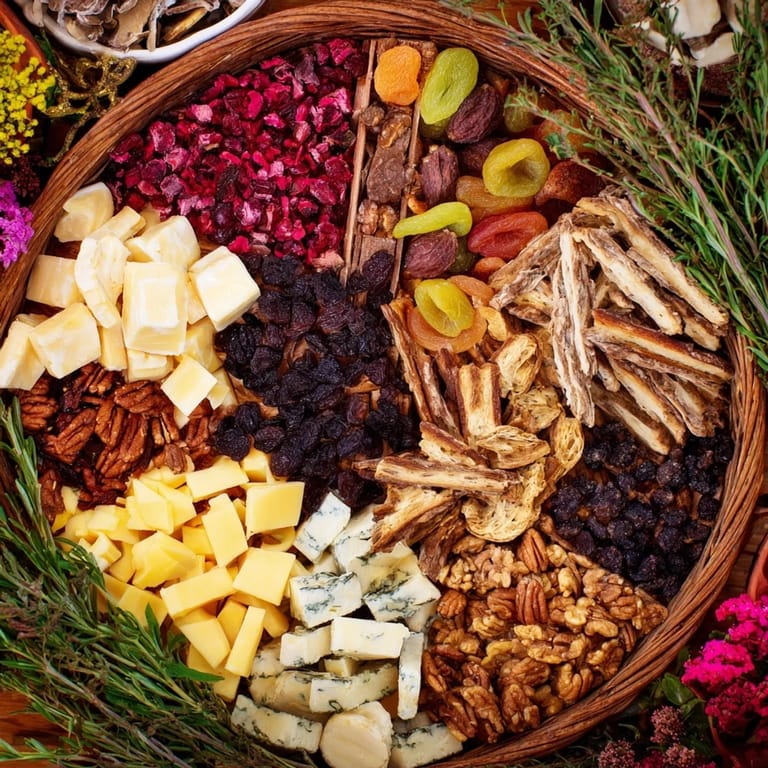
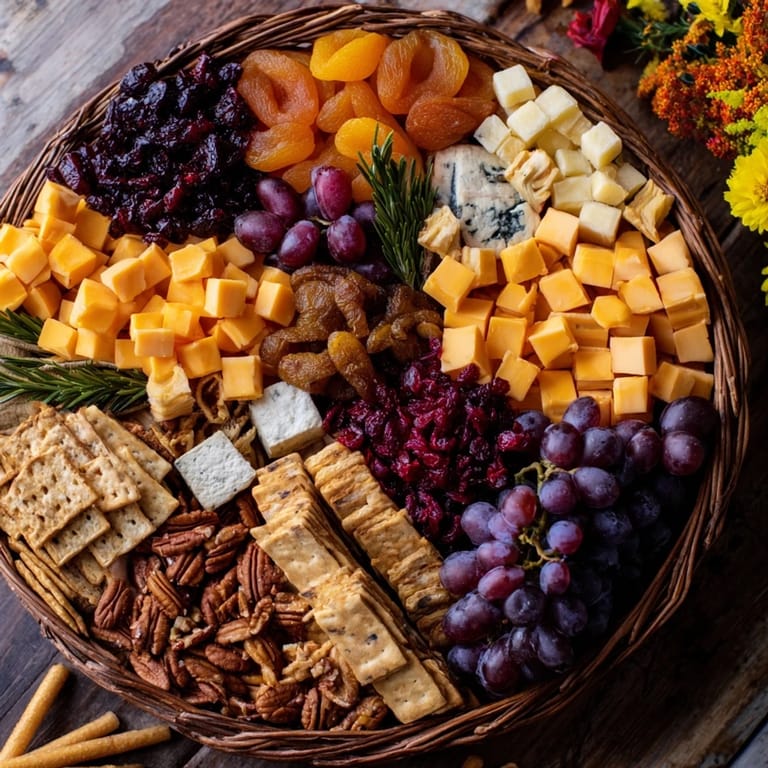
- Dried apricots, figs, cranberries, and apple rings (1 cup each): These are your color palette and backbone—choose ones that feel tender when you squeeze them gently, as overly hard dried fruit won't appeal to guests. I've learned that splurging slightly on quality here makes a visible difference.
- Fresh seedless grapes (1 cup, optional): These add a pop of freshness and juiciness that cuts through the richness of nuts and cheese, and they cascade beautifully down the arrangement.
- Walnuts, pecans, and almonds (1 cup each): Toast these lightly for 5–7 minutes at 300°F if they've been sitting in your pantry; it wakes up their flavor and adds subtle crunch. I always taste one before committing to the arrangement.
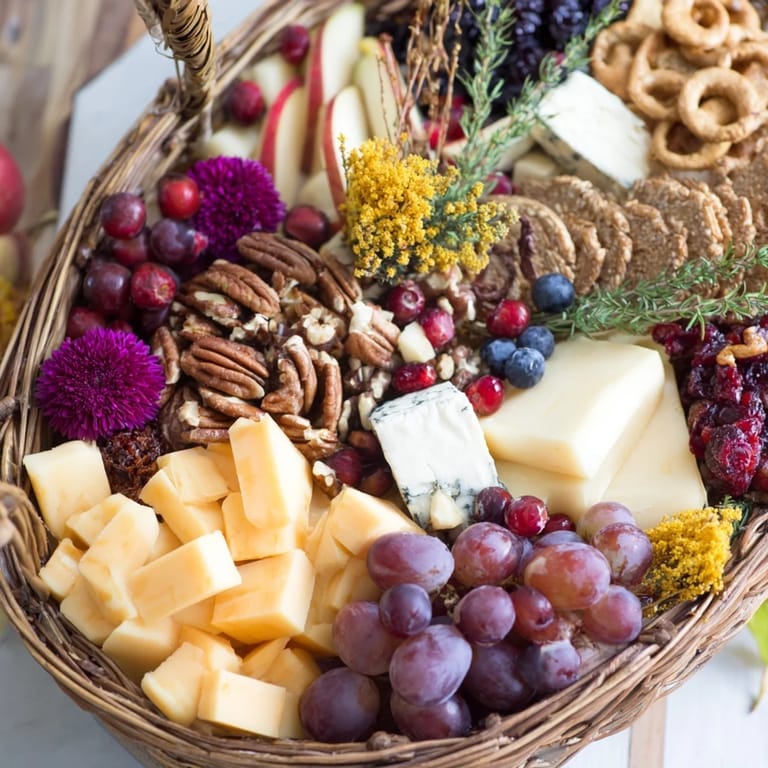
- Aged cheddar, creamy goat cheese, rustic blue cheese, and aged gouda (6 oz each): The cheese is your flavor anchor—cut everything into generous pieces that feel luxurious to grab. I learned the hard way that thin slices look stingy; chunky, beautiful pieces feel abundant.
- Rustic crackers and baguette slices (2 cups crackers, 1 baguette): Use sturdy crackers that won't crumble under the weight of cheese and fruit. A sliced baguette adds rustic charm, though it's best added just before serving if your guests will take their time.
- Fresh rosemary and thyme sprigs, edible flowers or seasonal leaves: These aren't just garnish—they're fragrant reminders that this is a harvest celebration. I tuck them between cheeses and fruits for visual surprise.
- Wicker cornucopia basket or homemade bread horn: If using store-bought, line the inside with parchment paper so nothing slips through the gaps. For a bread horn, shape dough around a foil-covered cone and bake at 375°F until deep golden, about 25 minutes—it becomes edible theater.
Tired of Takeout? 🥡
Get 10 meals you can make faster than delivery arrives. Seriously.
One email. No spam. Unsubscribe anytime.
Instructions
- Prepare your stage:
- Place the cornucopia or bread horn on a large, beautiful serving board or platter where it will be the undeniable focal point. If using a wicker basket, I line the opening with parchment so creamy cheeses don't seep through. Step back and imagine how it will look once it's full.
- Begin with cheese:
- Start by nestling the cheese pieces inside the horn's opening—let some cubes and rounds tumble outward as if the horn is so full it simply cannot contain everything. This is where abundance starts. I alternate cheese types so each grab reveals something different.
- Layer with dried fruits and nuts:
- Now comes the meditative part. Arrange dried fruits and nuts in loose layers around and flowing out of the horn, thinking of color and texture balance as you go. Those deep purple figs look stunning next to golden apricots. Fill empty pockets with walnuts and almonds. There are no rules here—only what looks and feels bountiful.
- Tuck in crackers and bread:
- Slide crackers and bread slices into gaps along the sides and among the fruits, creating little pockets where a guest might grab both a cracker and a piece of cheese in one go. Don't overcrowd; some white space lets each element breathe.
- Add the final flourish:
- Tuck fresh rosemary and thyme sprigs between cheeses and fruits. If you have edible flowers or autumn leaves, scatter them now. This is when the arrangement transforms from generous to genuinely stunning. Step back. Smile at what you've created.
- Present with ease:
- Set the cornucopia on the table 30 minutes before guests arrive, allowing everything to reach room temperature. Provide small cheese knives and napkins nearby. The beauty is that guests will help themselves, making this both interactive and stress-free for you.
 Save to Pinterest
 Last year, a friend's teenage daughter—who usually scrolled through her phone during dinner—actually looked up and asked to help assemble the cornucopia. We spent 15 minutes together arranging fruits and cheeses, laughing at how seriously we were treating a food platter. When dinner ended and guests had devoured nearly everything, she said, 'Can we make this every year?' That's when I truly understood that these moments of creation matter just as much as consumption.
Why This Works as a Centerpiece
Unlike cut flowers that wilt, or decorations that serve no purpose, this cornucopia is genuinely useful—guests enjoy it, take from it, and watch it transform throughout the meal. The visual journey of that horn, gradually emptying as people help themselves, tells a beautiful story about generosity and sharing. I've noticed that when food is this visually stunning and accessible, conversations shift; people linger at the table longer, actually enjoying one another's company instead of rushing through courses.
Building Your Own Bread Horn
If you want to make the cornucopia fully edible, here's the path I've discovered: shape your favorite bread dough (even store-bought pizza dough works beautifully) around a cone made from heavy-duty foil, seal the seam gently, brush with an egg wash for shine, and bake at 375°F for about 25 minutes until it's burnished golden. Let it cool completely before sliding the foil out and filling it. The horn emerges crispy, beautiful, and genuinely delicious when broken into pieces. I've seen guests bite into the horn itself and look surprised by how good it tastes.
Pairing Suggestions and Final Touches
I've learned that what surrounds the cornucopia on the table matters as much as what's inside. A medium-bodied red wine (think Pinot Noir) or sparkling cider complements nearly everything in the arrangement. For those who want extra richness, I set out small ramekins of fig jam, apple butter, or local honey nearby—guests love spreading them on crackers and pairing with the sharp blue cheese or creamy goat cheese. The key is letting people customize their own experience.
- Taste one of each cheese and nut before assembling to ensure flavors are fresh and remind yourself of what you're offering
- If any element feels shy in color or texture, swap it out—this is your celebration, and it should feel authentic to what you love
- Remember that this isn't just food; it's a moment you're orchestrating, an experience you're creating for the people you love
 Save to Pinterest
 Every harvest season since that first cornucopia, I've made one, and each version teaches me something new about abundance, simplicity, and the unexpected beauty of slowing down. This isn't a dish that burns or falls flat—it's a celebration that grows more beautiful the more freely you approach it.
Recipe Questions & Answers
- → What cheeses work best for the cornucopia?
Aged cheddar, creamy goat cheese, rustic blue cheese, and aged gouda provide a balanced mix of flavors and textures.
- → Can the cornucopia be made gluten-free?
Yes, using gluten-free crackers and bread ensures the centerpiece fits gluten-free diets.
- → How should dried fruits and nuts be arranged?
Layer dried fruits and nuts around and spilling from the horn to create a visually appealing, abundant look.
- → Is it necessary to use a wicker basket for the base?
A wicker cornucopia basket or a homemade bread horn can be used, depending on preference and availability.
- → What garnishes enhance the centerpiece’s appearance?
Fresh rosemary, thyme sprigs, and edible flowers add a festive, harvest-inspired touch.
- → Can additional flavors be added?
Honey, fig jam, or apple butter served on the side complement the assortment nicely.