 Save to Pinterest
 The first time I truly understood Wiener Schnitzel was watching my neighbor's Austrian grandmother work her magic in a cramped Vienna kitchen, the smell of butter turning golden filling every corner. She moved with such quiet confidence, pounding the veal with the kind of gentle precision that takes years to perfect, then just a quick dip, a light coat of breadcrumbs, and into the pan. That sizzle—I still hear it when I make this dish. It's the sound of something becoming exactly what it's meant to be.
I made this for friends who'd just returned from a long trip, and the moment they bit into that golden crust, the conversation stopped—everyone just ate quietly for a few seconds. That's when I knew it wasn't just about technique anymore; it had become the kind of dish that brings people back to the table.
Ingredients
- Veal cutlets: Four pieces at about 150 g each, pounded to 1/4 inch thickness, are the foundation—they must be thin enough to cook through quickly while staying tender and juicy.
- All-purpose flour: 100 g serves as the first layer of the breading station, creating a sticky base that helps the egg wash cling.
- Eggs and milk: 2 large eggs beaten with 4 tbsp milk make an egg wash that's forgiving and creates better adhesion than eggs alone.
- Fine dry breadcrumbs: 150 g of quality breadcrumbs are worth seeking out—they brown more evenly and stay crispier than rough, homemade versions.
- Clarified butter or neutral oil: 250 ml is essential; this isn't a dish where you skimp on fat, and clarified butter gives authentic Viennese flavor that neutral oil can't quite match.
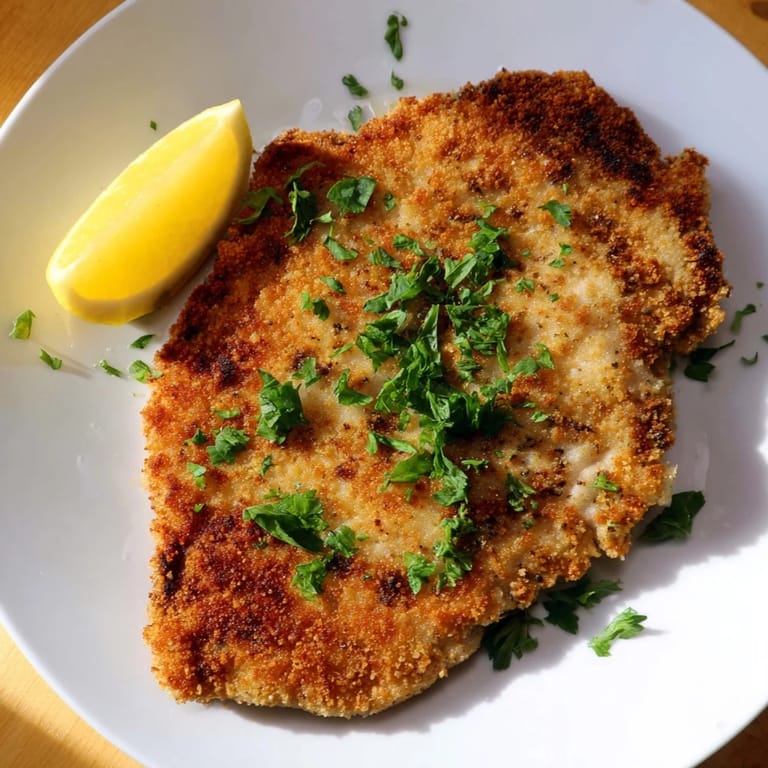
- Lemon wedges and fresh parsley: These aren't garnish afterthoughts—the sharp brightness of lemon cuts through the richness beautifully, while parsley adds a fresh note.
Tired of Takeout? 🥡
Get 10 meals you can make faster than delivery arrives. Seriously.
One email. No spam. Unsubscribe anytime.
Instructions
- Pound the veal with intention:
- Place each cutlet between plastic wrap and use steady, even strokes with the meat mallet to thin it to 1/4 inch. You're not trying to destroy it; you're unlocking tenderness.
- Dry and season:
- Pat the pounded cutlets dry with paper towels—this is non-negotiable for crispiness. Season both sides with salt and pepper, keeping it simple so the meat stays the star.
- Build your breading station:
- Arrange flour, egg wash, and breadcrumbs in three separate shallow dishes in a line. Having everything ready keeps you moving and prevents confusion mid-coat.
- Bread with a light hand:
- Dredge each cutlet in flour, shake off the excess, dip into the egg mixture to coat, then press gently into breadcrumbs. The key is a light, loose coating—don't press hard or you'll trap steam and lose crispiness.
- Get the fat to the right temperature:
- Heat clarified butter or oil in a large skillet over medium-high heat until it shimmers and moves easily across the pan. Drop a breadcrumb in; if it sizzles immediately, you're ready.
- Fry with confidence:
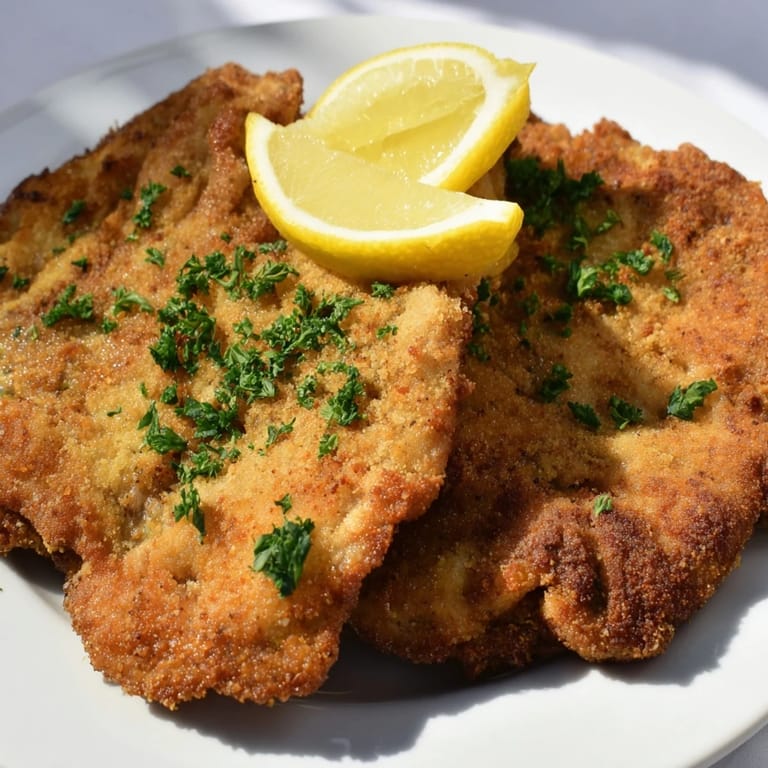
- Add one or two schnitzels (don't overcrowd—they need room to breathe in the fat), and fry for 2-3 minutes per side until deep golden brown. Tilt the pan and spoon hot fat over the top constantly for even, beautiful browning.
- Drain and serve immediately:
- Remove with a slotted spatula and rest briefly on paper towels to shed excess fat. Serve right away with lemon wedges and a scatter of fresh parsley.
 Save to Pinterest
 I learned the hard way that rushing the pounding step creates uneven thickness, which means some parts brown while others stay pale. Now I slow down, and that simple shift changed everything about how this dish turns out.
The Austrian Tradition Behind This Dish
Wiener Schnitzel isn't just a recipe; it's a point of pride in Vienna, where the dish has been perfected over centuries. The name itself means Vienna-style cutlet, and authentic versions use only veal—any other meat gets the suffix Schnitzel Wiener Art, which technically isn't the real thing. There's something beautiful about that specificity, that refusal to compromise. It taught me that sometimes traditional rules exist because they work, not because anyone's being stubborn.
Pounding Technique Matters More Than You Think
The meat mallet isn't just for tenderizing; it's for creating an even thickness that cooks uniformly, and that's where the magic happens. I've watched people treat it like they're angry at the veal, hammering hard and creating bruised meat that shreds. Instead, use steady, controlled pressure, let the mallet do the work, and you'll end up with cutlets that are tender and hold together beautifully through cooking. The difference between a rough technique and a gentle one is literally the difference between schnitzel and shredded veal.
Serving and Pairing Wisdom
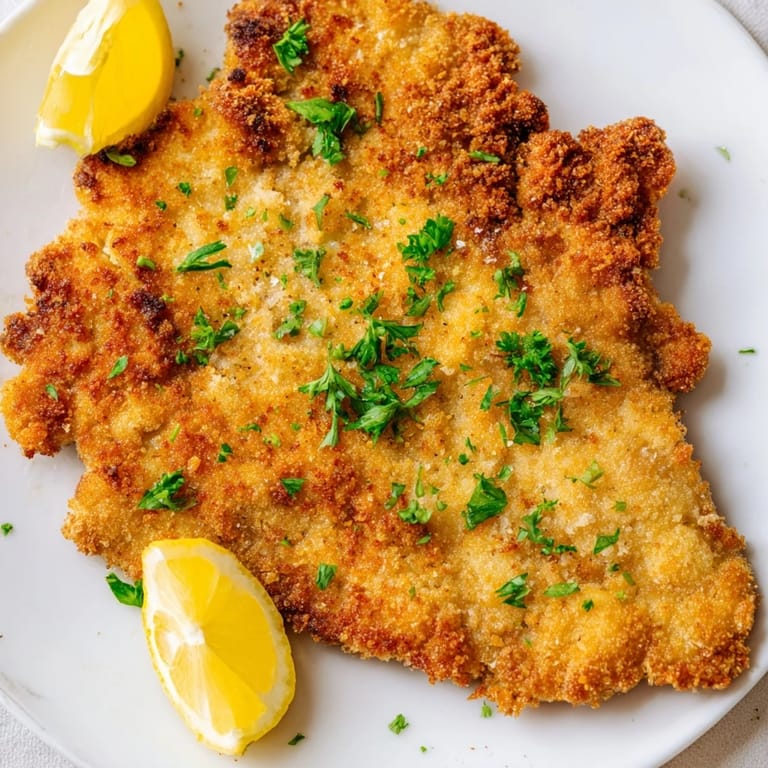
Traditionally, schnitzel pairs with potato salad, cucumber salad, or lingonberry jam—each one is there for a reason. The potato salad adds warmth and richness, the cucumber salad cuts through the heaviness with sharp acidity, and lingonberry jam brings a fruity sweetness that somehow makes sense alongside the meat. Serve it all on warm plates, and don't forget those lemon wedges; they're as essential to the plate as the schnitzel itself.
- If you can't find lingonberry jam, a good quality red currant jelly works beautifully as a substitute.
- Always serve immediately—schnitzel waits for no one, and room-temperature schnitzel is a sad thing.
- A cold Austrian white wine or a light lager complements this dish perfectly without overwhelming it.
 Save to Pinterest
 This dish reminds me that some of the best things in cooking aren't complicated—they're just done with care and respect for what you're making. That's the Austrian way, and once you taste it, it becomes your way too.
Recipe Questions & Answers
- → What cut of meat is used for Wiener Schnitzel?
Veal cutlets are traditionally used, pounded thin to ensure tenderness and even cooking.
- → How is the breading applied for a crispy coating?
The cutlets are lightly coated in flour, dipped in an egg and milk mixture, then covered with fine breadcrumbs without pressing to maintain crispiness.
- → What fat is best for frying Wiener Schnitzel?
Clarified butter is preferred for its flavor and high smoke point, but neutral oils with a high smoke point can also be used.
- → Why is it important not to overcrowd the pan when frying?
Overcrowding lowers the fat temperature, preventing the schnitzel from becoming crispy and causing uneven browning.
- → What traditional accompaniments complement this dish?
It is commonly served with lemon wedges, fresh parsley, and sides like potato salad, cucumber salad, or lingonberry jam.
- → Can other meats be used instead of veal?
While veal is traditional, pork or chicken variants exist, known as Schnitzel Wiener Art.