 Save to Pinterest
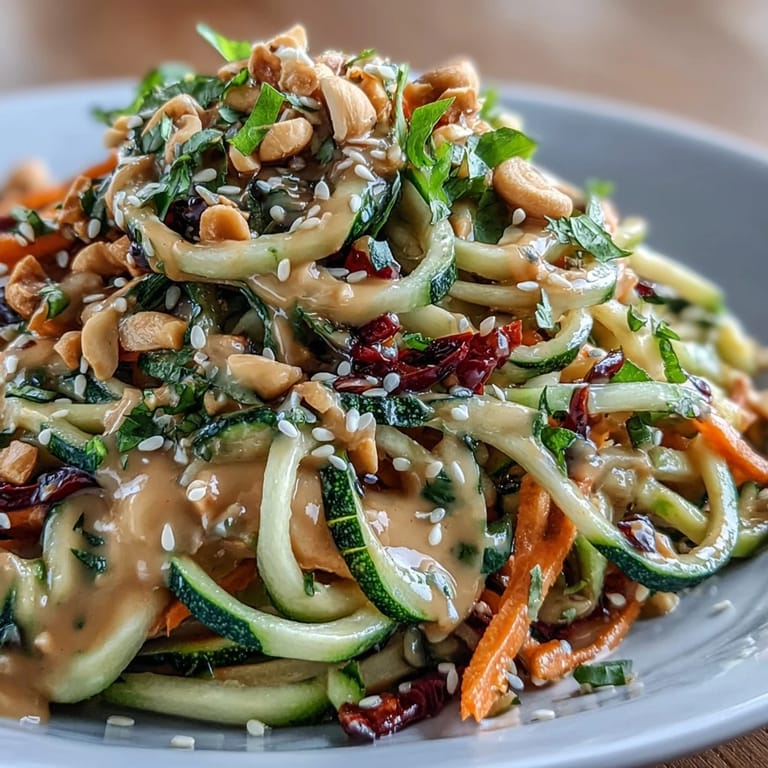
 Summer heat had me standing in the kitchen, staring at a bundle of zucchini from the farmer's market and wondering what to do with them besides the usual grilled slices. My roommate walked in asking if I could make something light for lunch, and within minutes, I'd pulled out the spiralizer and started thinking about bright, fresh flavors. The Thai peanut sauce came together almost by accident, whisking things from the pantry, and when I tossed everything together that afternoon, the crunch and the creamy-tangy dressing just clicked. It became the salad I now make whenever I want something that tastes like summer on a plate.
I brought a big bowl of this to a potluck on a scorching July evening, and it was gone before anything else on the table. People kept coming back asking what made it taste so different, and I realized it wasn't just the peanut sauce—it was the way the raw vegetables sang when they weren't drowning in dressing. Watching someone try it for the first time and immediately go back for seconds felt like the highest compliment a salad could get.
Ingredients
- Zucchini, spiralized: The base here—spiralizing gives you those satisfying noodle-like strands that feel way more interesting than raw zucchini slices, and they stay tender-crisp when tossed with the dressing.
- Carrot, shaved into ribbons: A vegetable peeler makes this quick, and the slight sweetness balances the savory-tangy peanut sauce perfectly.
- Red bell pepper, sliced or ribboned: Its natural sweetness and bright color make every bite feel festive and alive.
- Cucumber, ribboned: Adds cooling crispness and keeps the whole salad from feeling heavy on a warm day.
- Spring onions: A sharp bite that cuts through the richness of the peanut dressing—don't skip them.
- Red cabbage, shredded: Not just for color; it has a natural crunch that lasts even after dressing soaks in for a while.
- Fresh cilantro and mint: The herbs that make this feel authentically Thai and bright; mint is optional but I never skip it.
- Roasted peanuts, chopped: Texture and toasted flavor that echoes the dressing; rough chopping means you get whole pieces mixed with smaller bits.
- Sesame seeds: A nutty finish that takes the whole thing from good to unforgettable.
- Creamy peanut butter: The foundation of everything; make sure it's natural or you'll taste off-flavors that throw the balance off.
- Soy sauce or tamari: Umami depth; tamari keeps it gluten-free if that matters to your table.
- Maple syrup or agave: A touch of sweetness that rounds out the acid and heat, just enough so nothing tastes sharp.
- Fresh lime juice: Bottled won't work here—fresh lime is what gives this its bright, summery character.
- Rice vinegar: Milder than white vinegar, it adds tang without aggression.
- Toasted sesame oil: A small amount goes a long way; it adds nutty warmth to the dressing that regular oil can't touch.
- Fresh ginger and garlic: These are what make people say 'what IS that flavor?'—they wake up your palate.
- Water: Thinning the dressing gradually lets you control the consistency; you want it pourable but still coating, not watery.
- Chili flakes or Sriracha: Optional heat that I usually add because I like the little kick at the end of each bite.
Tired of Takeout? 🥡
Get 10 meals you can make faster than delivery arrives. Seriously.
One email. No spam. Unsubscribe anytime.
Instructions
- Prep your vegetables like you're setting up a produce display:
- Spiralize the zucchini into a large bowl, then use a vegetable peeler or mandoline to shave the carrot, bell pepper, and cucumber into thin, delicate ribbons—you want them pretty and uniform so they cook evenly with the dressing. Toss in the sliced spring onions, shredded cabbage, and your chopped herbs, stirring gently so everything gets a little air between the pieces.
- Build the dressing in a small bowl:
- Spoon the peanut butter into a small bowl and whisk in the soy sauce, maple syrup, lime juice, rice vinegar, and sesame oil until smooth and combined. Add the ginger and minced garlic, then add water a tablespoon at a time, whisking constantly, until you have a sauce that pours easily but still clings to a spoon—this takes about 2 to 3 tablespoons of water, but trust your instincts.
- Bring the salad together with a gentle toss:
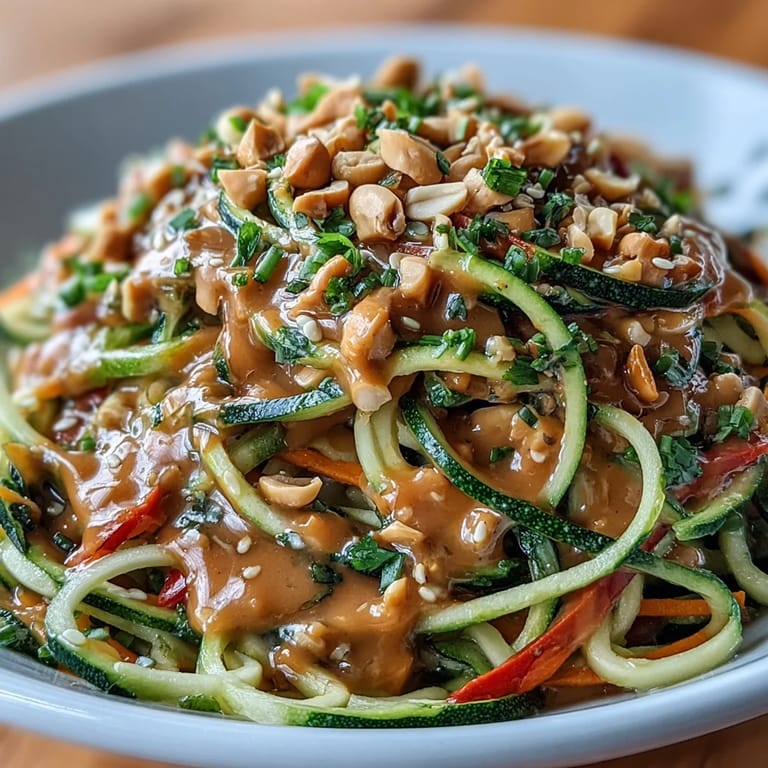
- Pour the peanut dressing over the vegetables and toss everything together with your hands or two wooden spoons, making sure every strand and ribbon gets coated without crushing the delicate pieces. It should come together like a light, colorful mess in the best way.
- Plate and crown it with crunch:
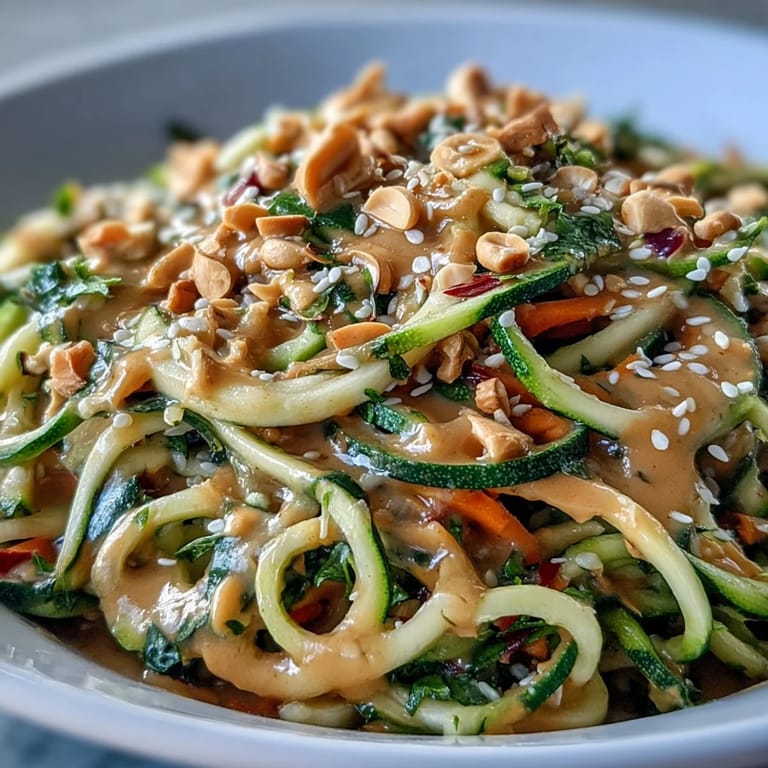
- Transfer to a serving platter or divide into bowls, then scatter the chopped roasted peanuts and sesame seeds generously over the top so you get them in every bite. This is where the texture really sings.
- Serve at the moment of peak crispness:
- Eat it right away while everything still has that raw, snappy quality, or chill it for up to an hour if you're making it ahead—it holds up better than most salads because the vegetables stay firm.
 Save to Pinterest
 There was a moment one afternoon when I made this for myself alone, no event, no one watching. I sat on my porch with the bowl, watching the light hit the red cabbage and bell pepper, tasting that perfect balance of creamy and tangy and crunchy all at once, and I realized this wasn't just a salad—it was proof that the simplest things, done with attention and good ingredients, could taste like celebration.
Why This Dressing Works Every Time
The magic of this sauce lives in the balance between three things: the peanut butter gives body and richness, the acid from lime and vinegar brings brightness and cuts through that richness, and the sesame oil adds a warm, toasted note that keeps it from tasting one-dimensional. The ginger and garlic are there to surprise you on the back end of your palate, and that touch of maple syrup rounds everything out so nothing tastes sharp or aggressive. I've made this dressing a hundred times now, and I've yet to get it wrong because the ratios are forgiving—lime juice a little too much? The vinegar balances it. Peanut butter a little thick? Water fixes it. It's honest food that responds to your touch.
Customizing for Your Crowd
The beauty of this salad is how flexible it is without losing its character. Swap the zucchini for spiralized sweet potato if you want something earthier and warmer, or use spiralized cucumber for a lighter version on really hot days. Add baked tofu cubes or edamame if you need more protein for a main course salad, and honestly, crispy chickpeas are stunning here too. The vegetable ribbons are a canvas—use whatever's fresh and looks good at the market, keeping the color balance in mind so it stays visually exciting.
Make-Ahead Notes and Storage
If you're planning ahead, prep your vegetables the morning of and store them in separate containers so they don't get waterlogged by nighttime—they'll stay crisp and ready to toss. The dressing keeps in the fridge for three days, and if it thickens when cold, just thin it back out with a splash of water. Don't dress the full salad more than an hour before serving, but you can absolutely have everything ready to go so assembly takes thirty seconds when you're hungry.
- Store undressed vegetables in airtight containers; they'll stay crisp for up to eight hours.
- Keep the dressing separate in a jar; shake it before pouring over fresh vegetables.
- Add the peanuts and sesame seeds only when serving; so they don't soften and lose that crucial crunch.
 Save to Pinterest
 This salad lives in that perfect space between quick weeknight dinner and something special enough to bring to a gathering—it never feels like you're settling for something light. It's food that tastes like care, without asking you to spend hours in the kitchen.
Recipe Questions & Answers
- → How do I spiralize zucchini for this dish?
Use a spiralizer or julienne peeler to create long, noodle-like strands of zucchini, which provide a fresh, textured base for the salad.
- → Can I substitute the peanut butter in the dressing?
Yes, sunflower seed butter works well as a nut-free substitute while maintaining a creamy texture and rich flavor.
- → What vegetables can I use besides zucchini and ribbons?
Carrot, cucumber, bell pepper, and red cabbage are great crunchy options that complement the dressing and create a colorful plate.
- → How do I adjust the heat level?
Add or reduce chili flakes or Sriracha in the dressing according to your spice preference for a mild to moderate kick.
- → What are good additions for extra protein?
Baked tofu or edamame can be incorporated to boost protein content while keeping the dish plant-based.
- → Can this dish be made ahead?
It's best served immediately for maximum crunch, but can be chilled for up to one hour before serving without losing texture.