 Save to Pinterest
 I discovered this dish on an ordinary Tuesday while staring at my cutting board covered in beet juice and carrot peels, wondering why every plate I made looked like something that belonged in a restaurant I could never afford. That's when it hit me—what if I stopped fighting against the chaos and leaned into it? What if I made one bold, unapologetic line of color instead of scattering things around like I was afraid of empty space? The stripe was born from frustration, honestly, but it became the most beautiful accident I've ever plated.
The first time I served this to my sister, she actually put her phone down. I remember her fork hovering over the plate for a second while she decided where to start, then she laughed and said it seemed criminal to break it apart. We ended up eating it slowly, savoring each color separately before mixing them together like we were conducting a flavor experiment. She brought it up for months after, which felt like the highest compliment a home cook could get.
Ingredients
- Beets (2 medium): Choose ones that feel heavy and firm; the earthiness becomes pure silk when roasted long enough, and that deep crimson is your stripe's anchor color.
- Carrots (3 large): Fresh carrots have a sweetness that transforms when cooked down, but avoid the precut baby ones—they won't give you the same creamy texture when blended.
- Fresh ginger (1 tsp grated): This wakes up the carrot purée with a gentle spice that doesn't overpower; fresh is non-negotiable here.
- Avocado (1 ripe): The timing matters—too hard and it won't blend smoothly, too soft and the whole thing falls apart; aim for that moment when it yields to gentle thumb pressure.
- Greek yogurt (2 tbsp): It adds body to the avocado without making it taste like yogurt; skip the flavored versions and use plain.
- Olive oil, butter, lemon juice, lime juice: These are the bridge flavors that tie everything together and prevent the stripe from feeling one-dimensional.
- Microgreens, edible flowers, pistachios, sea salt: These aren't decoration—they're texture and contrast that make the whole thing sing.
Tired of Takeout? 🥡
Get 10 meals you can make faster than delivery arrives. Seriously.
One email. No spam. Unsubscribe anytime.
Instructions
- Get the oven ready and start your beets:
- Preheat to 400°F while you peel and dice your beets—they'll stain your hands bright red, but that's part of the ritual. Toss them with olive oil and sea salt, spread them on a baking tray, and slide them in for 30 to 35 minutes until they're so tender a fork slides through without resistance.
- Cook your carrots while the beets roast:
- Slice them into rounds and steam or boil until they collapse into softness, about 15 to 20 minutes. You want them completely yielding so they blend into pure silk without any grittiness.
- Blend the beet purée:
- Once the beets cool just enough to handle, blitz them with lemon juice in a blender until completely smooth and impossibly silky. Add water by the tablespoon if the mixture feels too thick—it should pour but hold its shape.
- Create the carrot & ginger purée:
- Blend your cooked carrots with fresh ginger, butter, and salt until it becomes this glowing, velvety sauce. Taste it and adjust the salt; this is where the carrot's natural sweetness really shines.
- Prepare the avocado cream:
- Mash your ripe avocado with Greek yogurt, lime juice, and a pinch of salt in a small bowl, stirring until it's completely smooth and luscious. Transfer it to a piping bag or squeeze bottle so you can work with precision later.
- Create your foundation stripe:
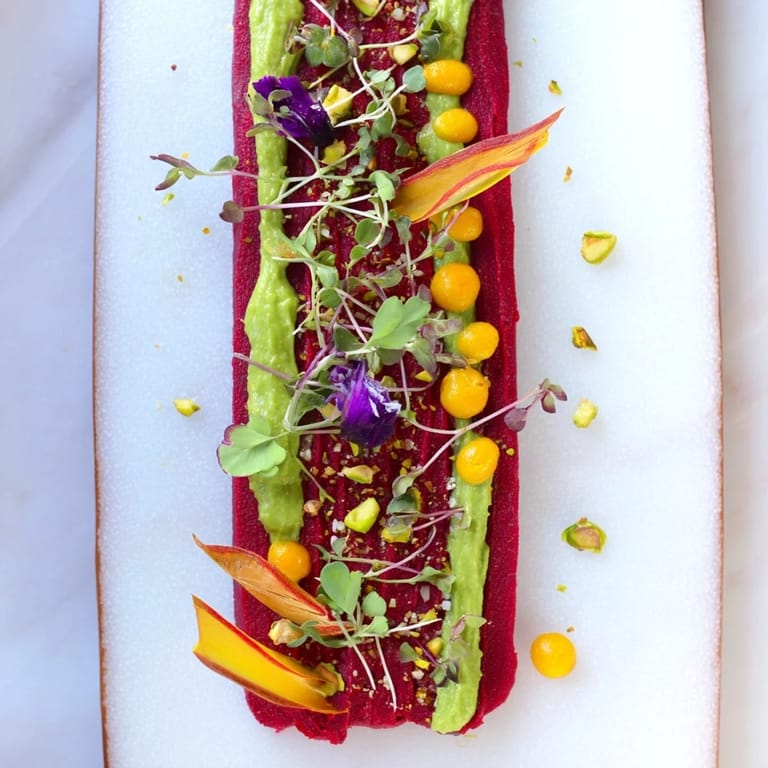
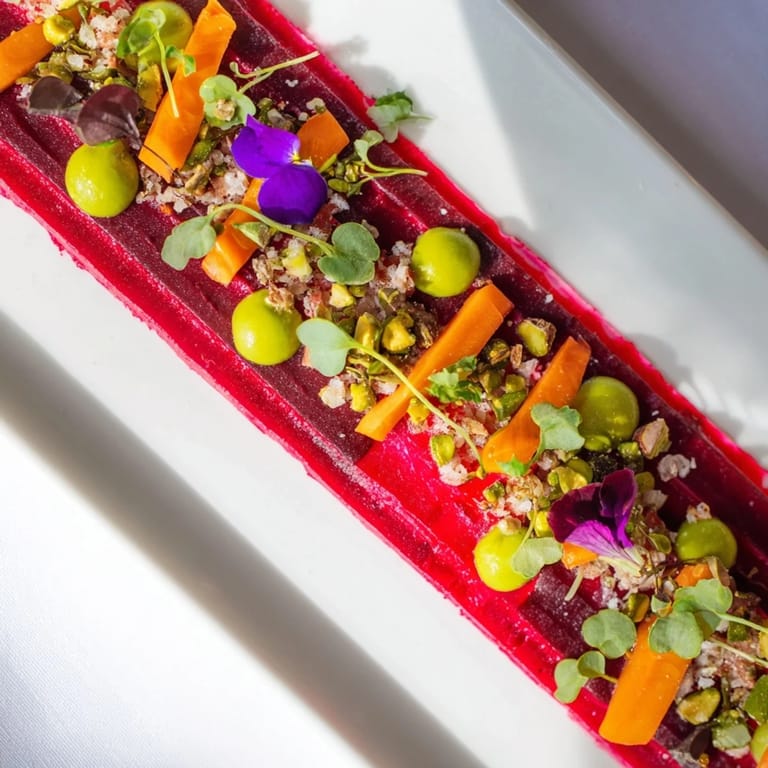
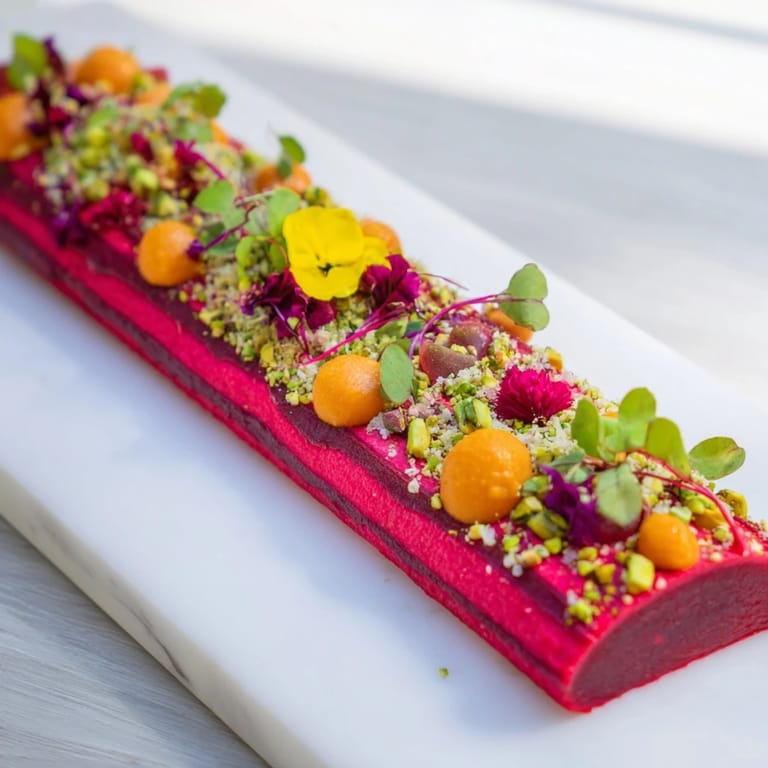
- Choose a clean, empty serving board and use a wide offset spatula or the back of a large spoon to spread the beet purée in one thick, bold stripe down the center—about 3 inches wide. Make it confident and unapologetic.
- Layer on the remaining purées:
- Pipe or artfully streak the carrot purée and avocado cream across the beet stripe in whatever pattern feels right—dots, lines, swirls—let your hand move without overthinking it.
- Crown it with life:
- Scatter microgreens, edible flowers, and crushed pistachios across the stripe, then finish with a light rain of flaky sea salt. This is where the dish wakes up visually.
- Serve with intention:
- Bring it to the table immediately while the colors are still vivid. Encourage everyone to scoop directly from the stripe, letting the purées blend together on their own forks.
 Save to Pinterest
 There's something humbling about a dish this simple that looks this complicated. My second time making it, I realized I wasn't really cooking—I was just coaxing three perfect colors into being honest versions of themselves, then arranging them like they were the only things that mattered on the plate.
Why the Stripe Works
Modernist cooking gets accused of being cold and untouchable, but this dish proves that minimalism can actually be generous. When you strip away everything except flavor and color, you're asking each element to be undeniably itself. The beet doesn't apologize for being earthy and sweet; the carrot doesn't hide its gentle spice; the avocado is just cream and richness without excuses. That honesty is what makes people slow down and actually taste what's in front of them instead of moving to the next thing.
Playing with the Concept
Once you understand how this works, the combinations become endless. I've made versions with roasted red pepper and turmeric for warm tones, or broccoli and pea purées for every shade of green. The only rule is that your purées need to be completely smooth and thick enough to hold their shape on the board. Think of the stripe as your canvas—you're just switching out the paints.
The Details That Matter
The garnishes aren't optional window dressing. That crunch of pistachios and the delicate bite of microgreens transform this from pretty to actually interesting to eat. Flaky sea salt does something different than regular salt—it catches the light and also hits your palate differently, in a way that feels celebratory. The edible flowers are there to remind you that you're allowed to make food that looks like art.
- Prep all three purées ahead of time and store them separately in the fridge, but always plate at the last moment so everything is at its best.
- If your stripe threatens to slide apart on the board, add a teaspoon more water to your thickest purée and try again with a steadier hand.
- Serve with something crisp and cold—a Sauvignon Blanc or even just sparkling water with lemon—so your guests can cleanse their palate between bites and taste each color independently.
 Save to Pinterest
 This dish taught me that sometimes the most striking thing you can do is stop adding and start subtracting. There's real power in a single, perfect stripe.
Recipe Questions & Answers
- → How do I achieve the smooth texture for the purées?
Roast the beets until tender and steam carrots until very soft before blending thoroughly with citrus and seasoning to ensure smoothness and balanced flavor.
- → Can I prepare the components ahead of time?
Yes, the purées and avocado cream can be prepared earlier and refrigerated; assemble just before serving to maintain freshness and vibrant presentation.
- → What garnishes complement the dish best?
Microgreens, edible flowers, crushed pistachios, and a sprinkle of flaky sea salt add texture, color, and a fresh, nutty contrast to the purées.
- → Is there an alternative to dairy in the avocado cream?
Use coconut yogurt or other plant-based alternatives in place of Greek yogurt and substitute butter with olive oil for a vegan-friendly version.
- → How should I plate the stripe for best effect?
Spread a thick, even stripe of beet purée on a clean board, then layer carrot-ginger purée and avocado cream with an offset spatula or piping bag to create striking visual layers.
- → What wine pairs well with this dish?
A crisp white wine like Sauvignon Blanc enhances the fresh vegetable flavors and complements the dish’s vibrant acidity and textures.