 Save to Pinterest
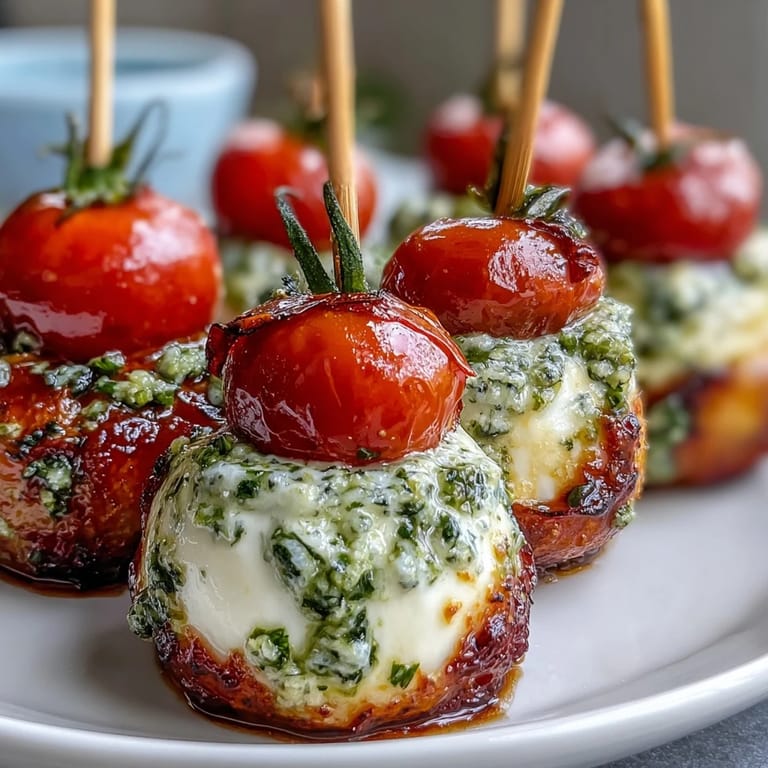
 My neighbor Marco showed up at a summer dinner party with a platter of these impossibly simple skewers, and somehow they became the thing everyone talked about for weeks. There's something about the way the creamy mozzarella melts against the warm tomato, how the basil leaf adds that whisper of freshness—it taught me that the best appetizers don't need complicated techniques, just quality ingredients and a little intention. That night, I watched people slow down, actually taste what they were eating instead of grabbing and moving on. I've been making them ever since.
I made a batch for my daughter's school potluck, and the teacher asked for the recipe—not to be polite, but because the kids had cleared the entire platter. There's something deeply satisfying about watching someone's face when they bite into one and that fresh basil hits their palate, realizing they can actually taste every single ingredient. That's when appetizers stop being just food and become little moments of joy.
Ingredients
- Cherry tomatoes: Look for ones that feel heavy and smell sweet at the stem end—that's your sign they'll have real flavor, not the watery kind that makes you regret it mid-bite.
- Mini mozzarella balls (bocconcini): These need to be fresh, not the ones sitting in oil at the back of your fridge; if you can find them at a proper cheese counter or Italian market, your entire platter shifts.
- Fresh basil leaves: Tear or cut them right before assembly—bruised basil turns dark and bitter, and you've just ruined the whole vibe.
- Wooden or bamboo skewers: Soak them in water for thirty minutes before threading; nobody wants a splinter surprise while eating an appetizer.
- Fresh basil leaves for pesto: Same rule as above—the fresher and more fragrant, the better your drizzle will taste.
- Pine nuts: Toast them lightly in a dry pan for about two minutes if you have time; it wakes up their flavor in a way that feels almost magical.
- Garlic clove: Use just one small one unless you want your guests smelling it on your breath all evening—a lesson learned the hard way.
- Parmesan cheese: Freshly grated makes a real difference; the pre-grated stuff has additives that keep it from blending smoothly into the pesto.
- Extra virgin olive oil: Don't use the cheap bottle you cook with; this is where good oil actually matters, since it's going in raw.
- Salt and freshly ground black pepper: These are your final adjustments, so taste as you go and don't be shy about seasoning.
Tired of Takeout? 🥡
Get 10 meals you can make faster than delivery arrives. Seriously.
One email. No spam. Unsubscribe anytime.
Instructions
- Thread your skewers with care:
- Start with a tomato, then the mozzarella ball, then a single basil leaf—that's your rhythm. You'll feel the tomato's give as you press the skewer through, and that's exactly right; be gentle so nothing splits open. Once they're all assembled, arrange them on whatever you're serving from and let them sit at room temperature while you make the pesto.
- Build your pesto foundation:
- Dump your basil, pine nuts, garlic, and Parmesan into the food processor and pulse—not blend, pulse—until everything's finely chopped but still has some texture. You're not making baby food here; you want it to feel alive and chunky.
- Emulsify with patience:
- Turn the processor on and drizzle the olive oil in slowly, letting it incorporate as you go. This is the moment where pesto either becomes creamy or stays grainy, and the key is patience—rushing it with a big pour of oil at once never works out. Taste it, season with salt and pepper, and stop when it tastes like summer in a spoon.
- Crown your skewers:
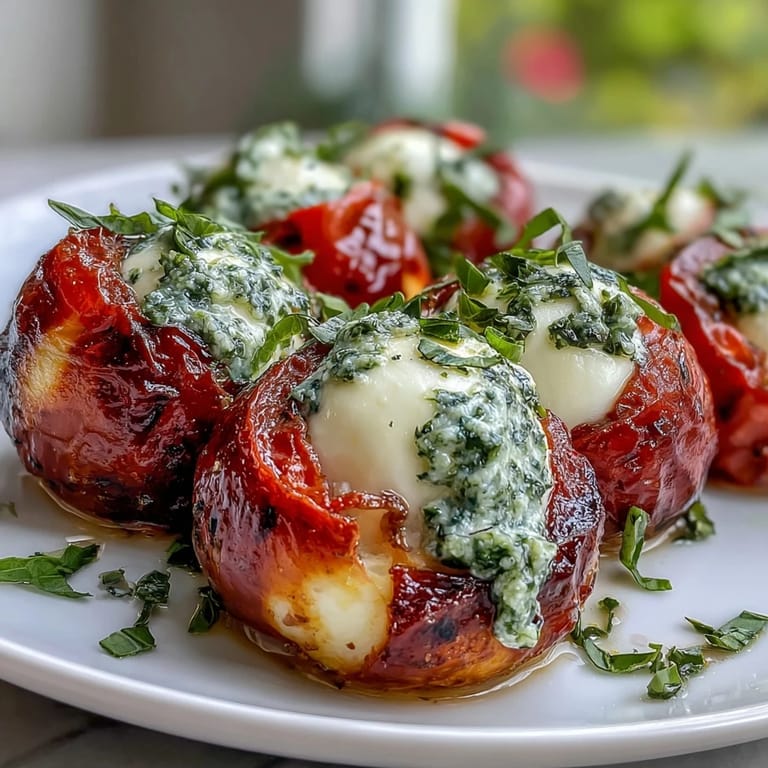
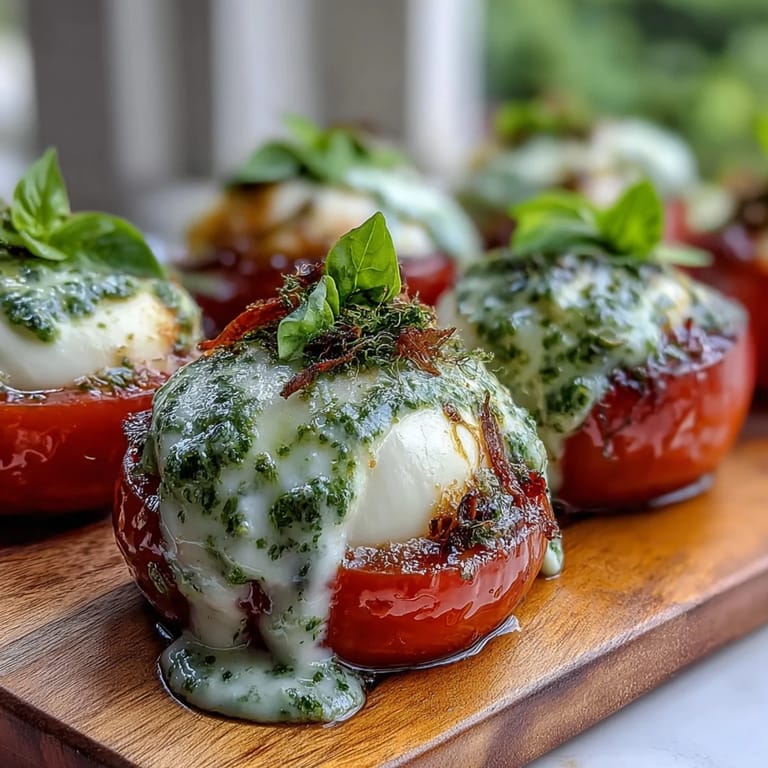
- Just before people arrive—and I mean just before, not an hour before—drizzle the pesto across your platter in thin lines or dots. Pesto oxidizes and darkens if you let it sit, and it tastes best when it still has that bright green snap to it.
 Save to Pinterest
 My friend's mother—who is Italian and therefore my silent judge on all things caprese—took one of these, bit into it slowly, and nodded. That nod meant everything. It was the moment I stopped worrying that I was being too casual with something so classically simple, and instead understood that sometimes the point is to honor the ingredients by getting out of their way.
The Secret Behind the Simplicity
There's a reason caprese has been around forever—it's proof that you don't need technique or labor to make something unforgettable. When you're working with just four main ingredients, each one has to earn its place, which means no compromises on quality. I've learned to spend a little more on good mozzarella and tomatoes when I'm making these, because mediocre versions of either just sit there on the skewer like they're apologizing. The basil should smell strong enough that you notice it the moment you open the container; anything less and you're already losing half the point.
Making Pesto Feel Fresh
Pesto is one of those things that seems intimidating until you realize it's just herbs and oil coming together, and then it becomes embarrassingly easy. The texture matters more than perfect measurements—you want it to coat a spoon and drip slowly, not run off like oil or sit there thick like paste. I've started tasting my pesto before I serve it, adjusting salt and pepper like I'm tuning an instrument; that final seasoning pass makes the whole thing sing. The moment you add the pesto is also the moment you've officially finished cooking, so take a breath and step back—you've made something beautiful.
Timing and Temperature Considerations
These skewers are best served at room temperature, which is why you can assemble them hours ahead and just finish with pesto when guests arrive. I've learned that cold mozzarella straight from the fridge doesn't deliver the same buttery softness, so pulling them out five minutes early matters more than you'd think. The tomato benefits from being at room temperature too—that's when its flavor is fullest and sweetest, not muted by the cold.
- Prep your skewers in the morning, cover them loosely with plastic wrap, and refrigerate until thirty minutes before serving.
- Keep your pesto in a separate container until the last moment, then drizzle it on just before people dig in for maximum color and flavor.
- If you're making these for a hot summer day, keep the platter in a cool spot away from direct sun so the mozzarella doesn't get too soft.
 Save to Pinterest
 Every time I make these, I'm reminded that the best food doesn't shout—it whispers, and people lean in to listen. These skewers do exactly that.
Recipe Questions & Answers
- → Can I prepare the skewers ahead of time?
Yes, assemble the skewers up to 4 hours in advance and refrigerate. Add the pesto drizzle just before serving to keep them fresh.
- → What can I substitute for pine nuts in the pesto?
Sunflower seeds can be used as a nut-free alternative while still providing a similar texture and flavor.
- → Is it necessary to use fresh basil in pesto?
Fresh basil is essential for the vibrant flavor and color in pesto, making the drizzle bright and aromatic.
- → Can I use other types of cheese instead of mozzarella?
Mini mozzarella balls are ideal for their mild taste and texture, but fresh burrata or soft goat cheese can offer interesting variations.
- → How should I store leftovers?
Store any leftover skewers and pesto separately in airtight containers in the refrigerator for up to 24 hours.